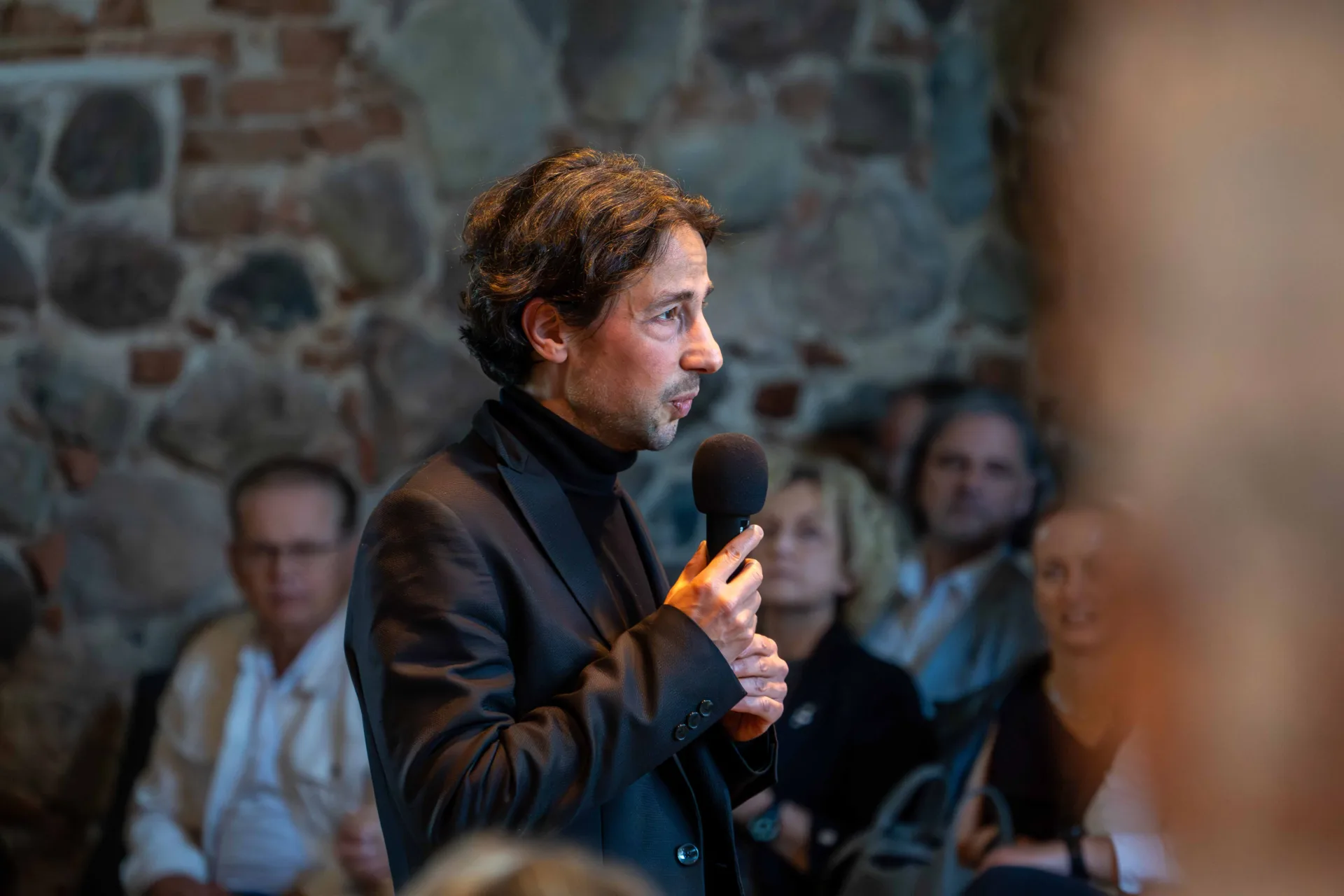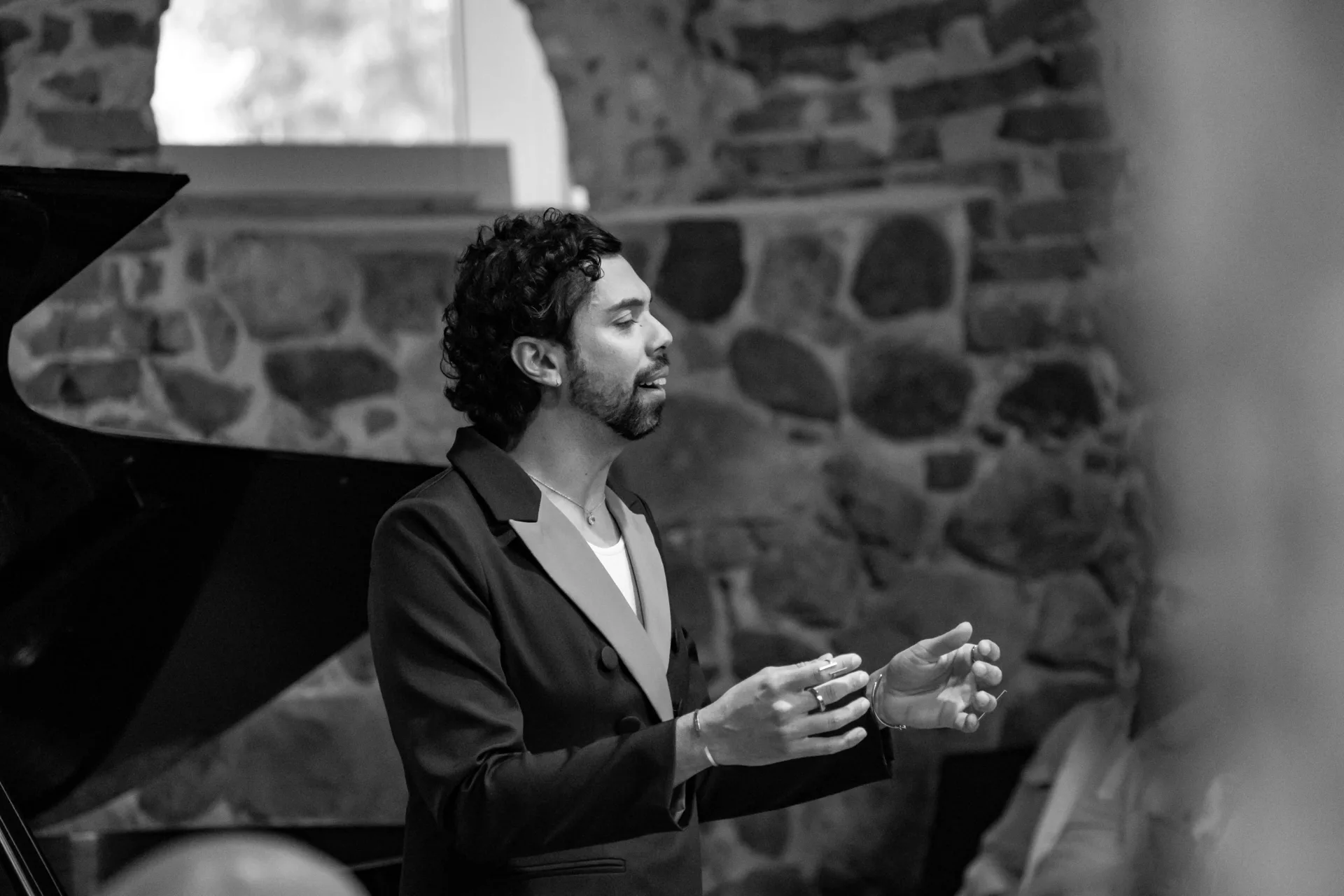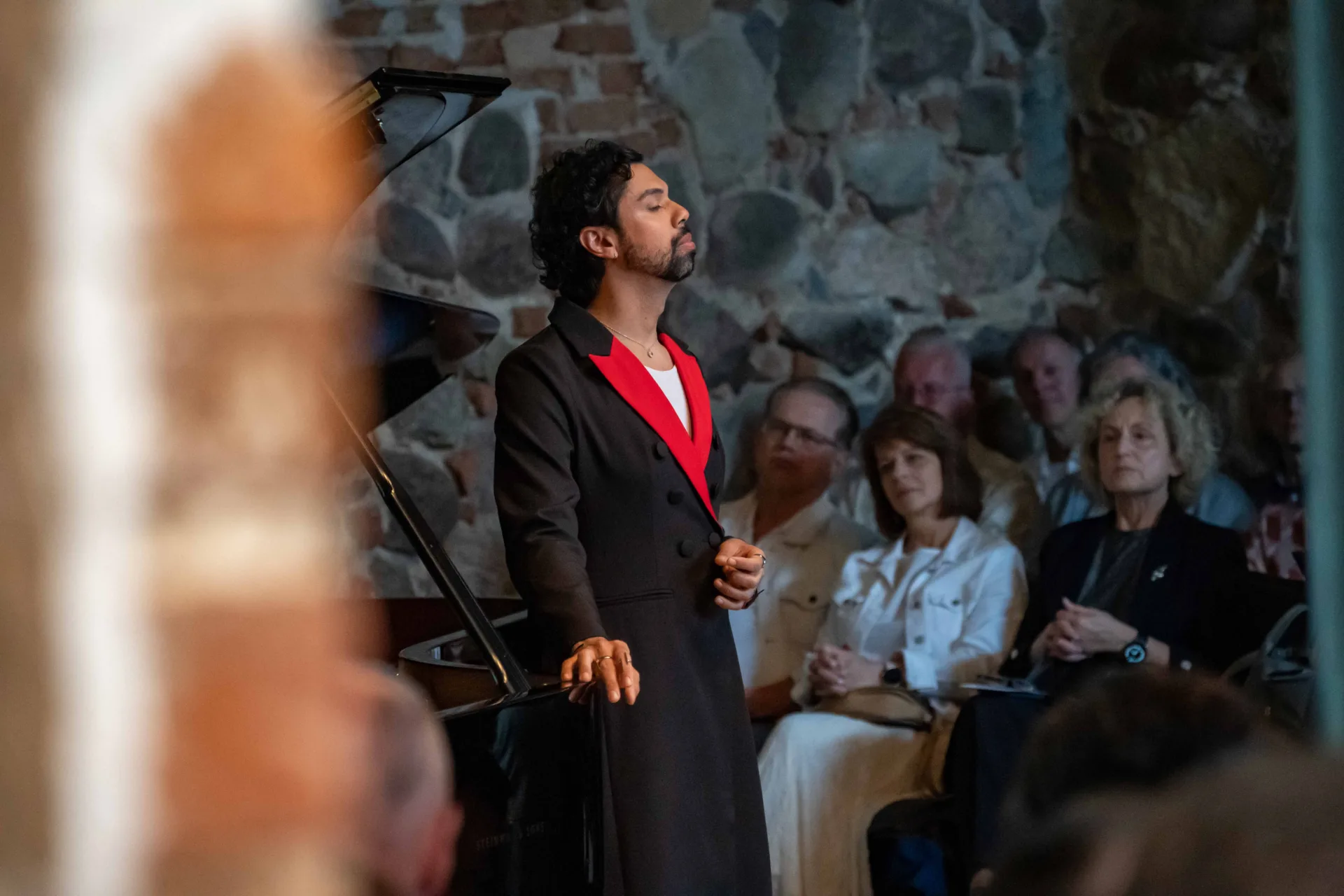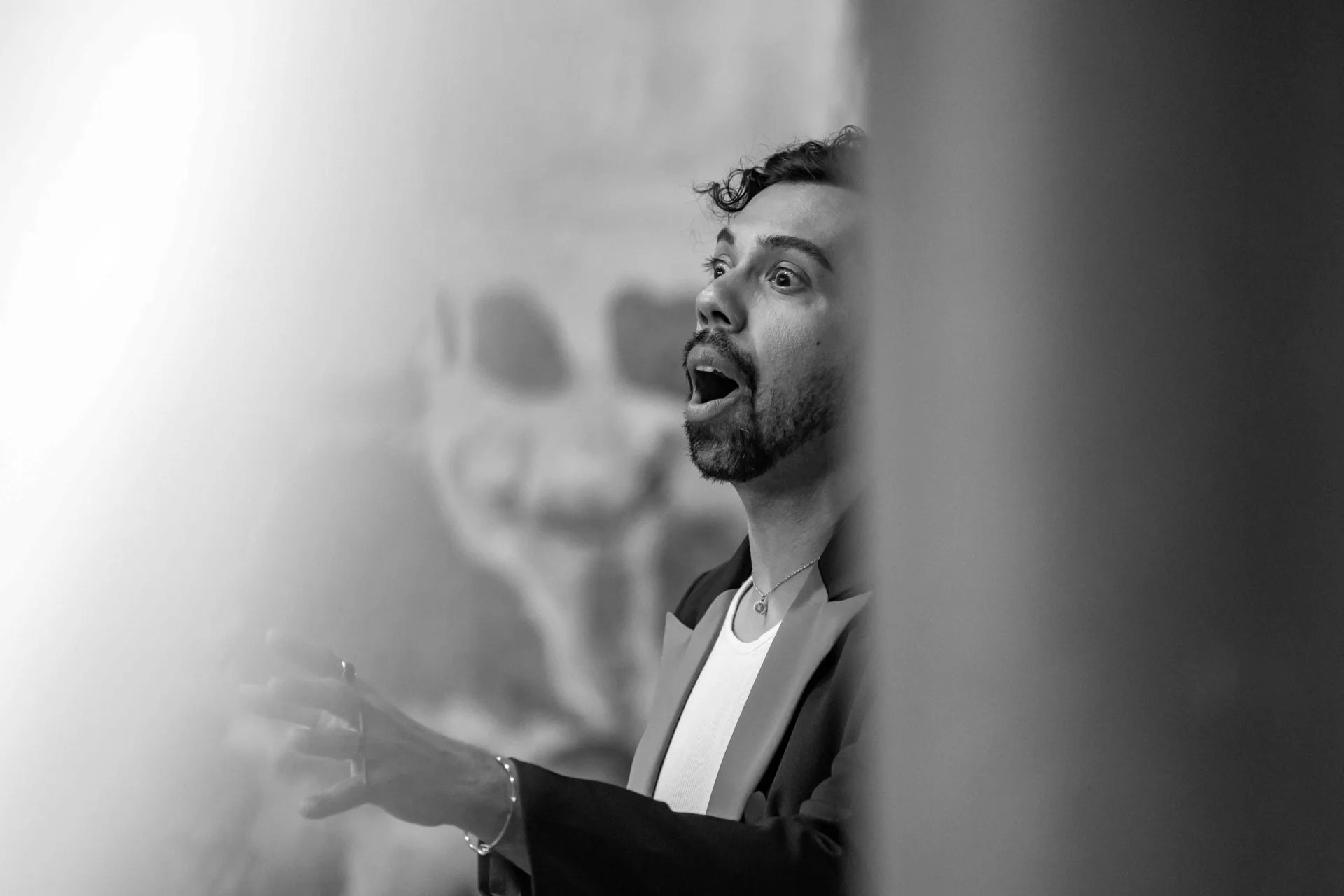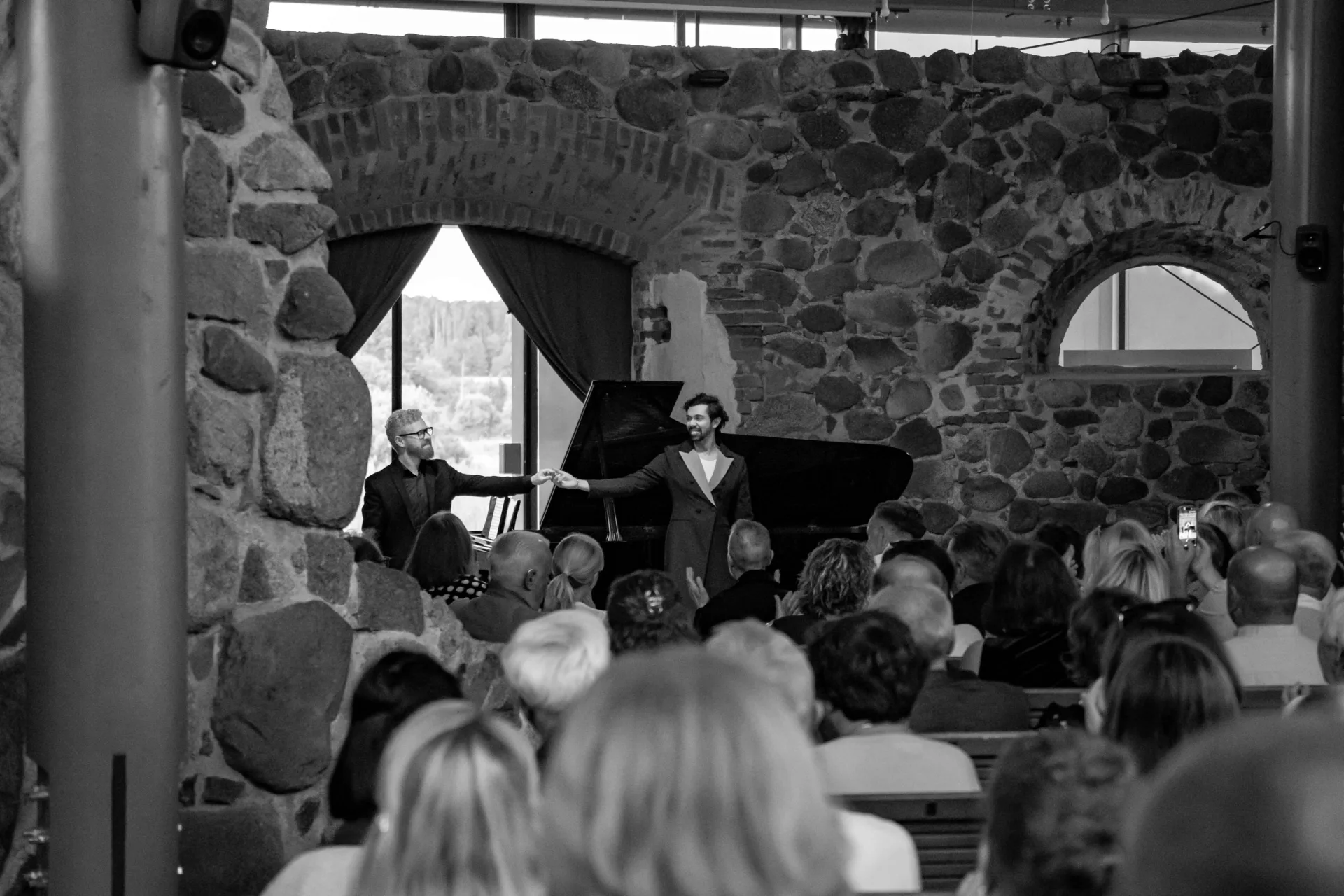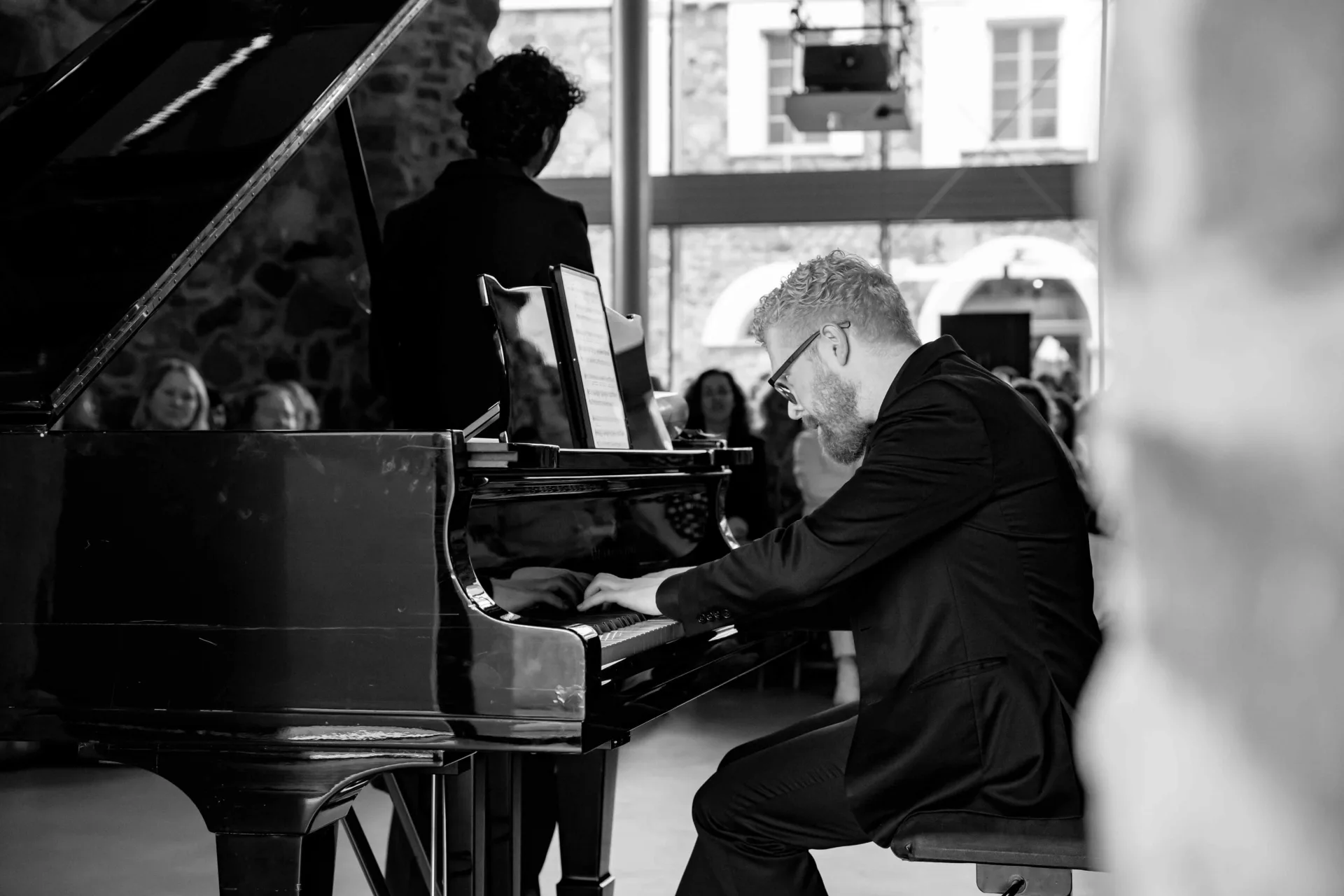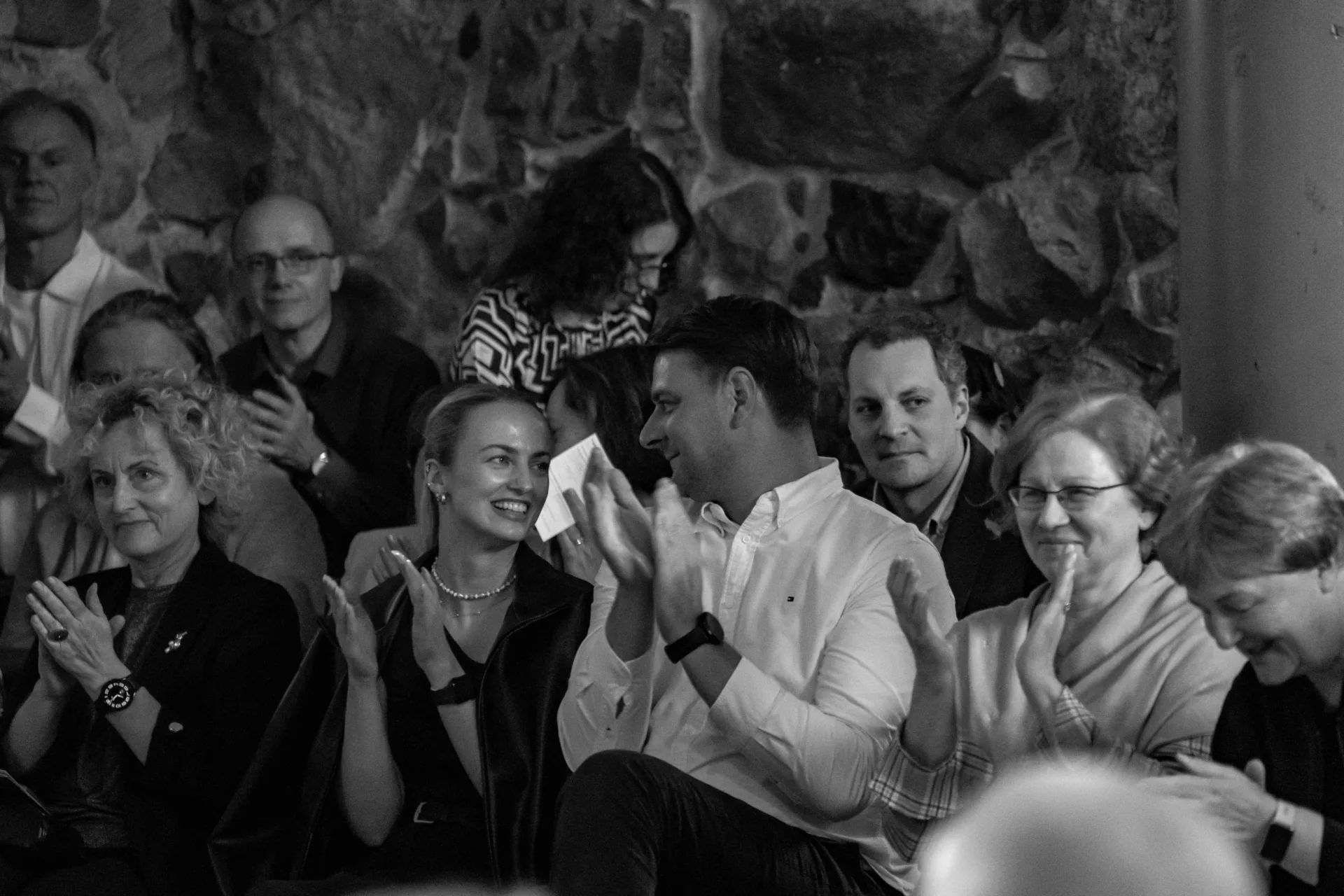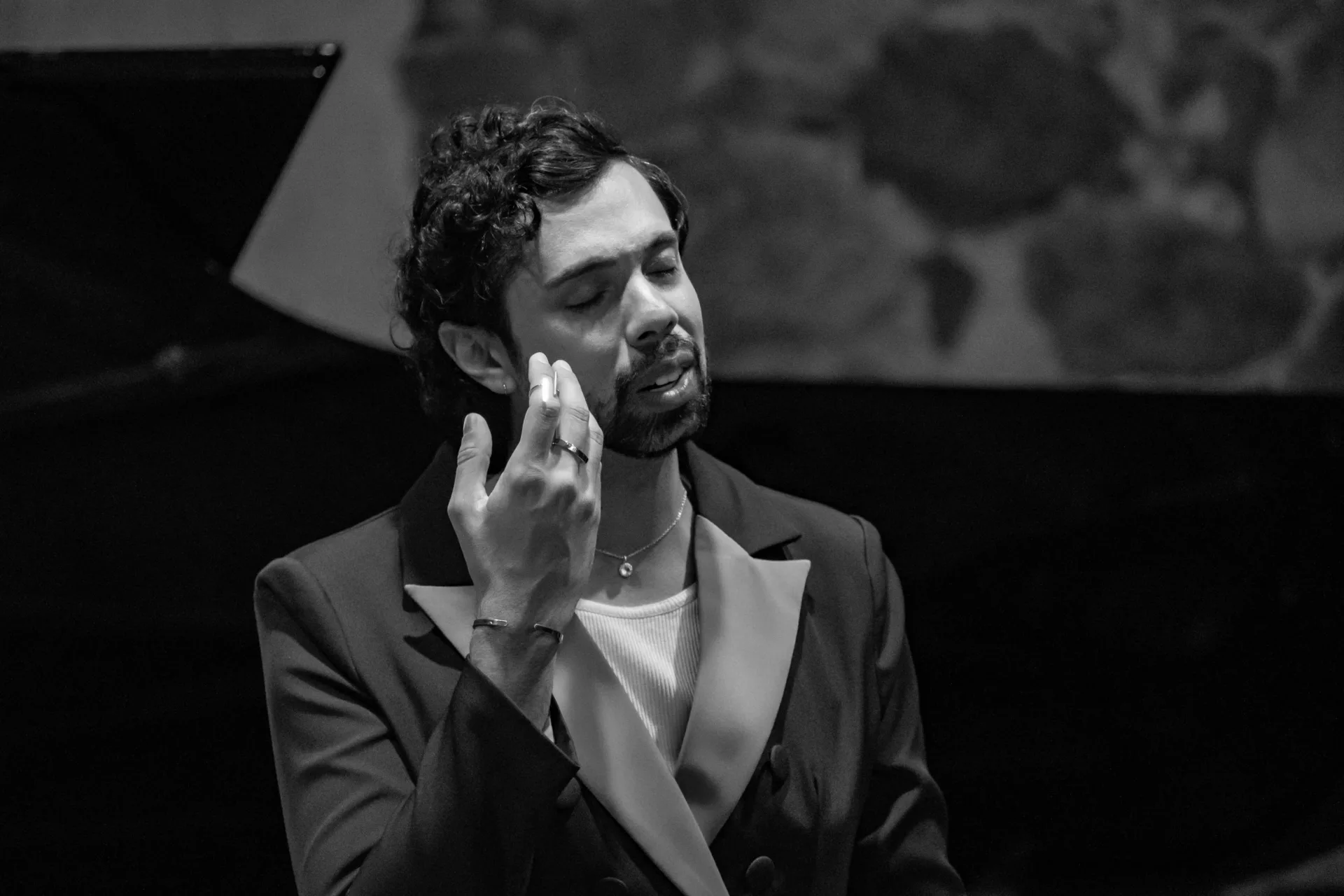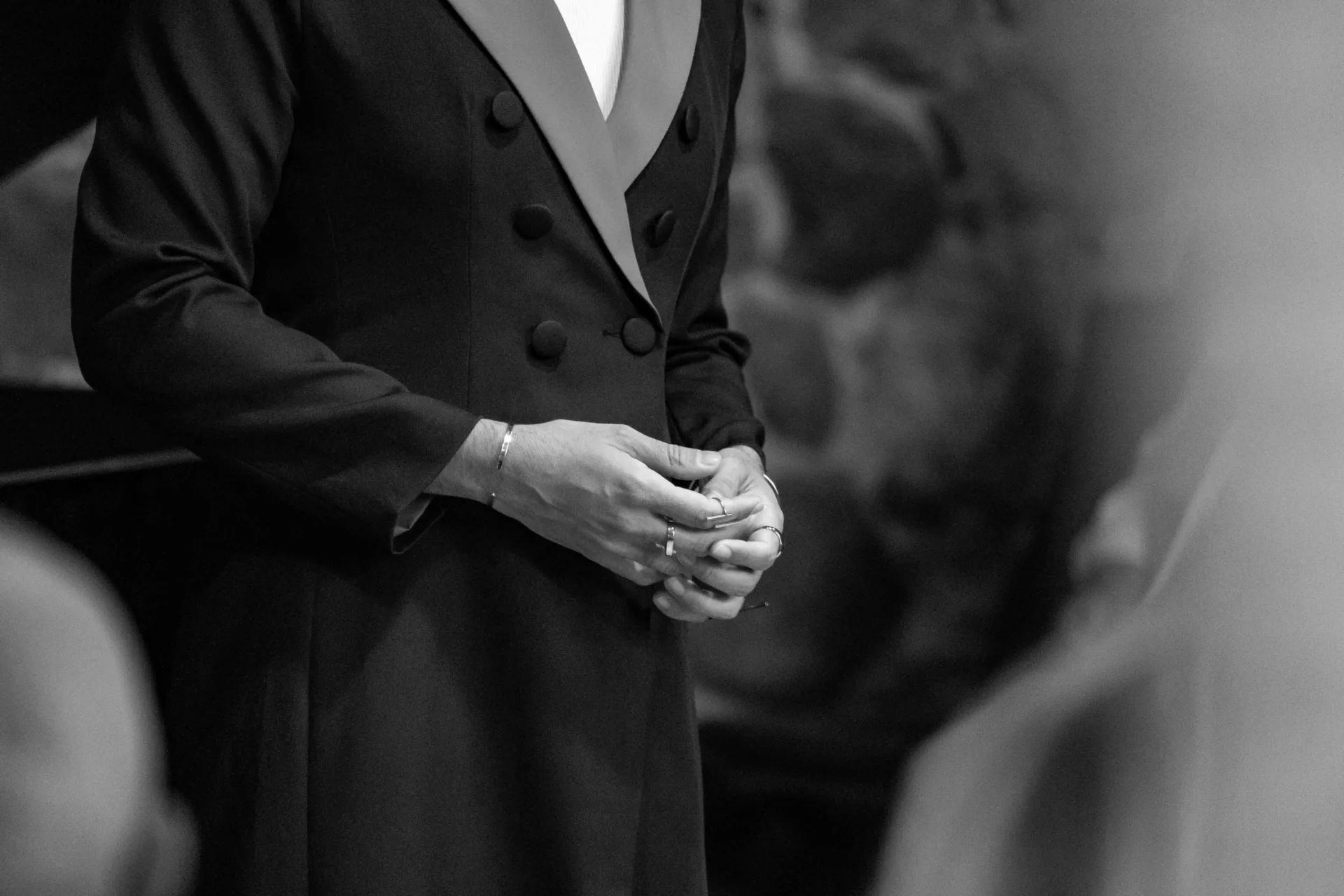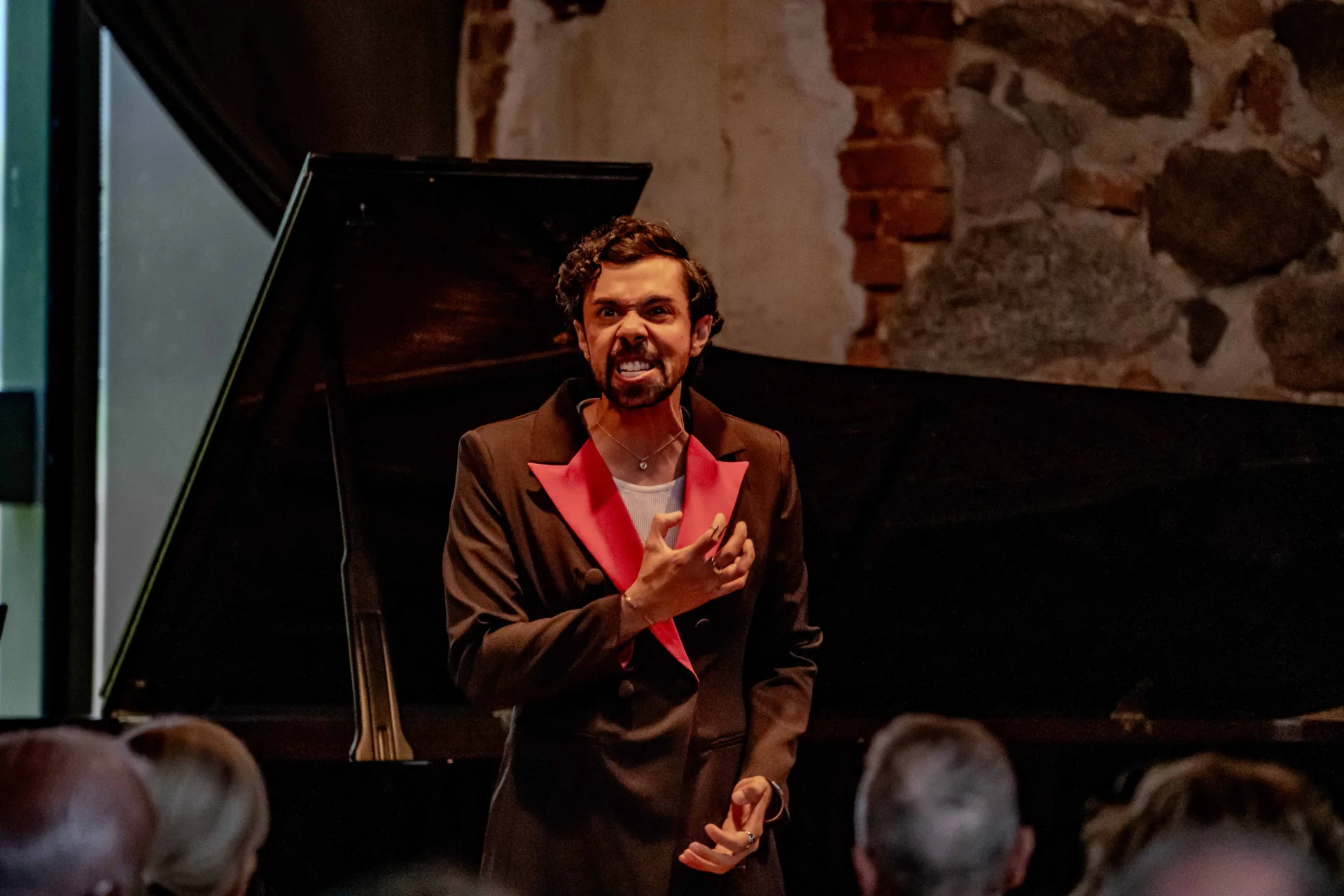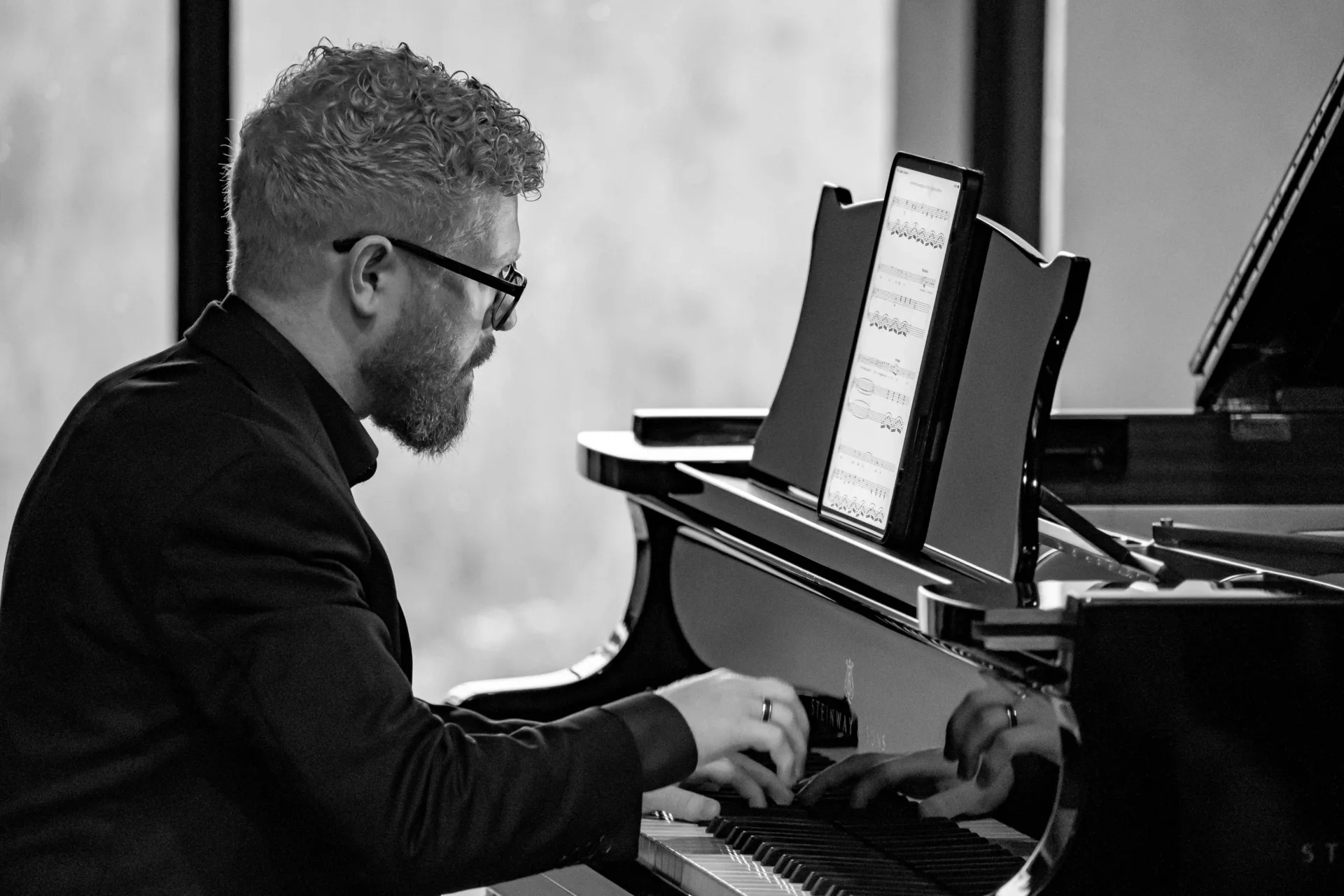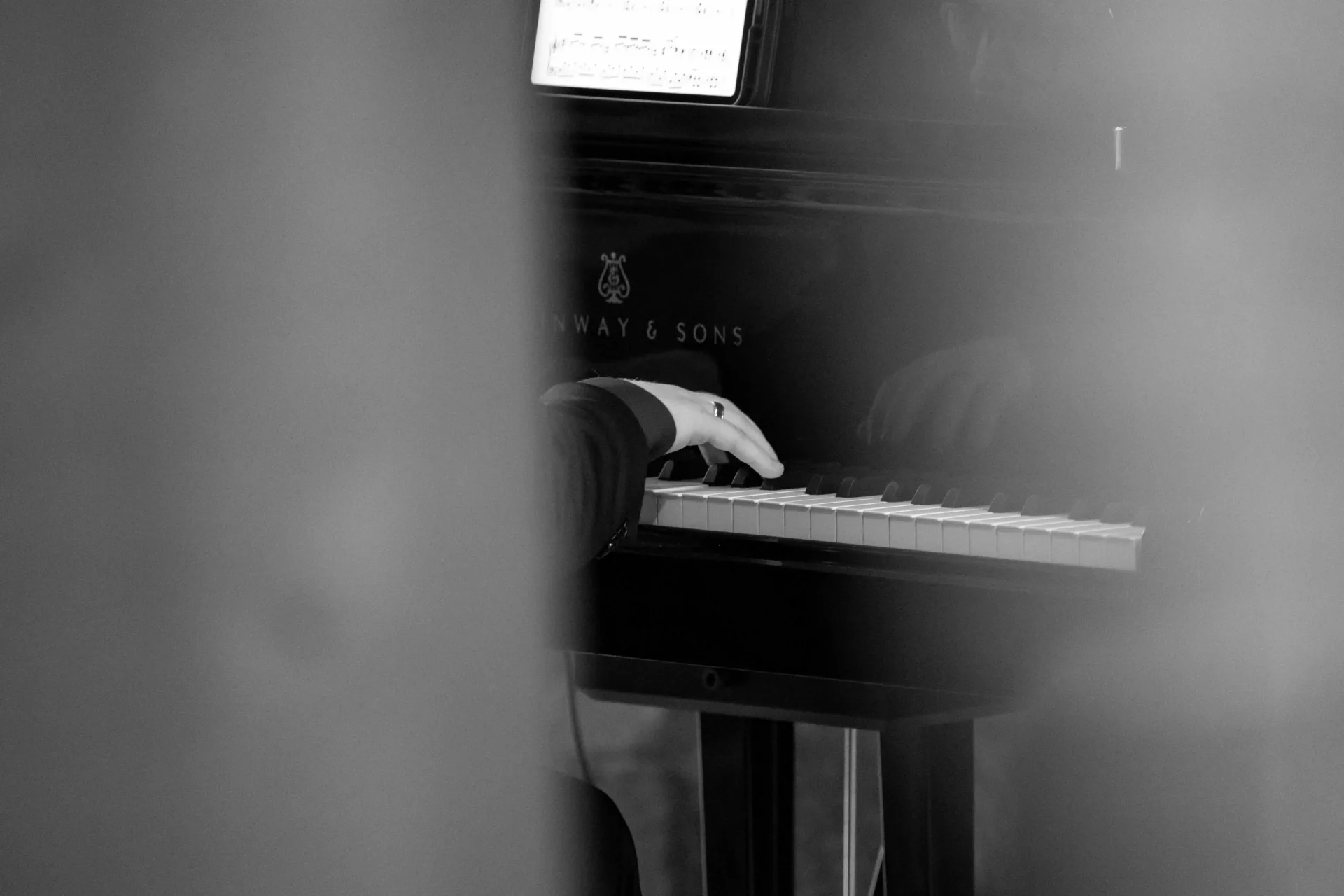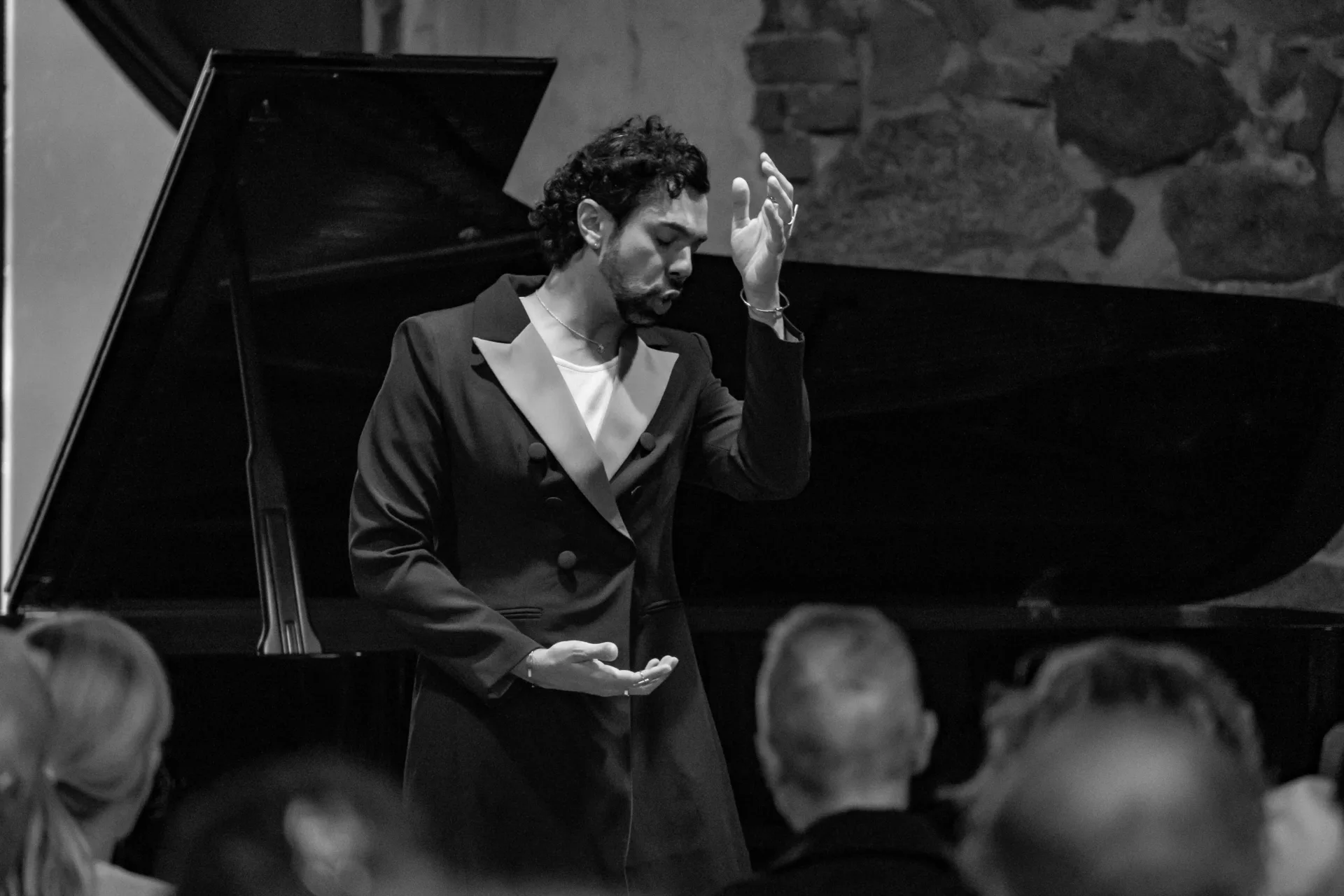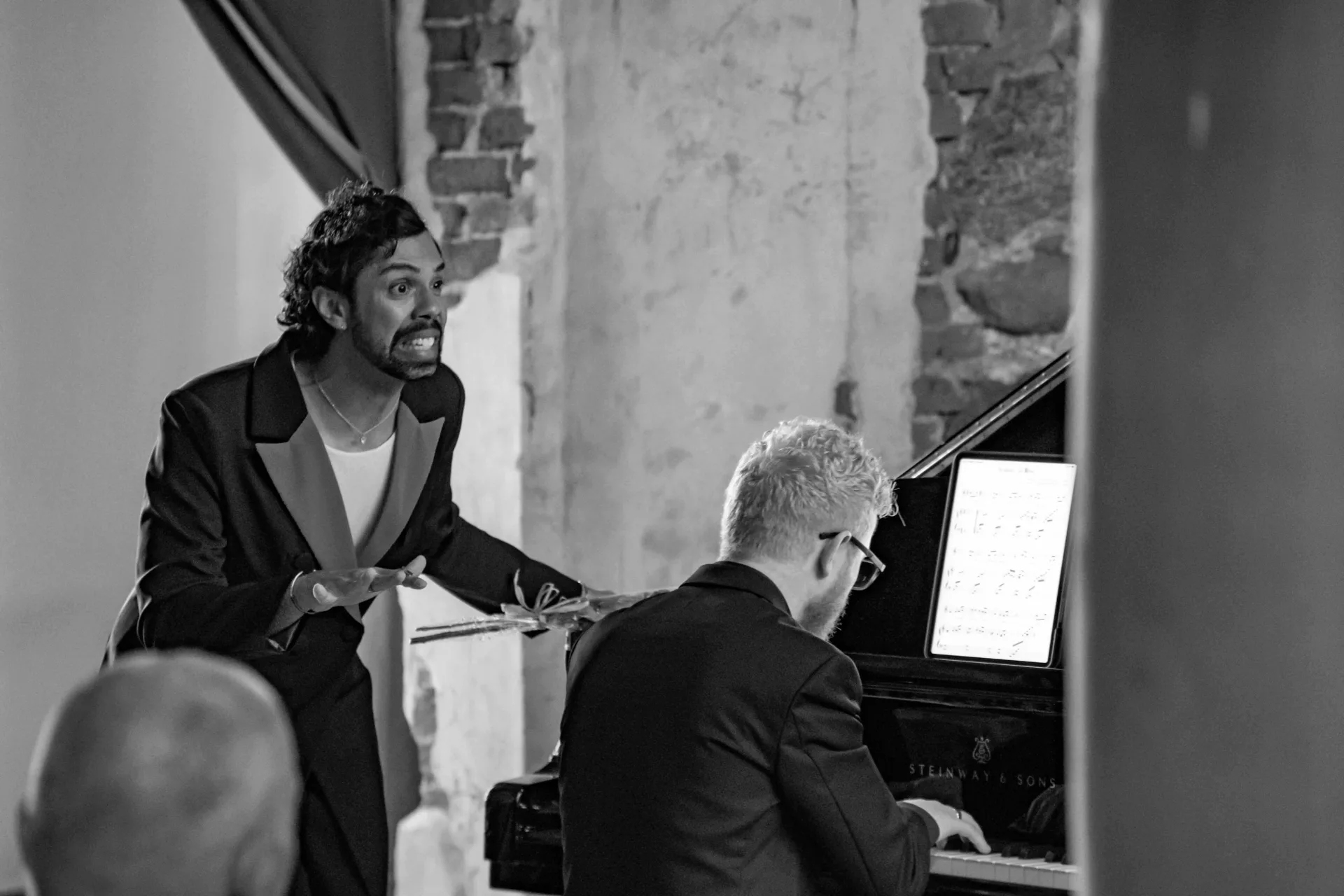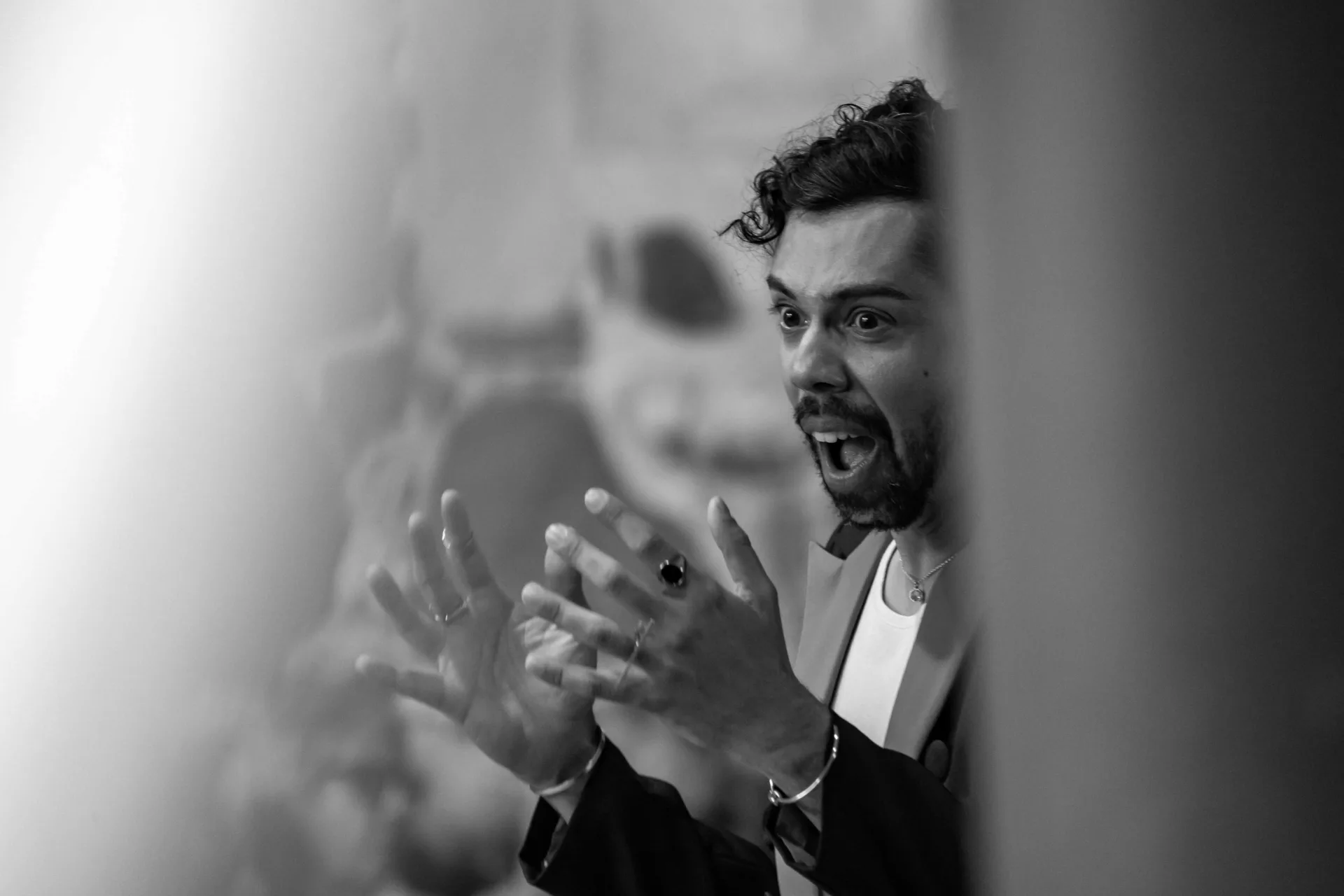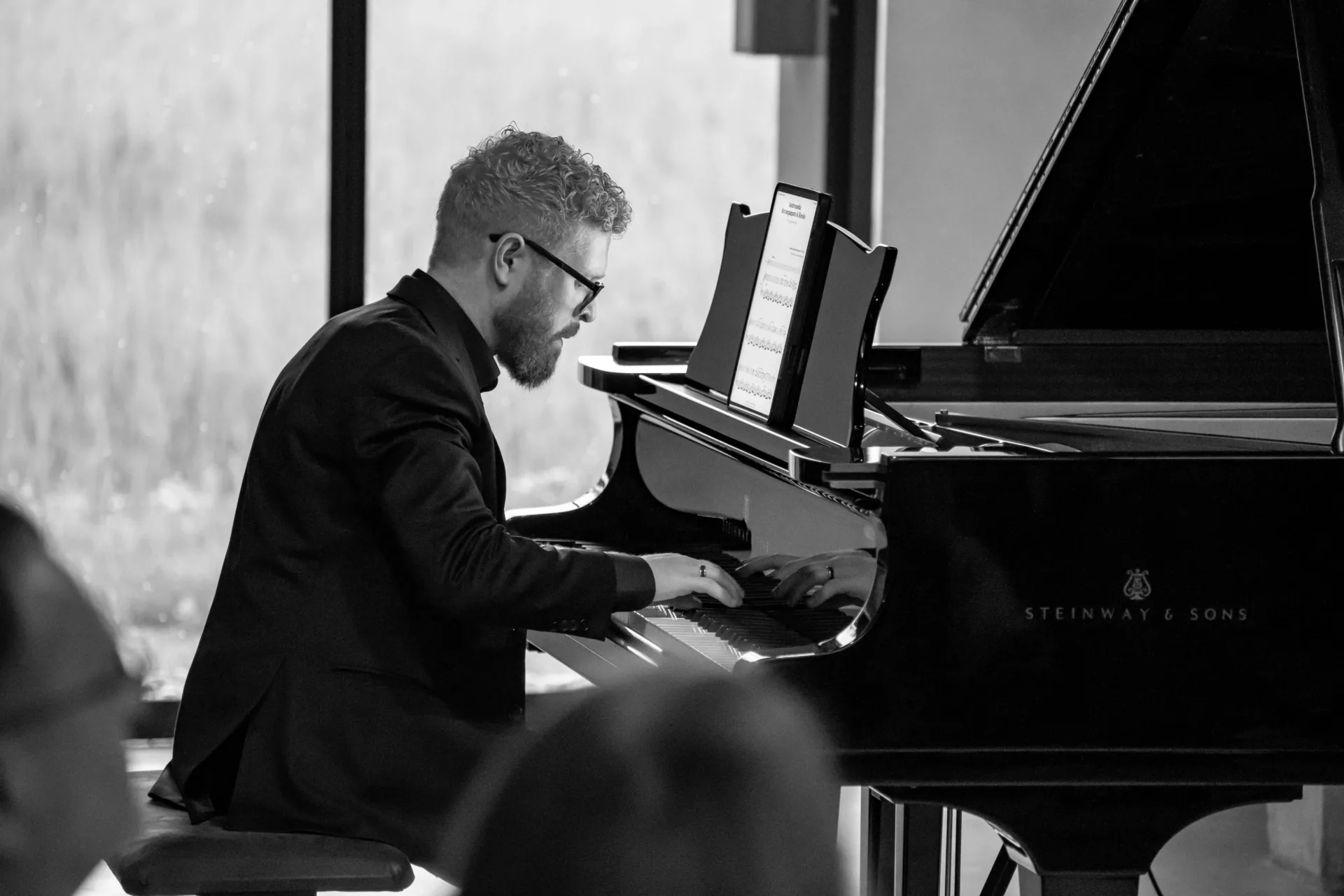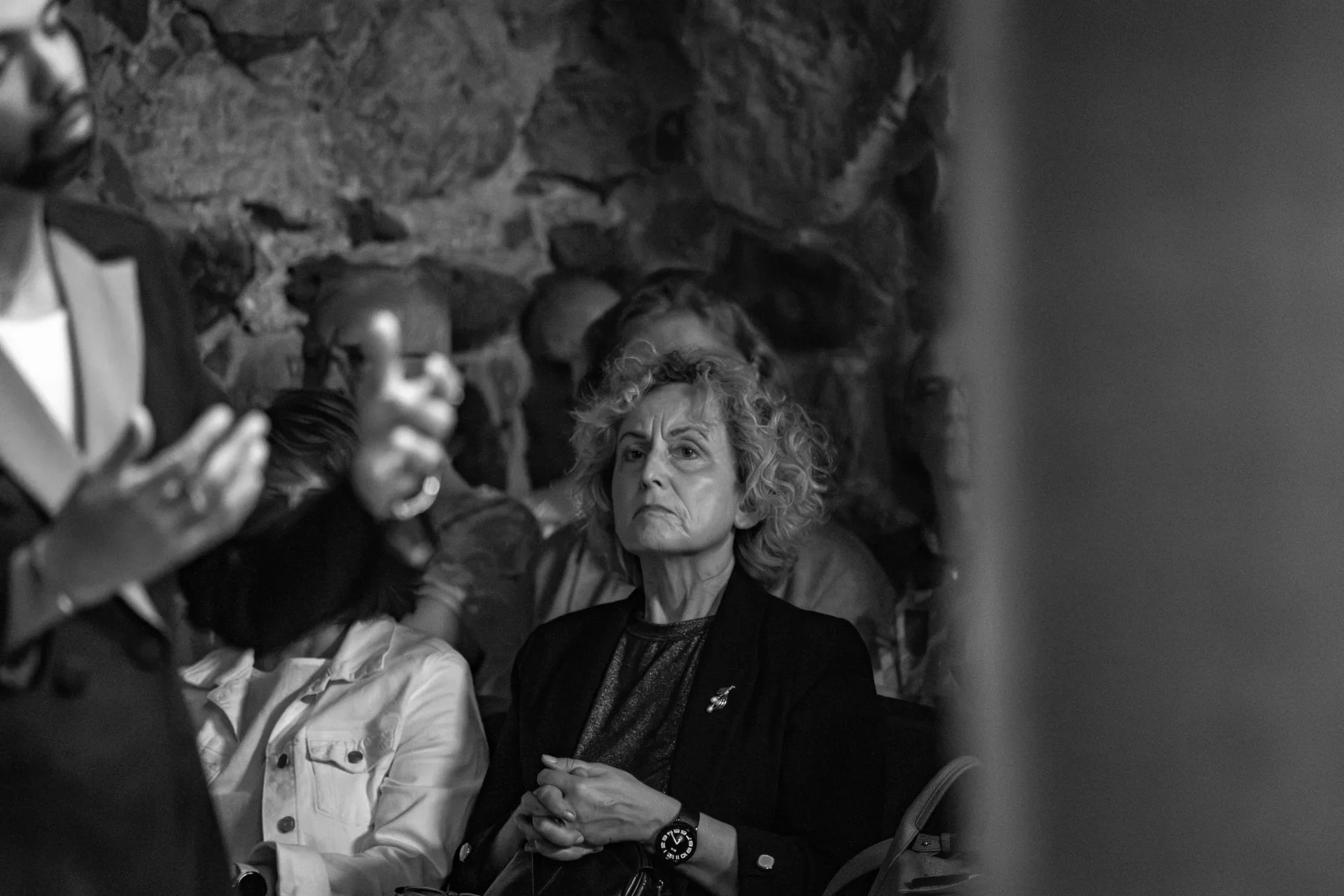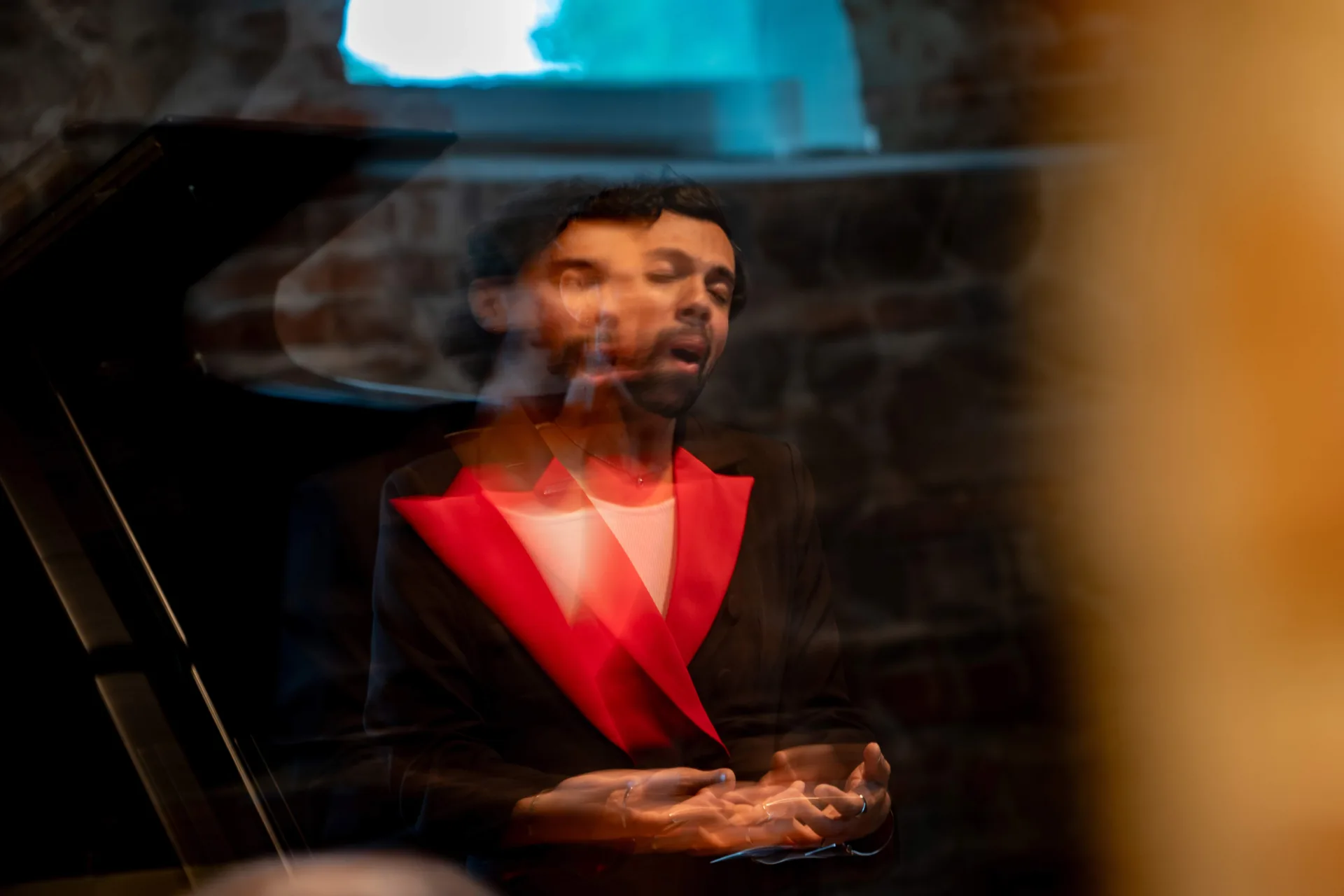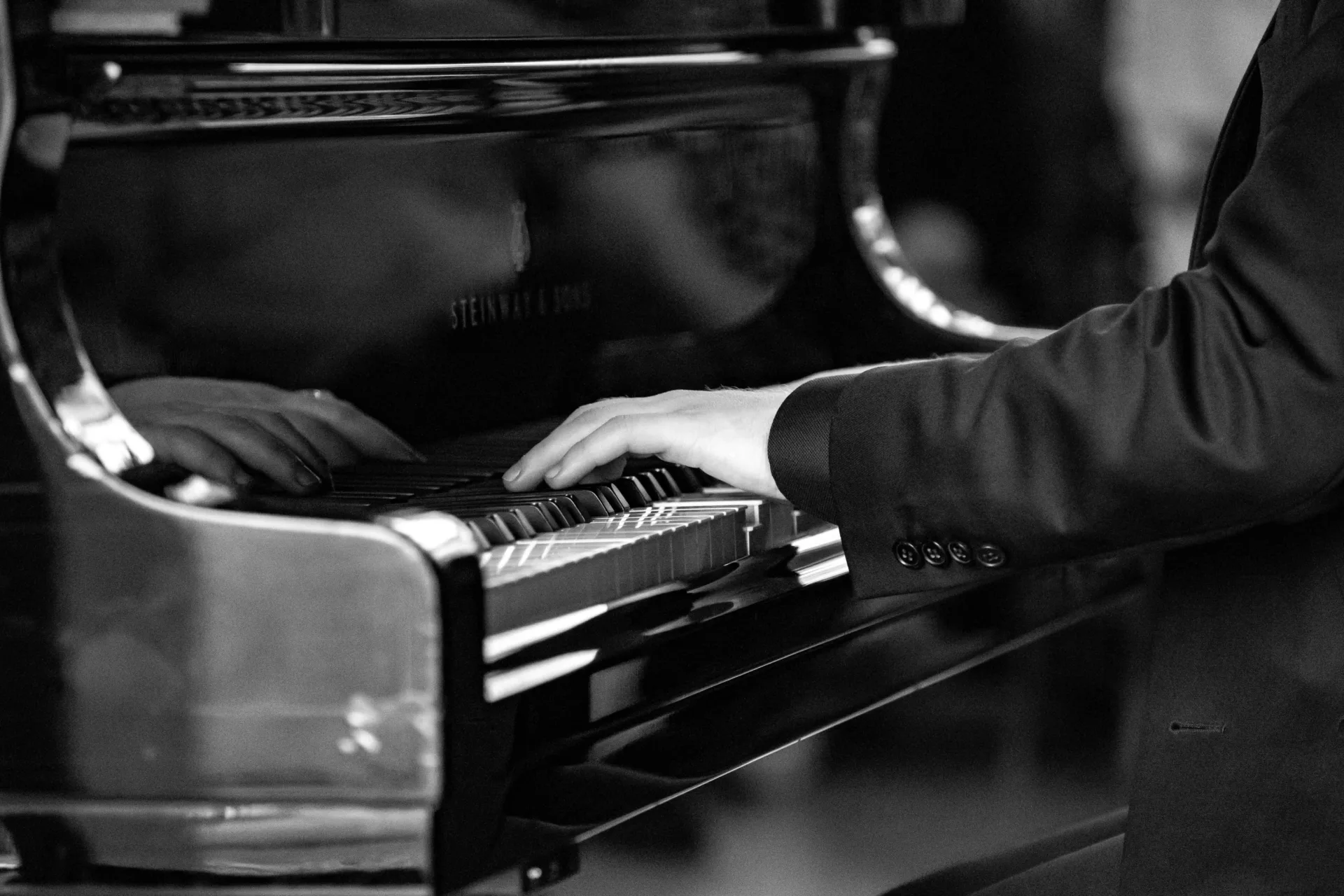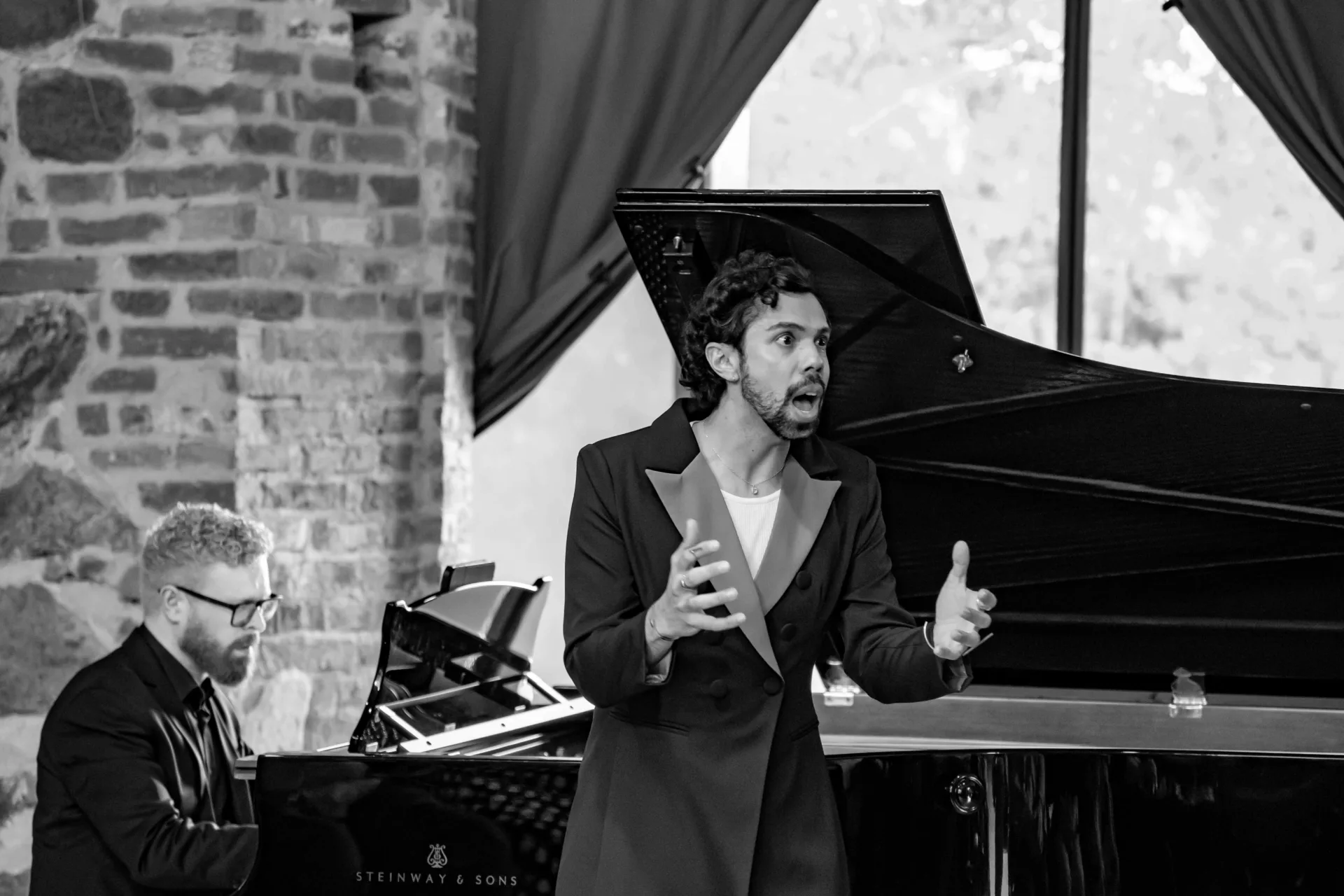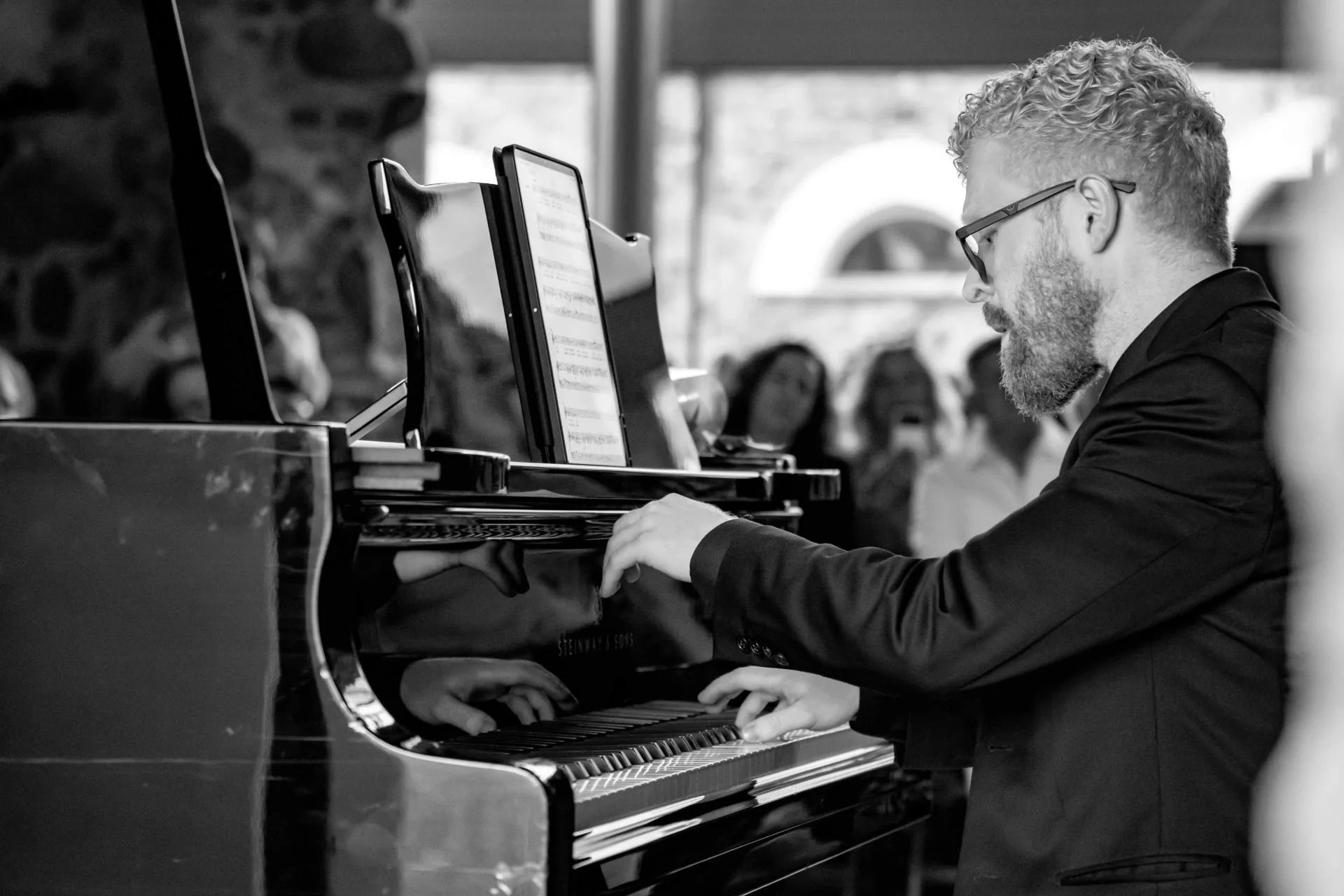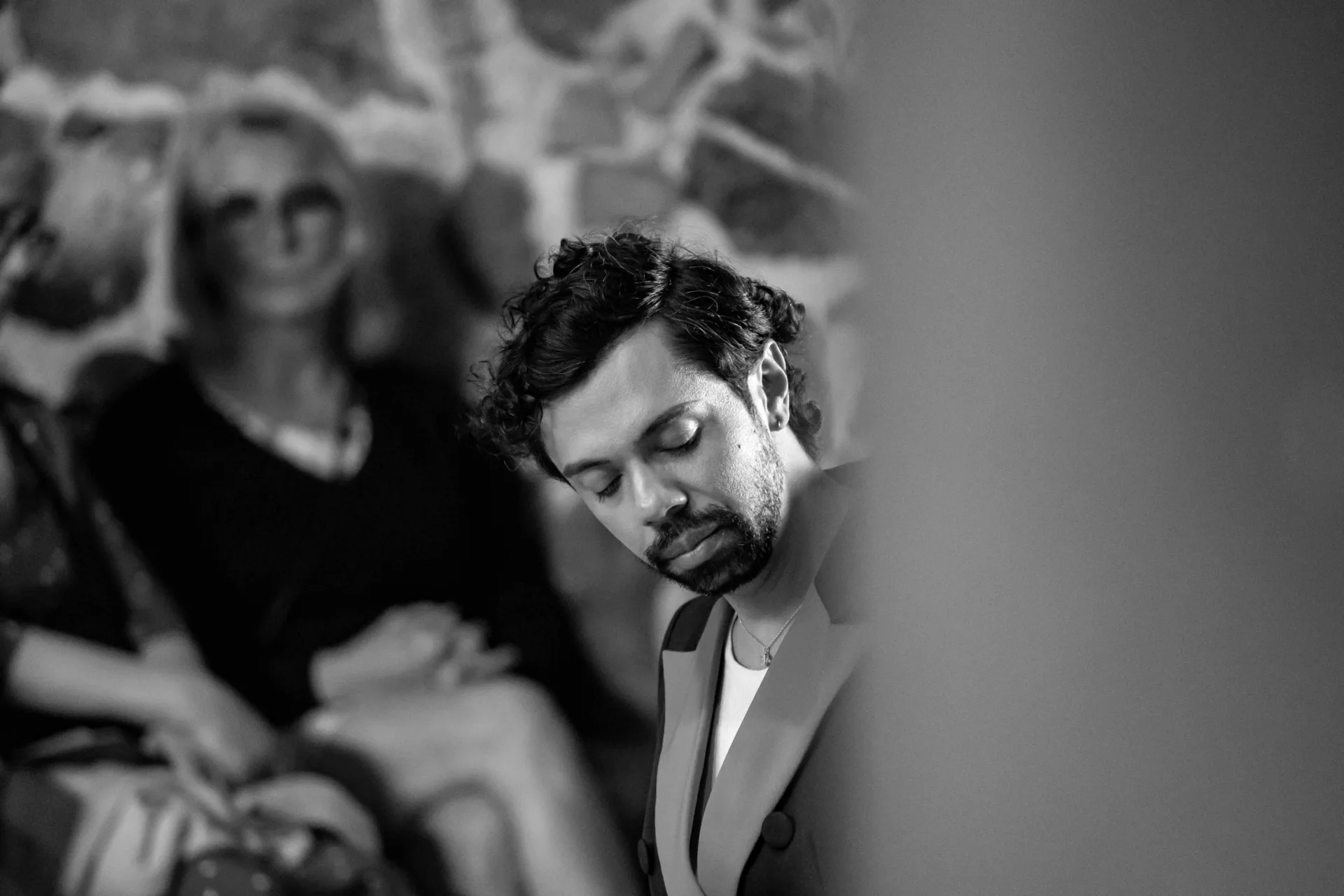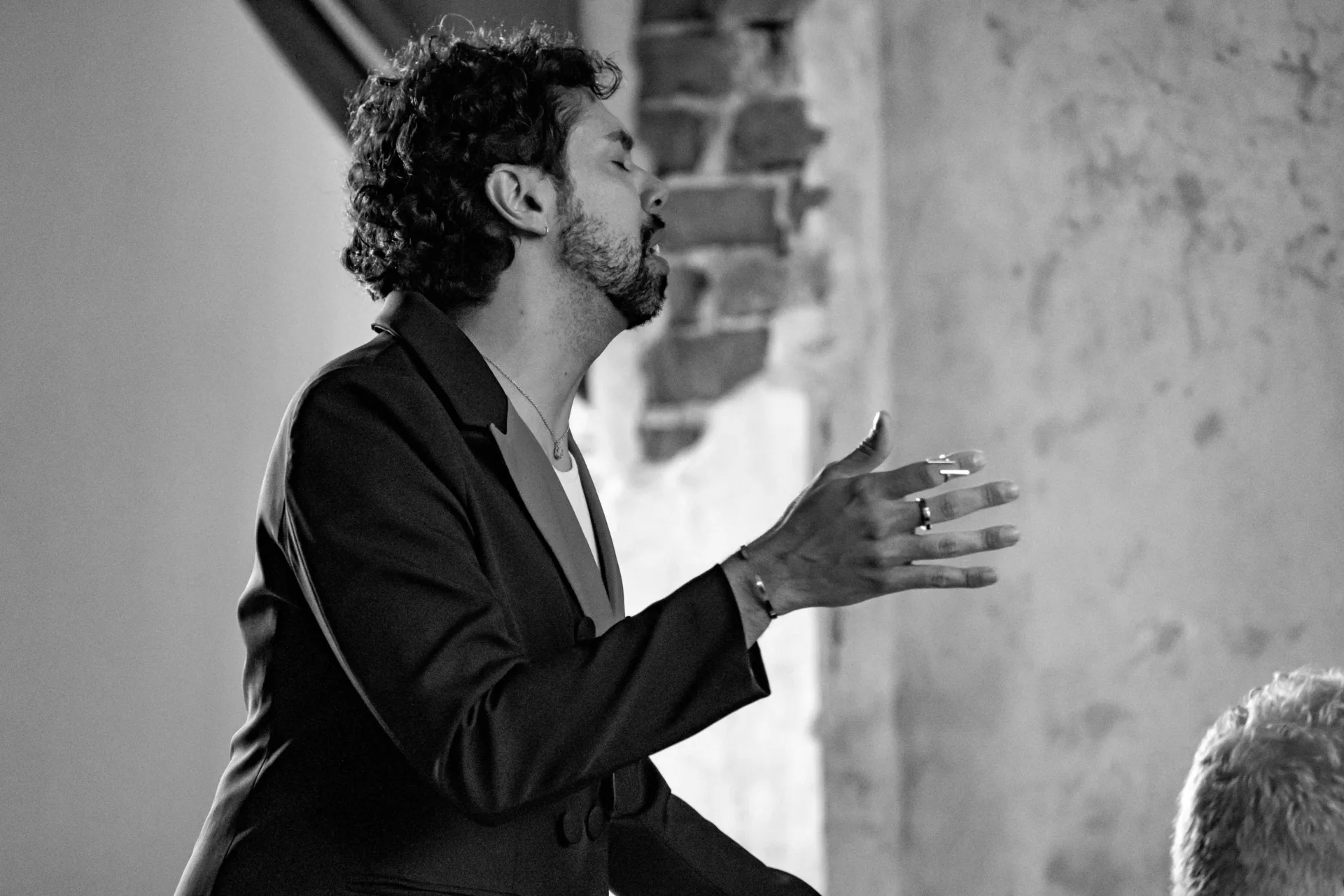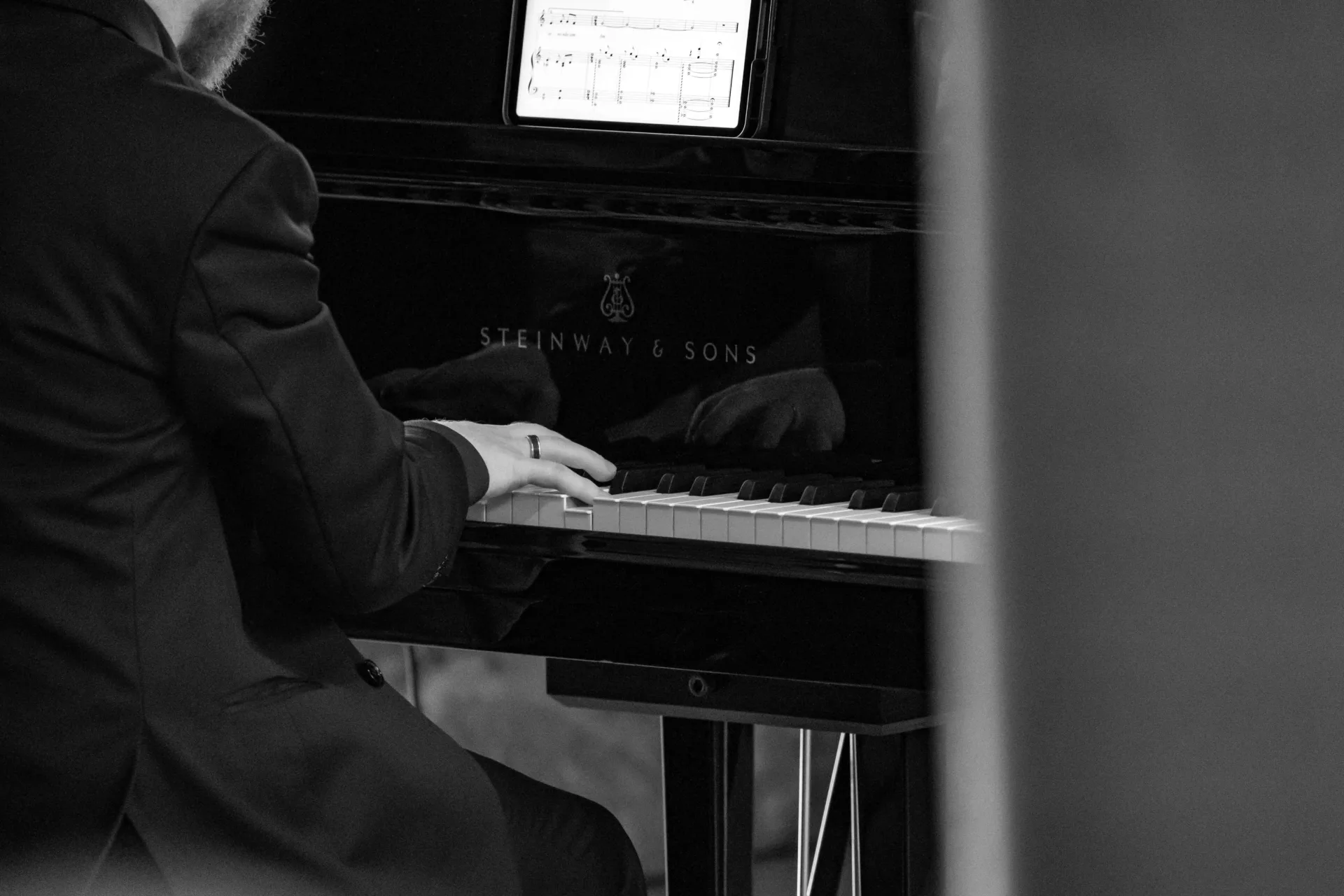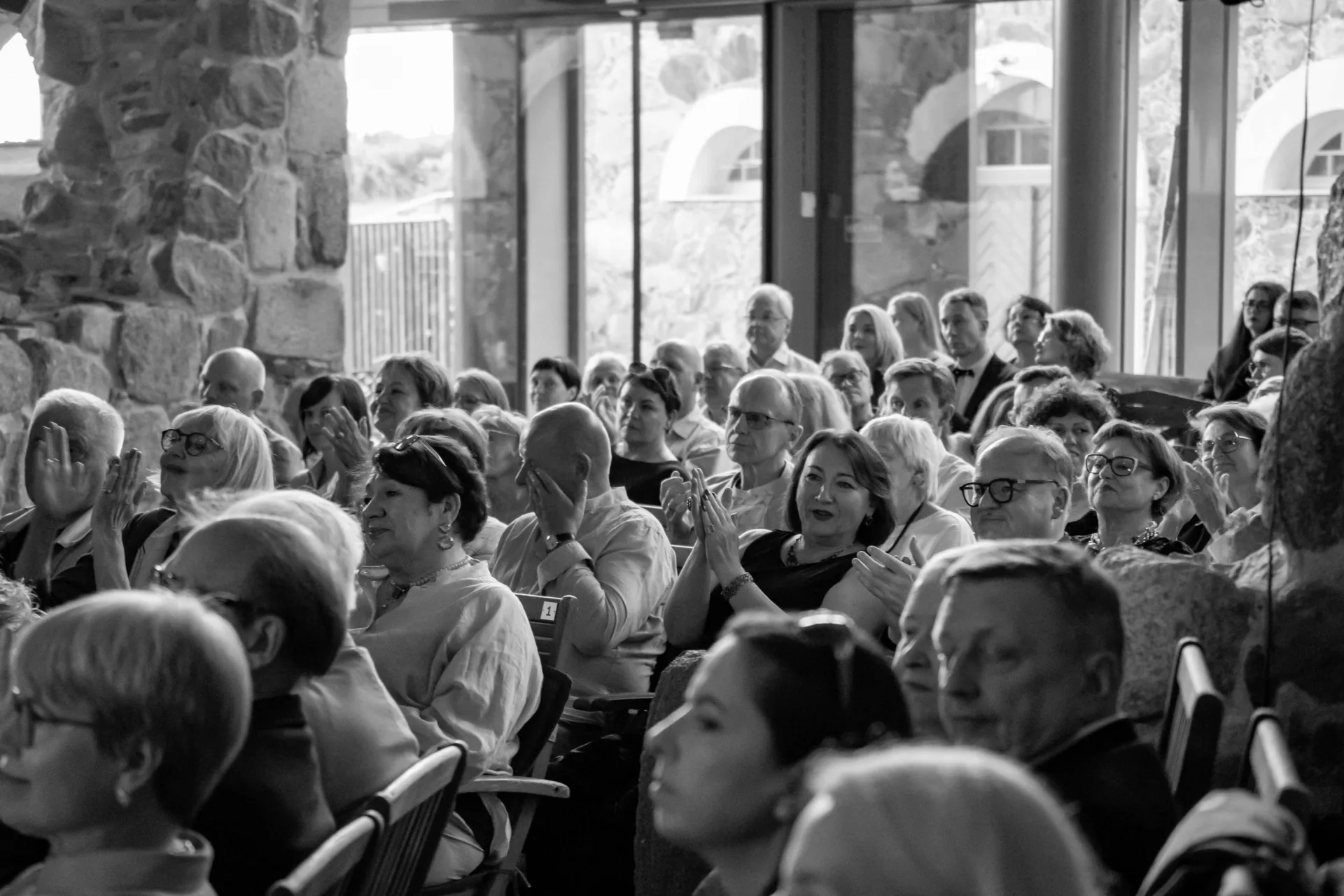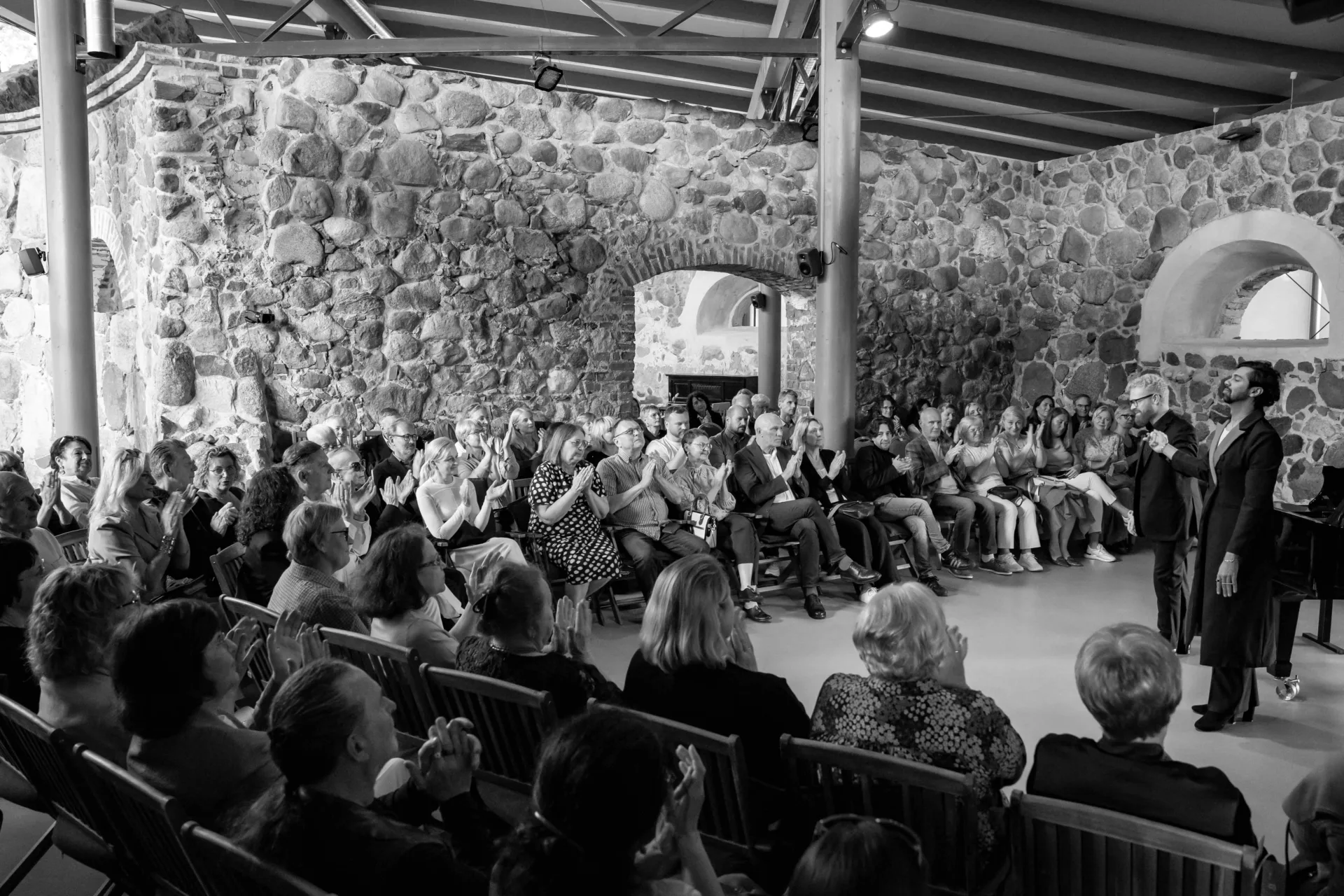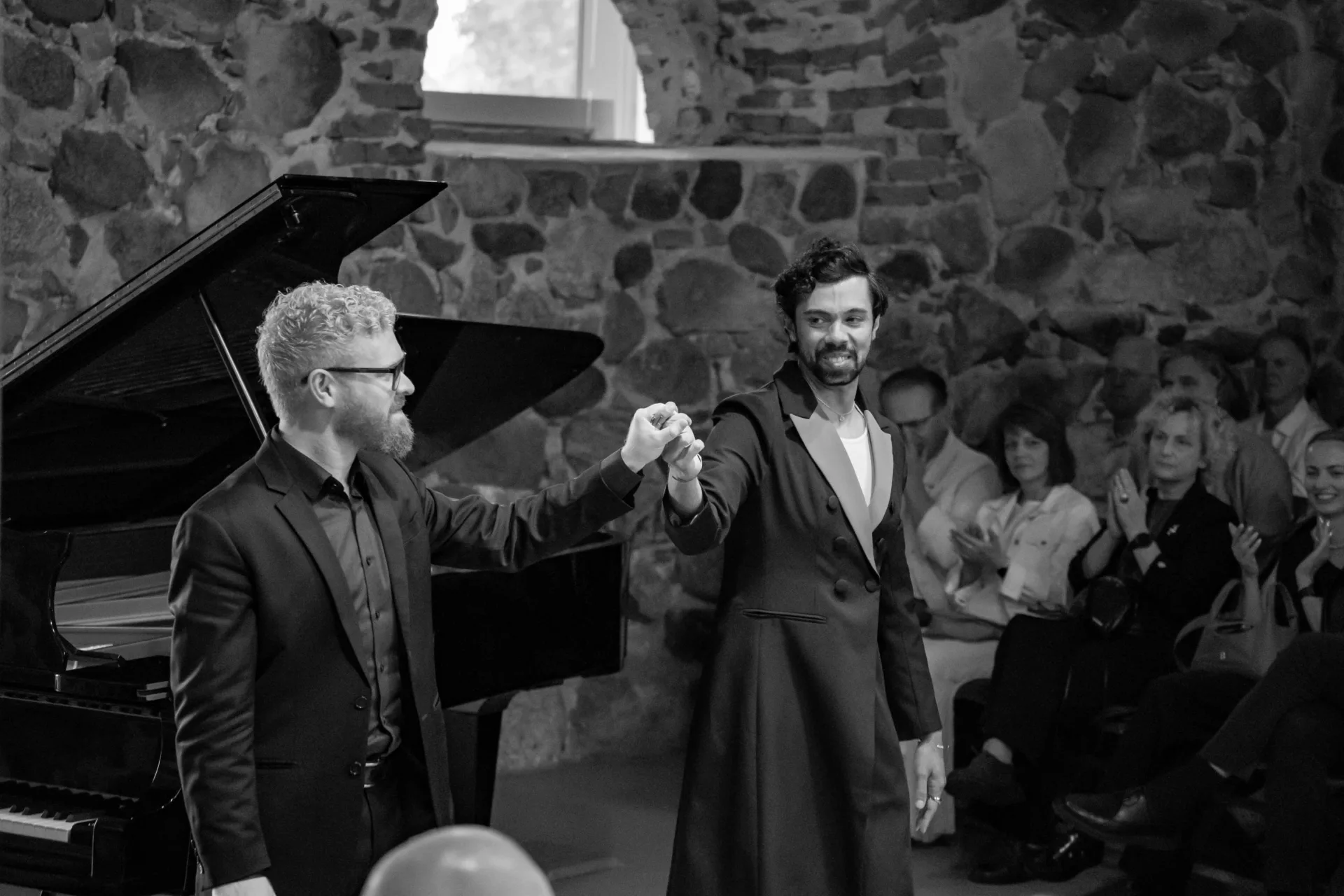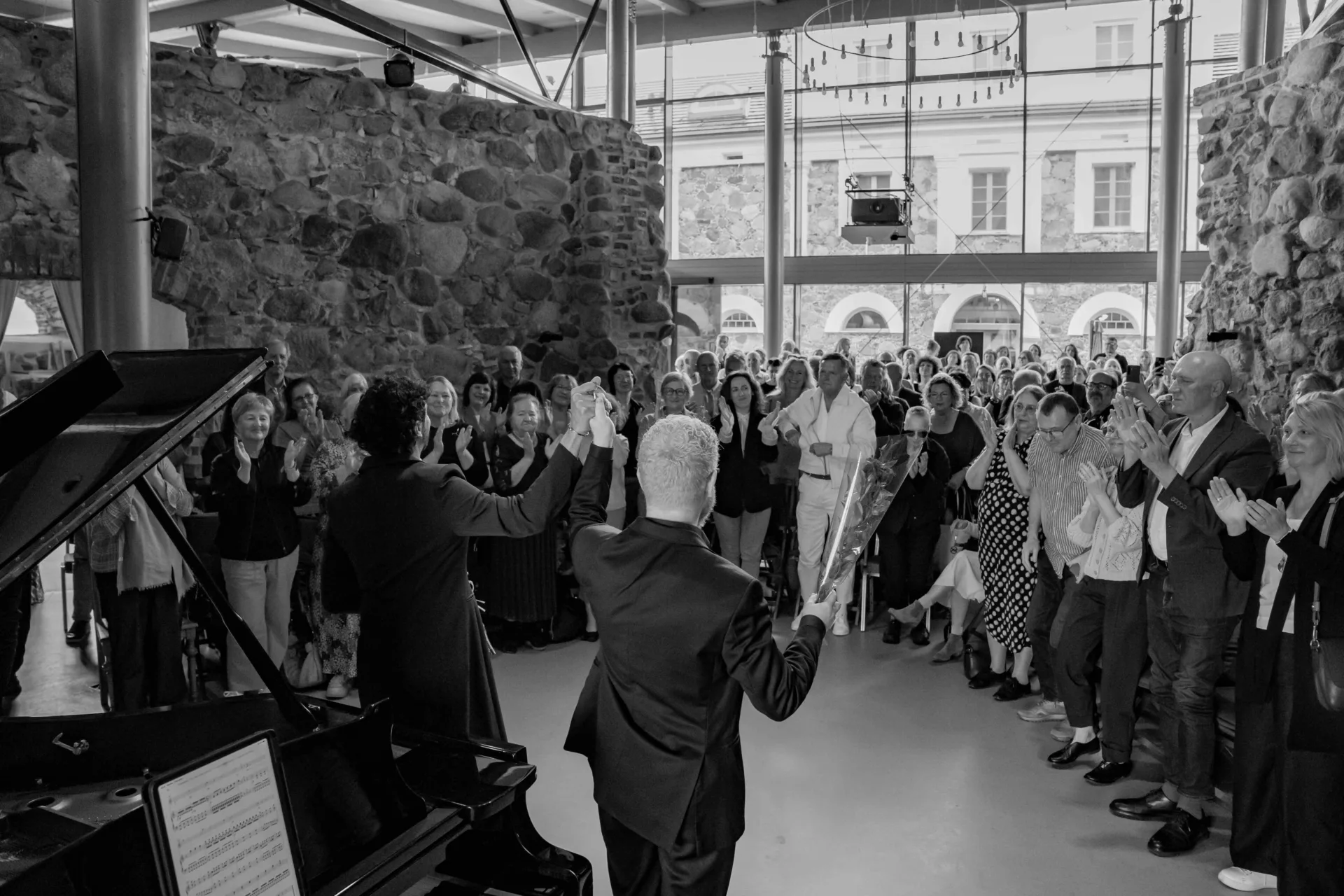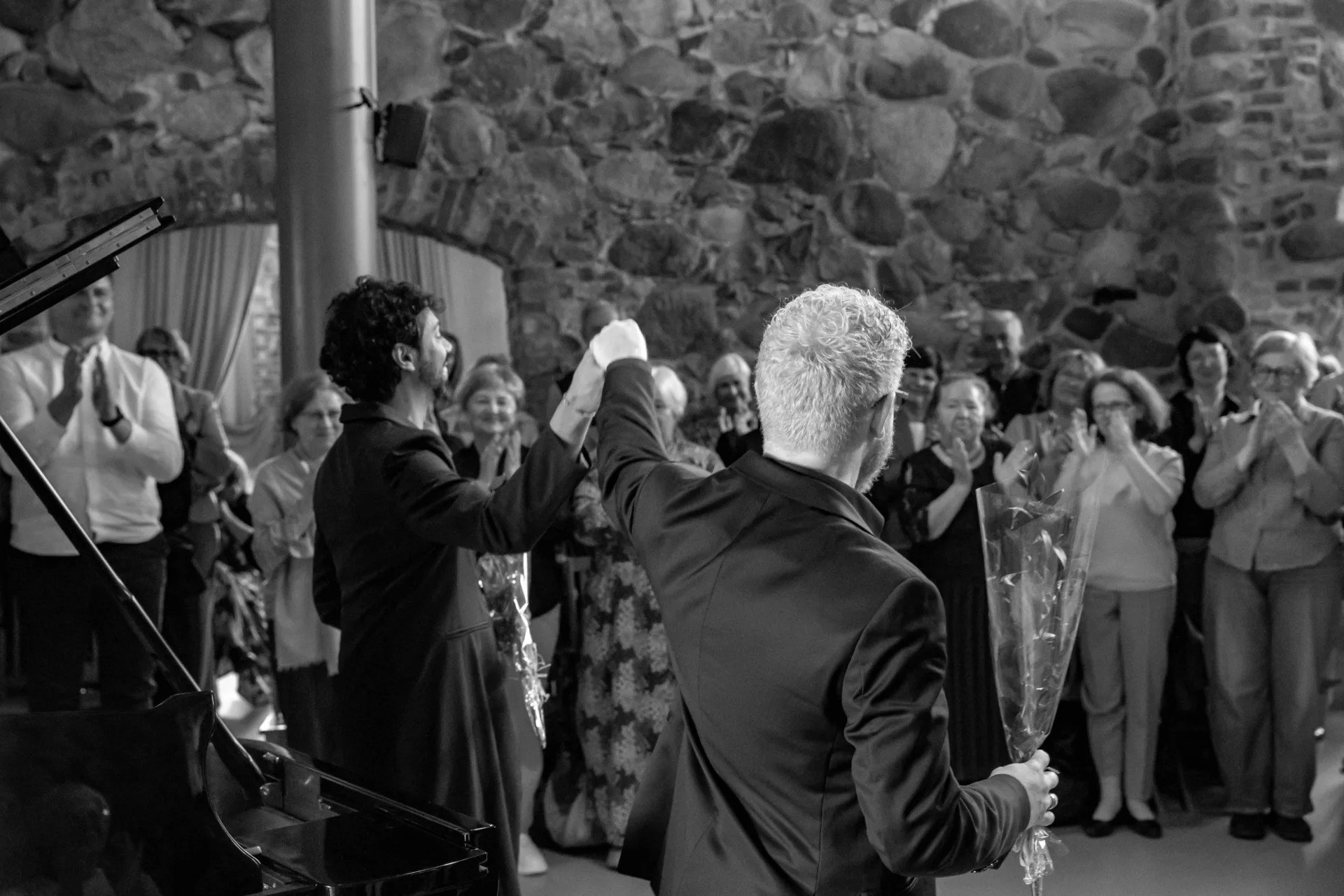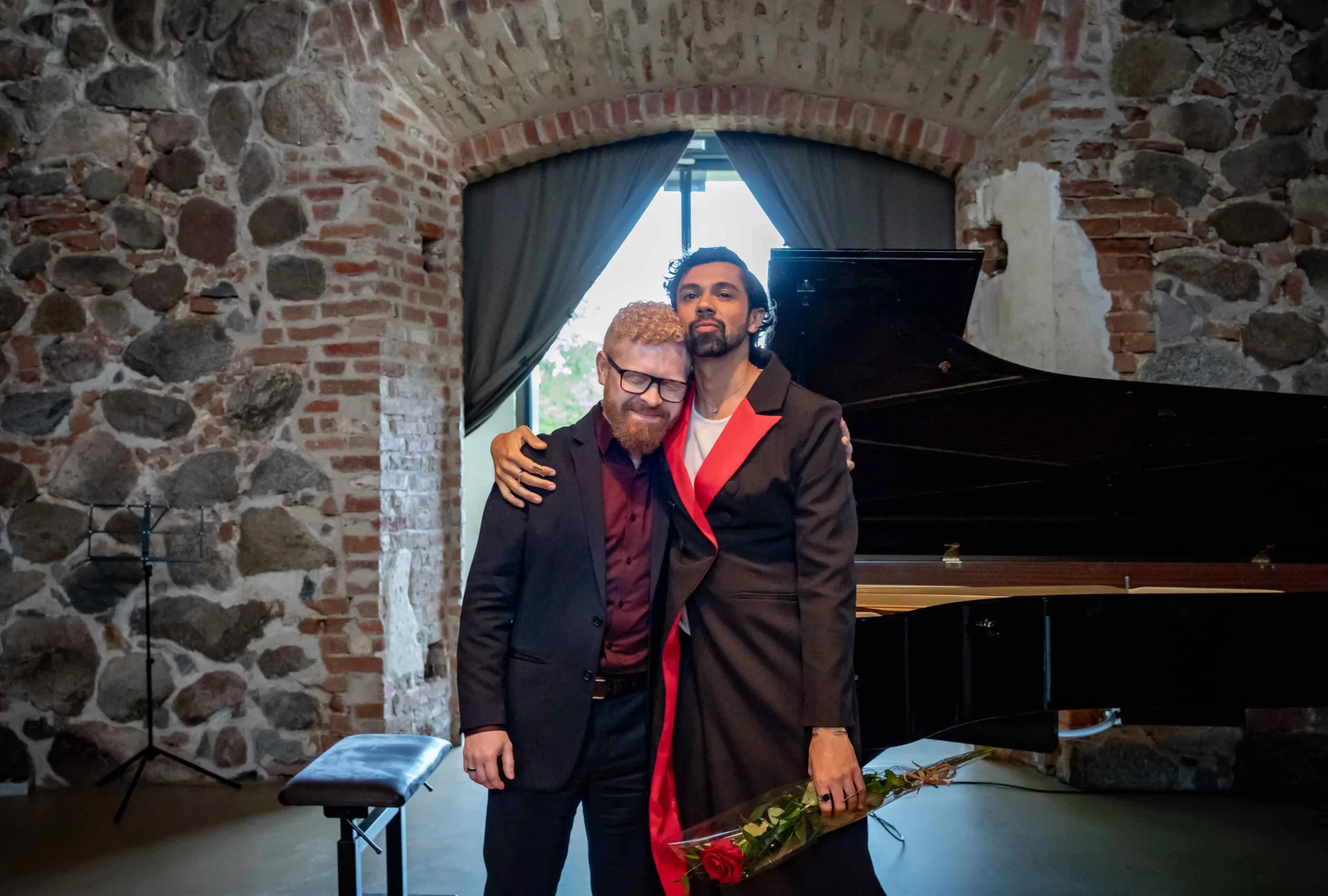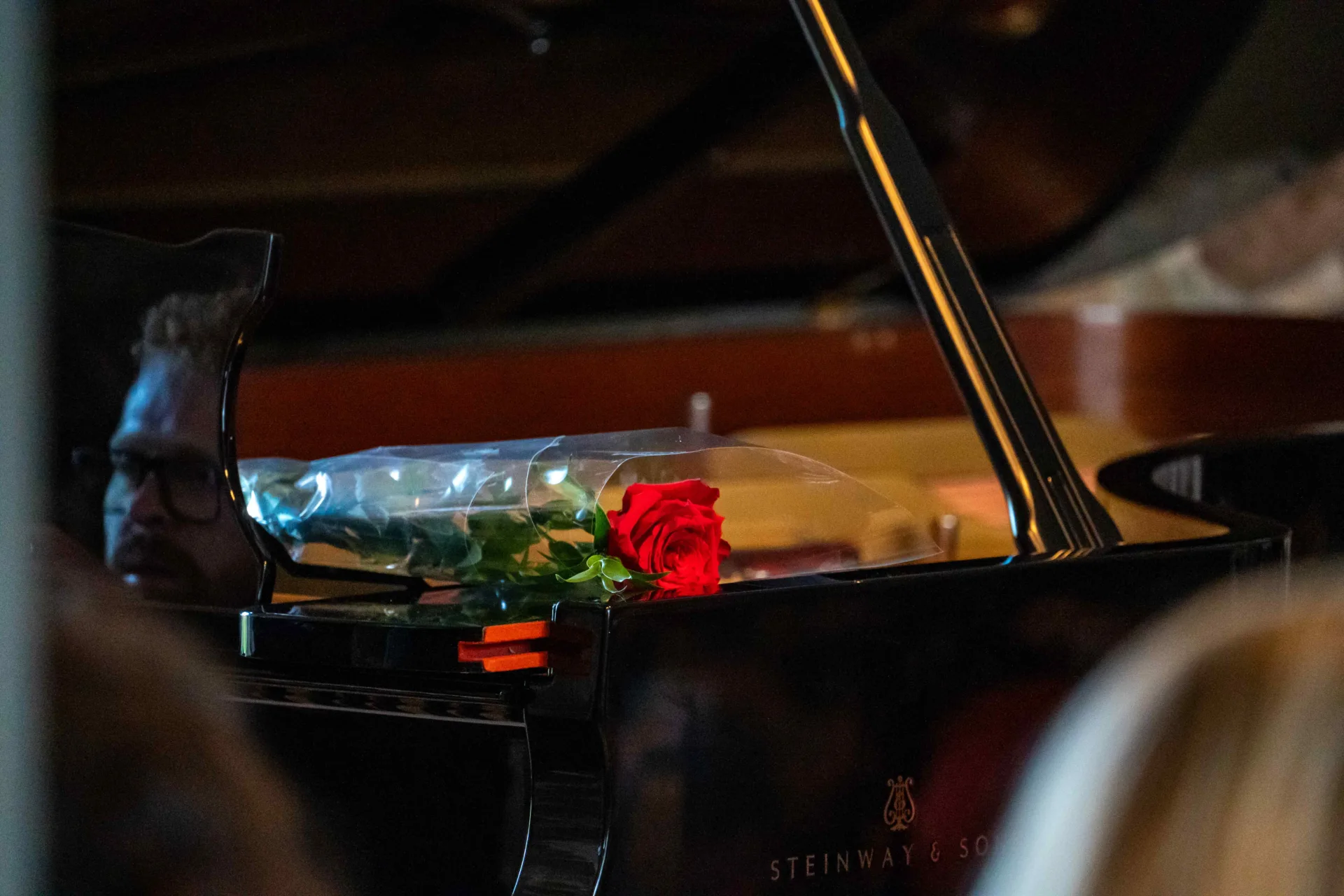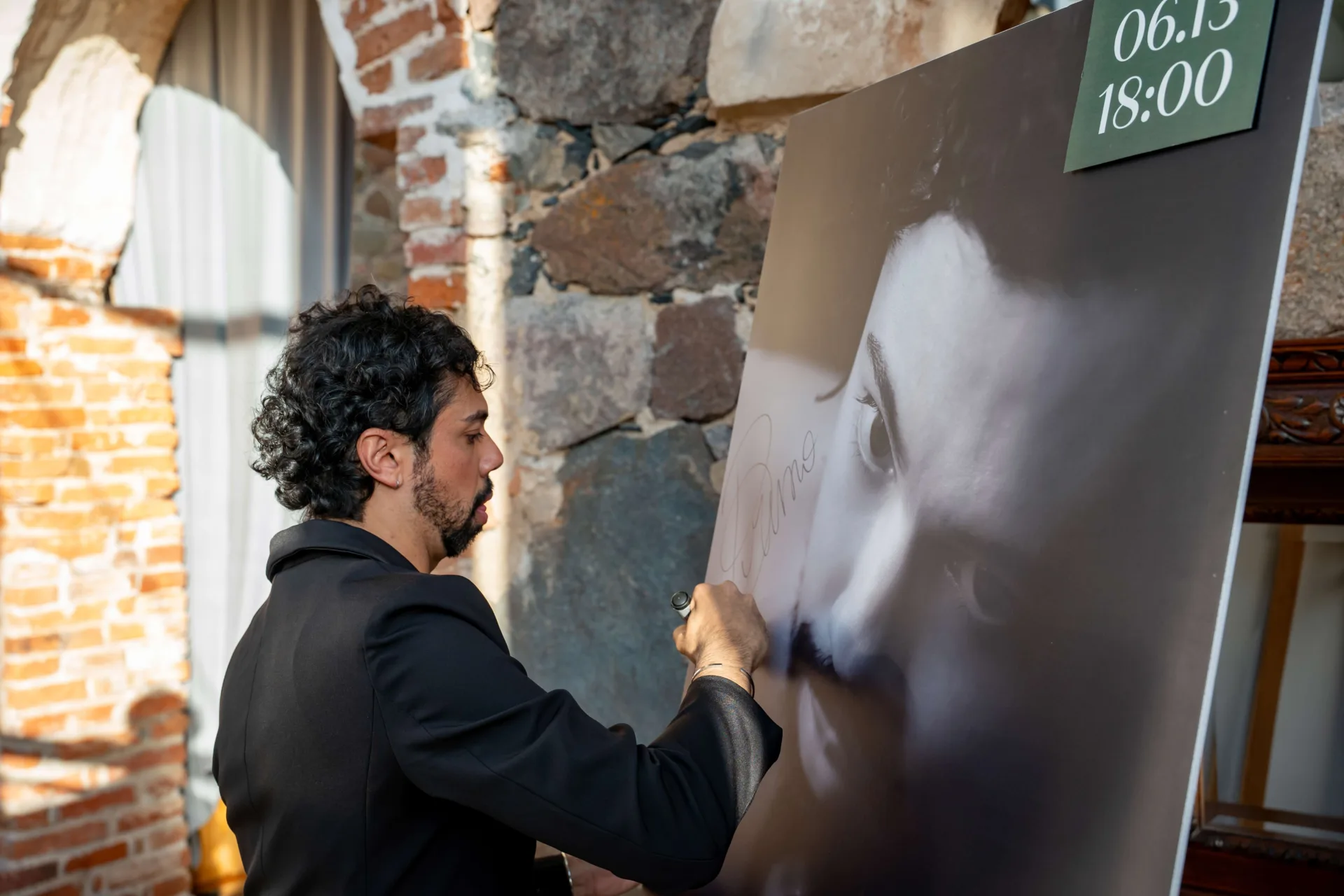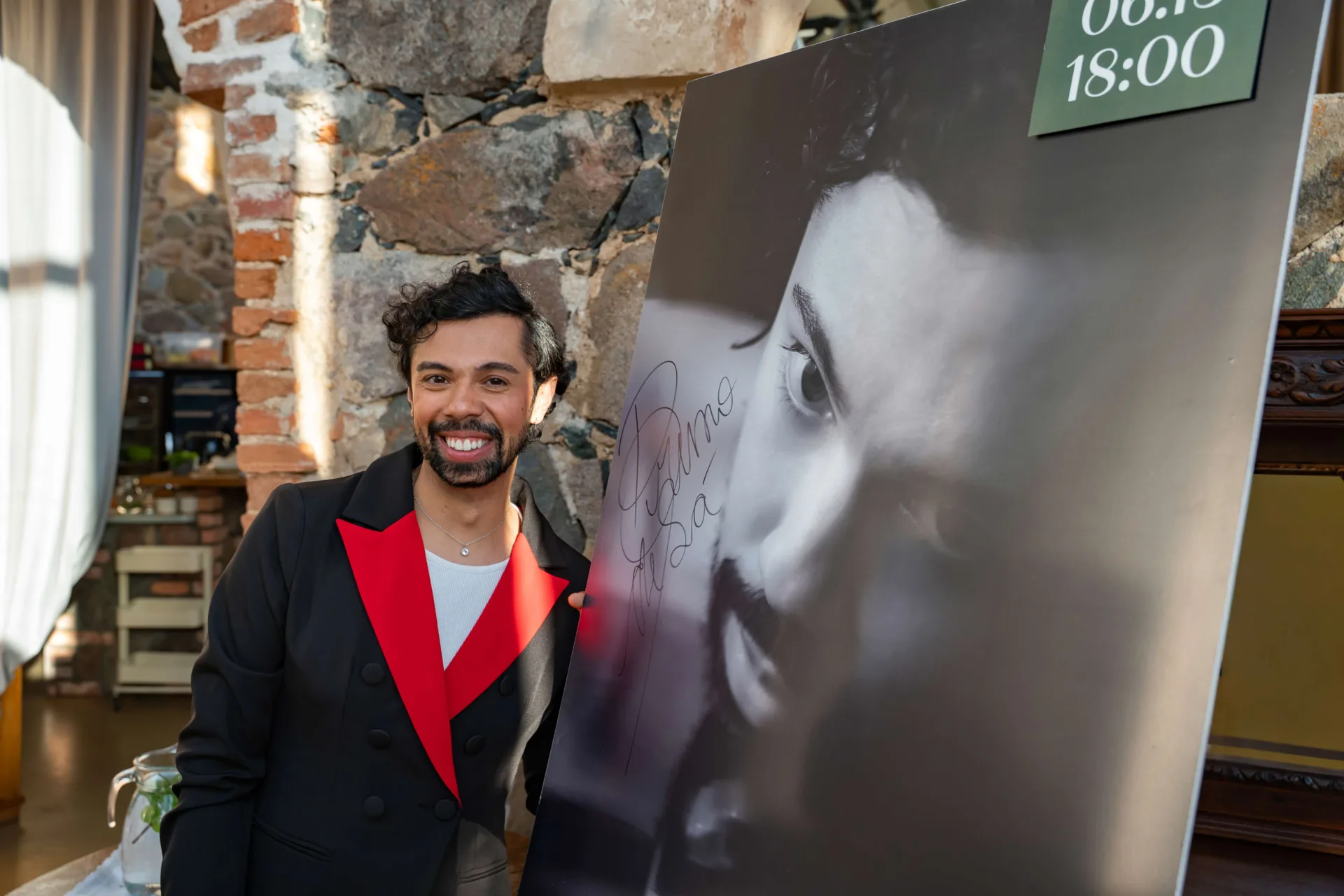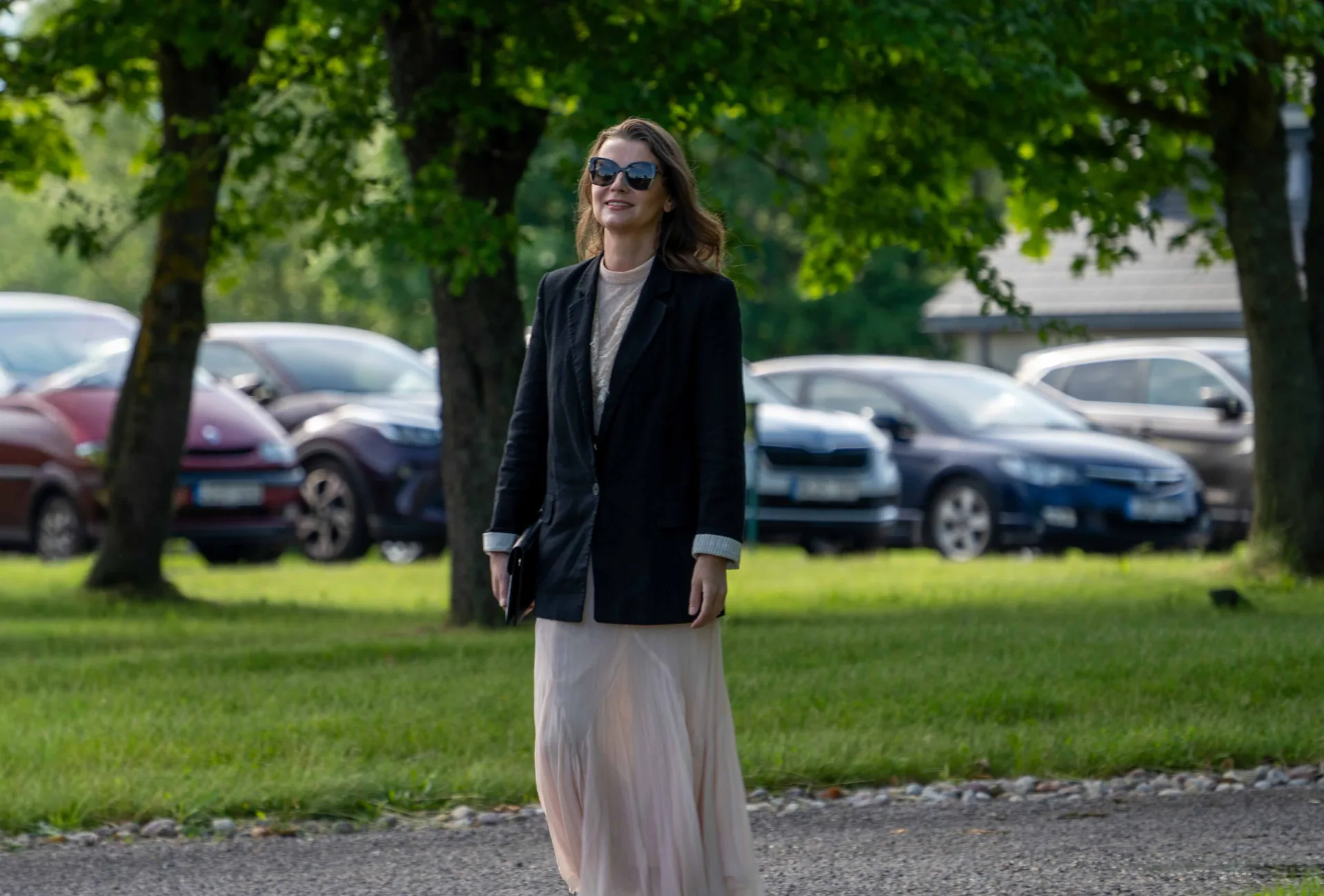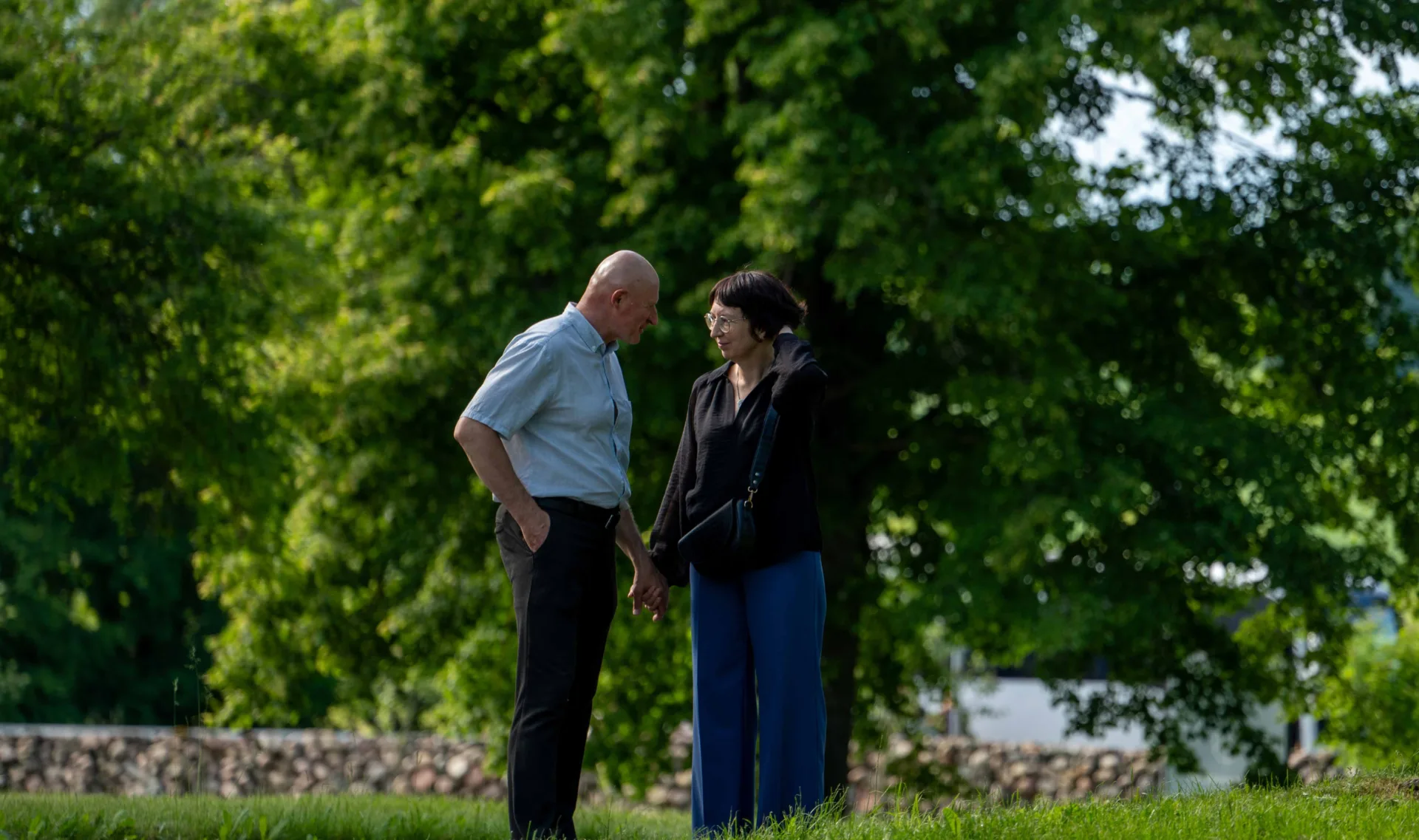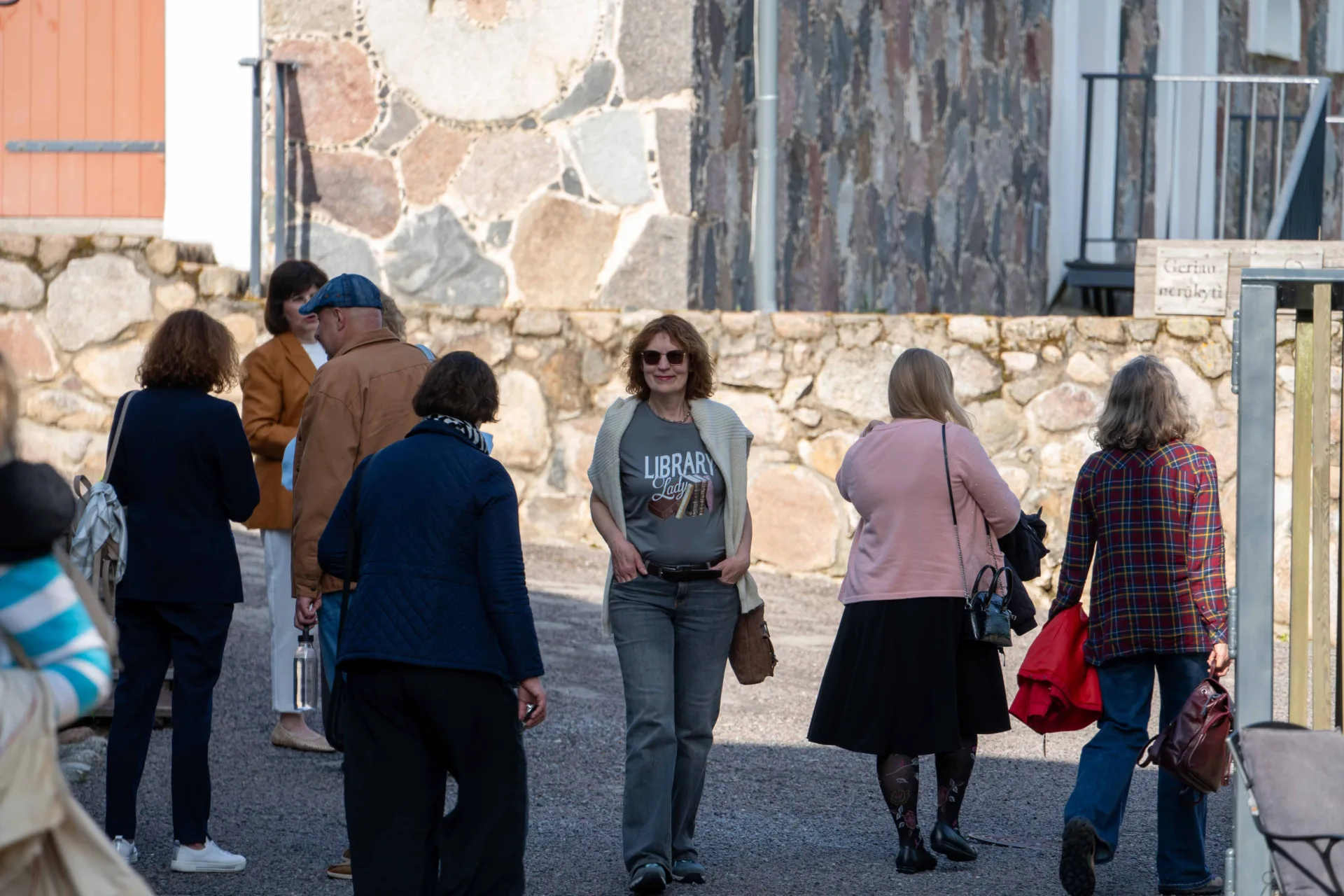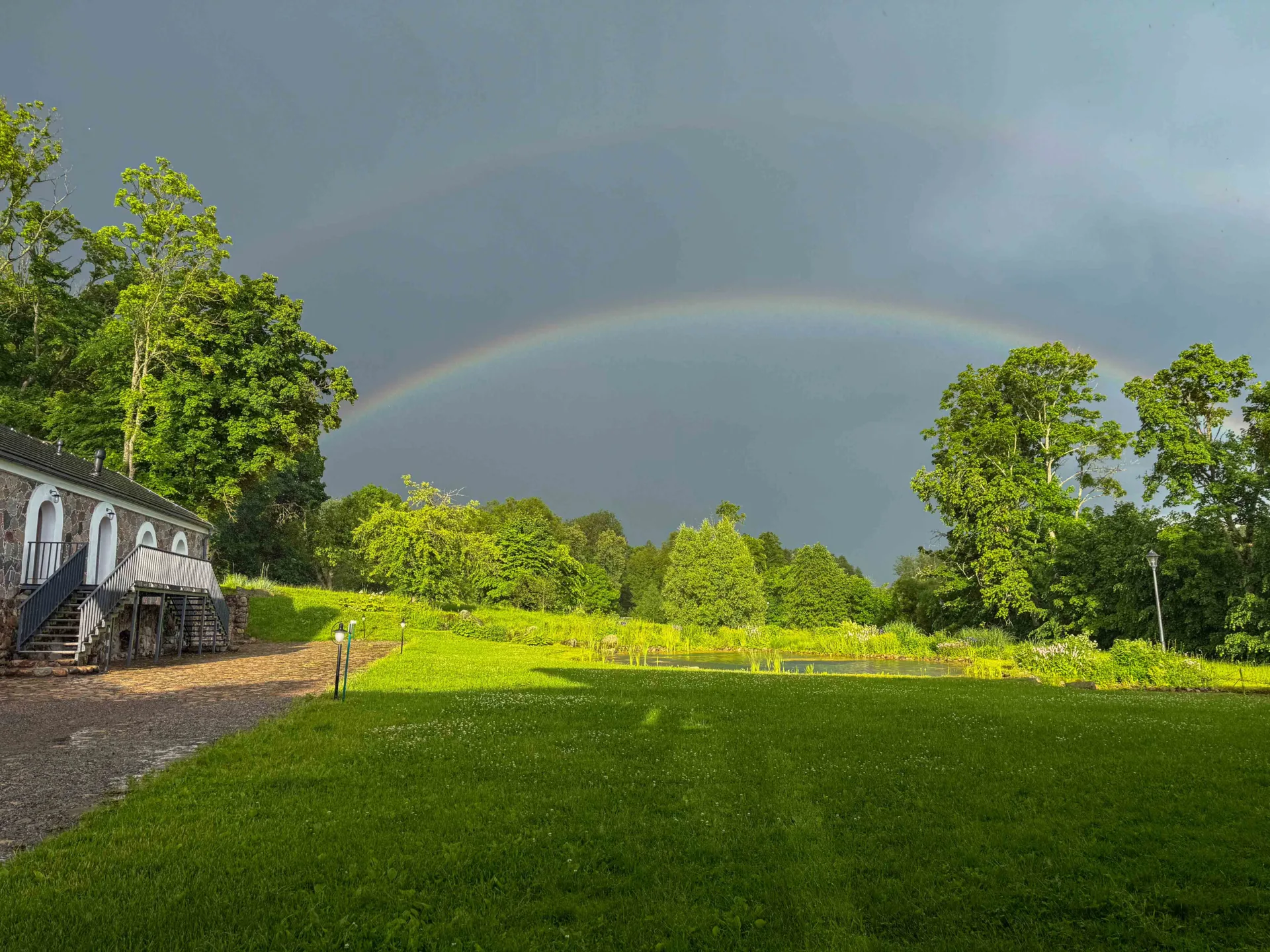
We share moments from the concert „Mille Affetti“ by one of today’s most prominent and interesting male sopranos, the Brazilian Bruno de Sá, and pianist Marcos Vinicius Vieira.
Photos by Simas Martinonis.
Journalist Valdas Puteikis’ review of the concert:
“Both Brazilians, both musicians born in the same suburb of São Paulo, currently live and work in Berlin. Last Saturday evening, when a downpour began to lash the Kančiogina bog, they delighted classical music lovers gathered in the full Horseshoe Hall of Paliesius Manor with their extensive program of works – from Baroque to Classicism. Male soprano (sopranino) Bruno De Sá and pianist Marcos Vinicius Vieira performed pieces from the singer’s second CD “Mille Affetti”.
One of the five currently highly successful performers with the rarest voice in the world, 35-year-old Bruno De Sá, stands out with an exceptionally high natural voice that is not falsetto-based (countertenors achieve soprano or alto vocal registers by using and developing falsetto), and is therefore considered a unique phenomenon in contemporary classical music. A male voice sounding in the soprano range is usually associated with music performed by women or boys, and in the Baroque era, when women were forbidden to appear on the opera stage or sing in solo manor concerts, castrati performed their vocal register arias or songs (among them the most famous was Farinelli (1705–1782), and the last castrato to brilliantly perform soprano parts is considered to be Alessandro Moreschi (1858–1922)).
Thus, with a naturally sounding soprano voice, today’s world stages are graced by Venezuelan Samuel Mariño (b. 1993) from Caracas, American Michael Maniaci (b. 1976), Moldovan Radu Marian (b. 1976), Israeli Maayan Licht (b. 1993), and, of course, yesterday’s guest at Paliesius, Bruno De Sá (b. 1989). From the age of two, Bruno attended the Evangelical Church of São Paulo with his parents and sang in its choir from childhood, where his exceptionally high timbre was noticed. His laryngeal structure is smaller than that of a standard male, and his vocal cords are distinguished by unusual elasticity, so his voice remained a coloratura soprano even after puberty. It sounds like a flute or an oboe. Incidentally, Bruno began his musical studies as a flutist and clarinetist, later completing vocal studies at the University of São Paulo. After his debut in Brazil in 2016, he moved to Europe, where he appeared in G. F. Händel’s oratorio “Messiah” and sang G. Rossini’s late work “Petite messe solennelle”. As an opera performer, he debuted and triumphed at the São Paulo Opera House, performing the role of Sesto in W. A. Mozart’s opera “La clemenza di Tito”. In Europe, Bruno’s first steps are related to the Italian Baroque composer Nicola Porpora’s opera “Polifemo”, in which Bruno created the mezzo-soprano role of Aci in 2019 (in the premiere performance in 1735, this was done by Farinelli). Although often invited to perform Baroque parts, Bruno strives to cover a much wider repertoire spectrum – with soprano parts from works by W. A. Mozart, V. Bellini, G. Donizetti, and G. Verdi.
His first solo album „Roma Travestita“ was released in September 2022 and received compliments from both music critics and audiences worldwide. The program was successfully presented in Versailles, Rouen, Bayreuth, São Paulo, Izmir, Cremona, Vilnius, and Buenos Aires. And in October 2024, Bruno, in collaboration with artistic director and conductor Jarek Thiel and the Wrocław Baroque Orchestra, released „Mille Affetti“ – his second solo album, dedicated to his favorite composer – W. A. Mozart and his contemporaries. The piano version of this CD with pianist Marcos Vinicius Vieira was presented to the audience of Paliesius Manor yesterday – from the coloratura-subtly sounding W. A. Mozart’s “Exultate Jubilate”, the dramatic aria of Perseus from Johann Friedrich Reichardt’s opera “Andromeda”, Luigi Caruso’s “Il fanatico per musica”, Felice Alessandri’s “Alessandro nell’Indie” (“Se possono tanto luci vezzose”) to Luigi Cherubini’s “Il Mesenzio, rè d’Esturia” and the encores chosen to captivate the audience: G. F. Händel’s “Lascia ch’io pianga” and a very gentle Brazilian lullaby…
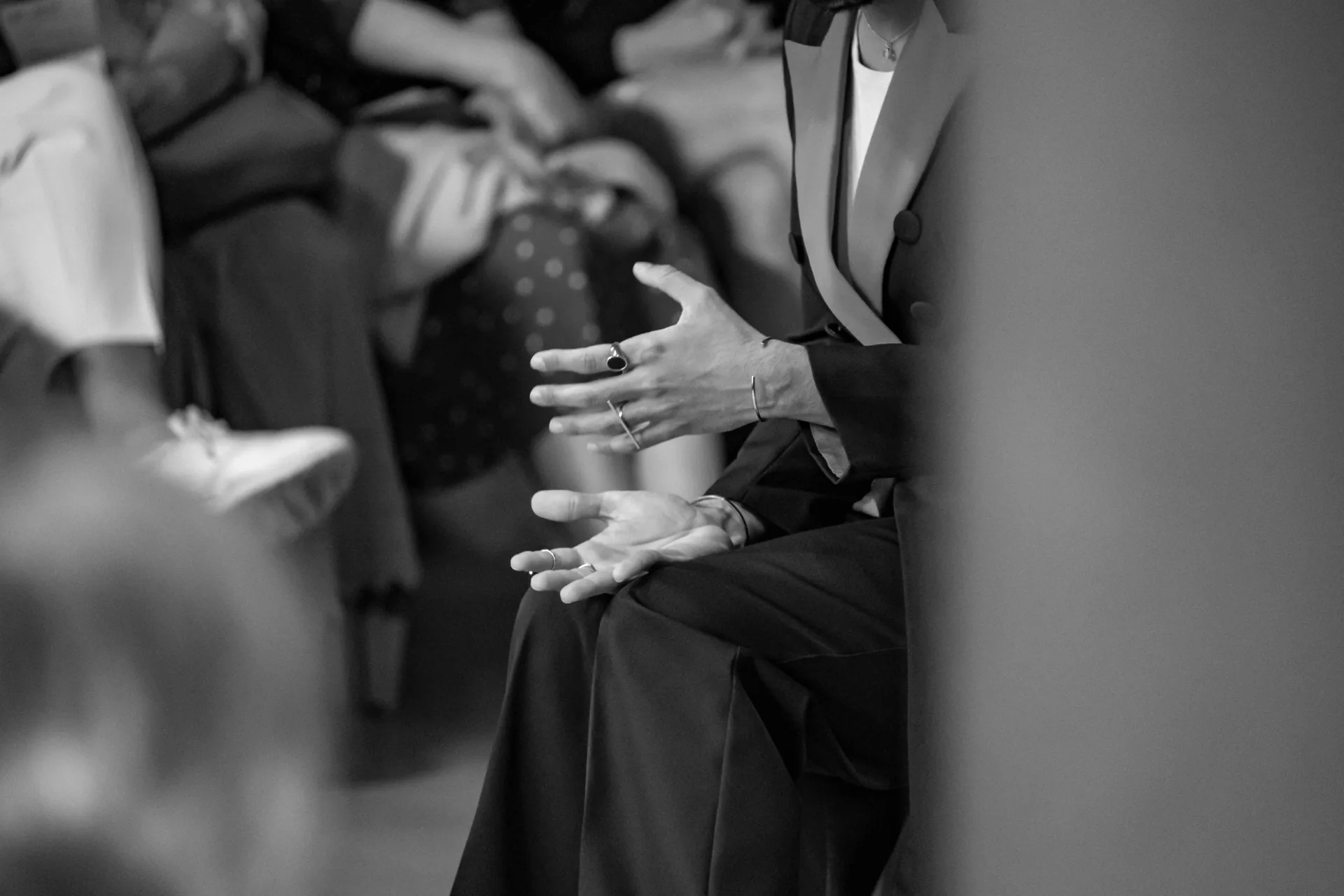
The performer’s image, stage presence, hand gestures, and acting mastery at the concert appeared so delicately subtle and organically inseparable from his vocal talent that every movement, every facial expression, and every glance served to allow Bruno to once again believe in the immortality of music from the Baroque and Classical eras.”