

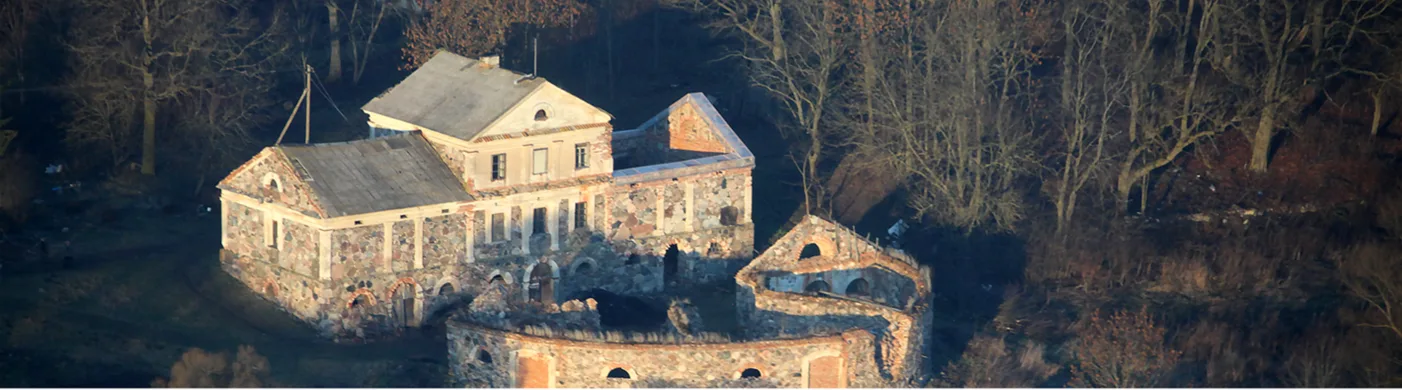
Paliesius Manor remembers the seventeenth century, a time when Count Tyzenhauz acquired the estate here, and a modest bathhouse and brewery stood proudly beside the Kančiogina stream. With its unique landscape and mysterious diversity, nature itself whispered the locale’s name: that which lies by the little forest, or *paliesiuje* (a word of Slavic origin). Thus the area of Paliesius was born, with Paliesius Manor becoming its heart.
Historical documents from 1671 mention the Tyzenhauz family as the owners of Paliesius Manor.
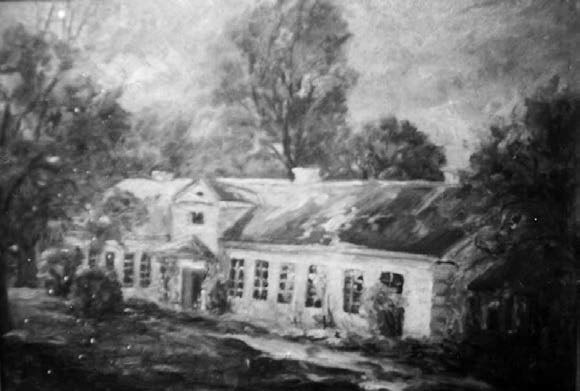 Photograph discovered in the archives. | 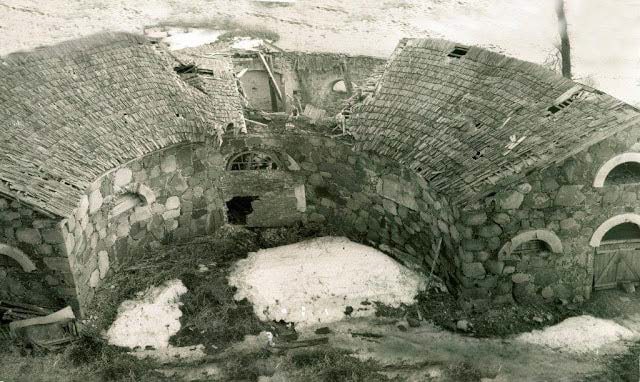 Photograph of the former barn (now the PASAGA concert hall), circa 1970. |
As the years passed and the estate’s hosts changed, the manor itself transformed. The nineteenth century is considered the estate’s golden age. From 1736, the manor belonged to the Kublickas family of Livonian government officials (the Livonian cupbearers Justina and Kazimieras Petras Kublickas), who were connected by marriage to the Soltanas family, nobles of the Grand Duchy of Lithuania. Under the stewardship of the Kublickas family in the early nineteenth century, a residential house with stables was built, known today as the Overseer’s (Steward’s) House. Beside it rose a barn of an unusual semicircular shape, connected to the residential house by an enclosed courtyard. Only later did an unpretentious plastered-brick residential building—the main manor house—emerge, where the owners eventually took up residence.
Near this building stood a chapel and an icehouse, alongside a thoughtfully landscaped ceremonial courtyard-park. The fact that the family felt no rush to construct a grand residence suggests that the Kublickas family cared more for the working estate than for mere appearances. This is confirmed in letters written by the artist Vincentas Smakauskas to his wife, Emilija Kublickaitė, noting that the Kublickas brothers were modern farmers with the latest equipment, a large and impeccably orderly estate, and a rich manor library. In 1779, the Kublickas family also funded the construction of the Mielagėnai church. Indeed, Paliesius Manor was even more prominent than the town of Mielagėnai, serving as a major hub of Lithuanian agricultural prosperity and cultural life; it was during this time that the entire architectural ensemble of Paliesius Manor took shape. The brothers Stanislovas and Adolfas Kublickas were also active organizers and participants in the 1831 uprising in the Užneris district, which ultimately forced them to retreat to Prussia.
The aforementioned Vincentas Smakauskas also lived at the manor, where he painted the renowned artwork „Steponas Batoras steigia Vilniaus universitetą“. The Mielagėnai church is graced by his majestic paintings „Šv. Matas Evangelistas“, „Šv. Morkus Evangelistas“, „Šv. Lukas Evangelistas“, and „Šv. Jonas evangelistas“. Its high altar is adorned with his „Šv. Jonas Krikštytojas“, while the presbytery features „Jėzus Kristus Nukryžiuotasis“. In 1838, he sculpted the magnificent stucco figures of St. Peter and St. Paul that embellish the portico, as well as the Kublickas family busts and memorial plaque found in the presbytery.
From the mid-19th to the mid-20th century, the manor endured a period of decline. In 1887, Paliesius Manor was purchased at auction by Liubimov, who became the estate administrator around 1900; the property was subsequently taken over by Povarova. The latter sold the estate to Major General von Ekse. Following his passing, his widow, Marija Dmitrijevna von Ekse, sold off the manor lands and mortgaged what remained to the Vilnius Land Bank. In 1921, Romualdas Bržezinskis became the owner of the estate, yet before the Second World War, as this part of Lithuania fell into Belarusian territory, the manor was nationalized. Following the 1940 nationalization, the estate was turned over to the Cirkliškis collective farm. During the Soviet years, the water mill and other manor buildings fell into ruin, and the property was plundered. It is worth noting that in 1956, the manor house, though in poor condition, was still standing. In 1974, by decision of the collective farm, permission was granted for its demolition.
A portion of the information discovered in the archives:
Situation in 2009:
Fragments from the restoration project materials:
The manor was restored by architects D. Ferguson and J. N. Ferguson. Read more about the project.
Changes in the manor:
It is always worthwhile to look back and trace the path we have traveled. PALIESIUS MANOR was also presented at HERITO, the international exhibition of cultural heritage management and technologies held in Vilnius in May 2019. This provided a wonderful opportunity to remember how, through professionalism and exacting standards, beauty can be drawn from ruins.
The present:
Paliesius Clinic
When the manor’s reconstruction began, one of our primary visions was to weave together wellness and holistic hospitality. Today, resting upon the original foundations discovered near the northern entrance, a wooden annex houses the Paliesius Clinic for Heart Health and Physical Exercise Therapy. Only here, where the enchanting nature of Paliesius invites you to return and heal, was it possible to establish an exceptional clinic whose primary method of healing is the body itself.
Treatment is grounded in specialized, purely evidence-based expertise, gathered through patient care using this method at the Mayo Clinic in the US. It is also proven that the finest therapeutic results blossom when clinical practice meets a holistic environment—thus, Paliesius embraces both specialized clinical care and a holistic approach, intertwining physical healing, lifestyle education, and positive emotions. These positive emotions are gently cultivated by resonant chamber music, while nature and history-infused walls invite you to relearn the art of living, and the body is nurtured through highly personalized clinical programs.
It seems this philosophy works. In 2019, Paliesius Manor was named the Lithuanian winner of the “Most Attractive European Health Tourism Destination 2019” award.
A Resonant and Inviting Manor
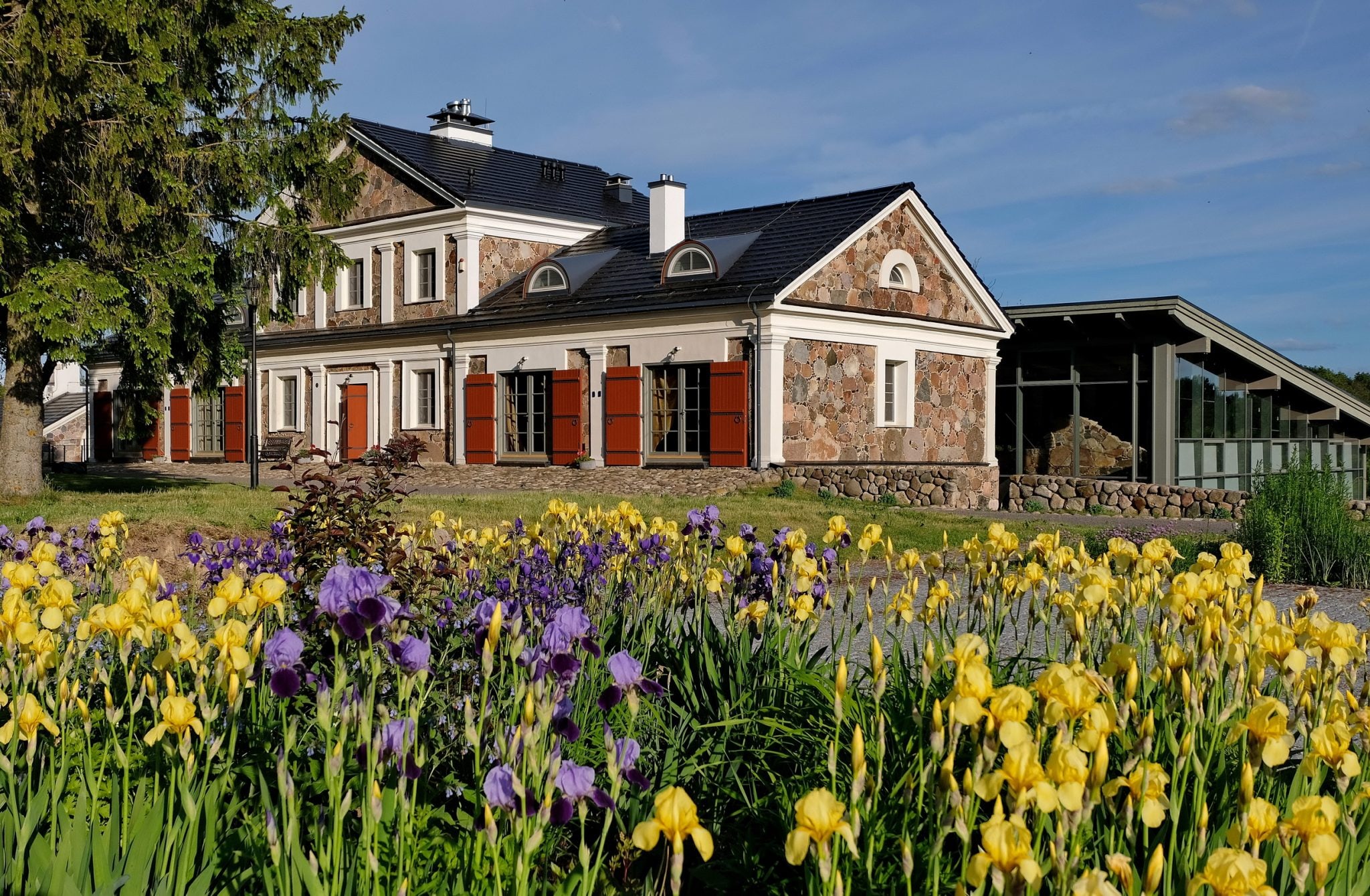
In 2015, the Lithuanian Restorers’ Association awarded Paliesius Manor the laureate diploma in their best restoration works competition—recognizing the implementation of new methodological solutions, as well as the complexity and innovation of the restoration. So, what unfolded here? The Steward’s House, now a haven of understated luxury, will pleasantly surprise those staying the night. In place of the former stables, a true cultural beacon has emerged: the PASAGA concert hall. Treasured for an intimacy that lets you feel every emotion of the performers, and for its unique acoustics, it is highly esteemed by the classical music elite, many of whom select this space for their recordings. Legend has it that due to these very acoustics, renowned classical musicians bypass even the capital’s grandest halls, journeying specifically to perform only at Paliesius Manor.
Within the historic Icehouse lies a boutique shop, where you will find a wide variety of rare goods and wares. Descend a little further, and the wine cellar awaits, sheltering 200 varieties of select French wines. Here, we host public and private tastings; you may also order a bottle to complement your meal, or purchase one as a gift for yourself or another. Where animal stalls once stood, the ground floor of the Steward’s building now hosts a restaurant and a mini SPA, elegantly framed by restored columns. Nearby, we cultivate a small garden of flowers and culinary herbs, which we use to garnish and flavor our dishes. The air is scented with the aroma of bread, pastries, and cakes, baked to authentic recipes in our bakery.
The grounds are embraced by an original fieldstone wall—not cemented, but uniquely stacked by hand. At the manor’s entrance, the oval parterre has been lovingly restored, complemented by walking paths, outdoor lighting, and a parking area. At long last, we have unveiled the cellars of the former Kublickis family residence, the manor’s historical owners, built in the 19th century and ultimately destroyed in 1974. And in summer, the outdoor terrace invites guests to luxuriate in a moment of rest with a cup of tea or coffee…
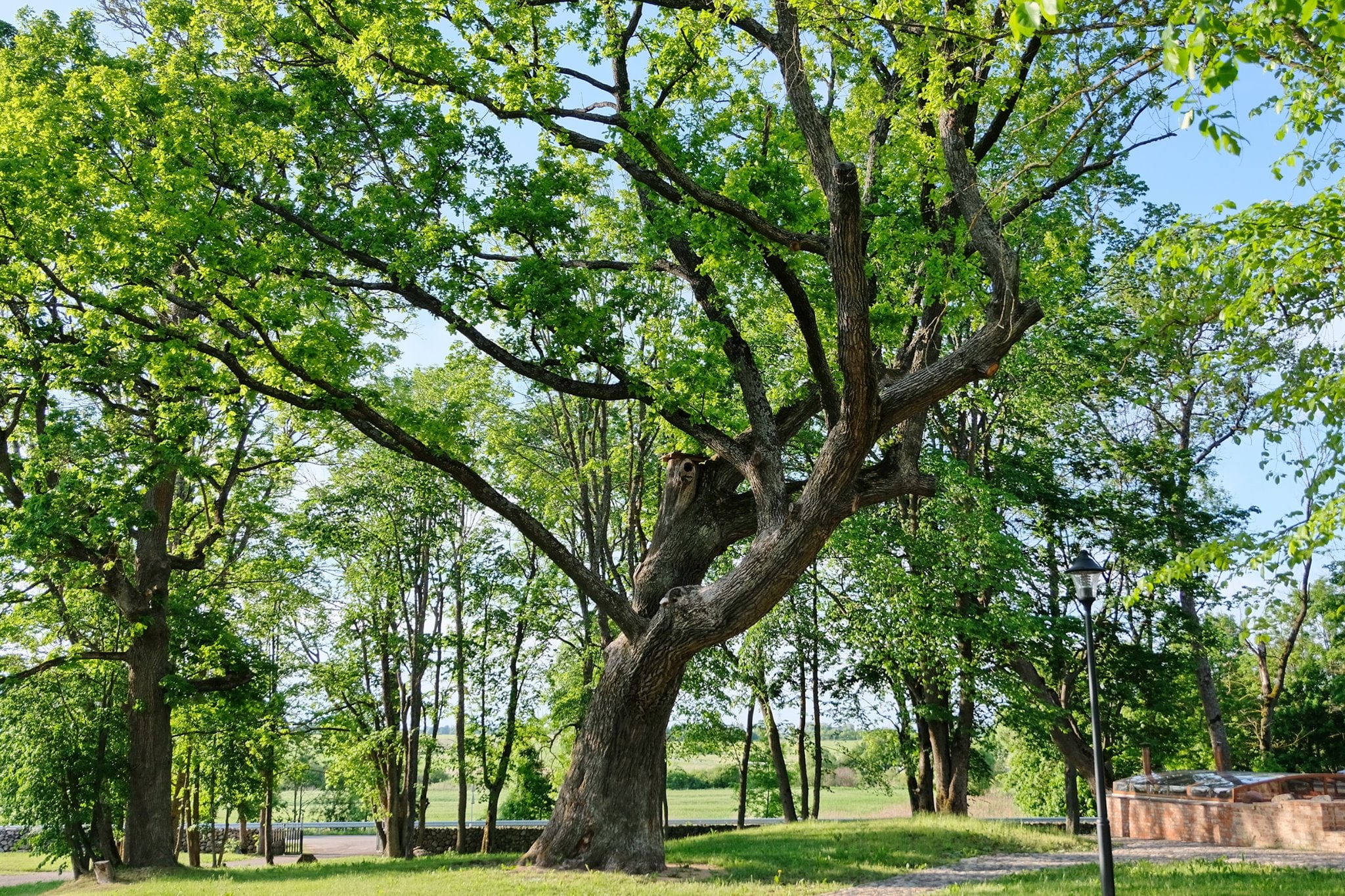
In the old manor park, maples, ashes, poplars, and lindens stand tall, remembering centuries past. The crown jewel of the park is a protected botanical monument of natural heritage: the 25-meter-tall Paliesius oak. Nearby flows a fountain of naturally bubbling waters, featuring a sculpture crafted by Finnish sculptor Jari Mannisto. The ceaseless, gentle murmur of water perfectly frames this vibrant masterpiece of nature—Paliesius Manor park.
 |  |
The park beckons for a stroll along specially surfaced paths—designed to mirror a natural forest trail, making movement utterly effortless. These walking trails vary in length, ensuring everyone can choose a distance that suits their pace. The total length of the walking trails within the park spans approximately 1,250 meters. When weary, you are welcome to pause and restore yourself at the rest areas thoughtfully placed throughout the grounds.
In the sprawling forest beside the manor, signposted Wellness Trails invite you to journey over varying distances (2.3 km, 5 km, and 8 km). Simply select your preferred route and follow the signs or use an orienteering map. In winter, these trails transform into magnificent skiing tracks.
Paliesius Manor, faithfully guarding ancient secrets within its stone walls, now offers its visitors a profound sense of tranquility. It invites you to exhale the weight of daily work, immerse yourself in the world of music and art, or simply escape civilization to seek out a gentle friendship with nature.
The winding paths of history have continually reshaped life at the manor, yet today, having preserved the spirit of centuries and awakened to a new life, Paliesius Manor rises once more in all its splendor—a place of reborn history and a true center of attraction. Meaningful symbols will accompany you everywhere you wander: whether in the building stones guarding the whispers of centuries, the song of a bird, the morning rustle of dew-kissed grass, the cinnamon scent of pastries just pulled from the oven, or the resonant beauty of music…