

Source: 7MD.LT
Author: Laimutė Ligeikaitė
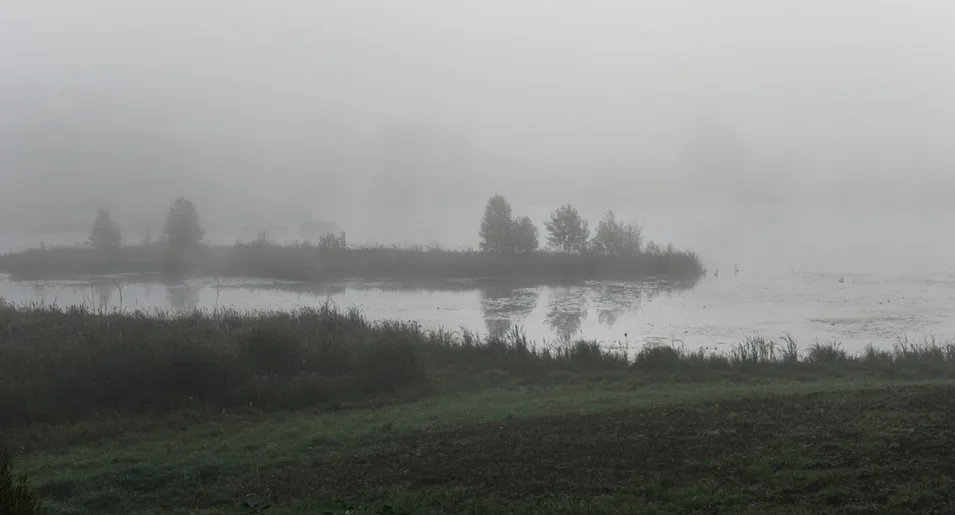
As mist still drifts through the forests and the horizon begins to break with dawn, we are enveloped by a morning stillness that heralds the day’s unfolding events. Thus begins the documentary film “Ieškant tylos” (“In Search of Silence”), exploring a unique place where music dwells and where time flows differently.
In Northern Lithuania, beside the Kančiogina river, nestled against the small town of Mielagėnai, Paliesius Manor emerged more than a decade ago as one of the most vibrant spaces in Lithuanian musical culture. Set over a hundred kilometers from the capital, this mystical, harmonious sanctuary of nature and music attracts not only our own but also globally renowned stage stars from around the world. Reflections on the extraordinary musical experiences at Paliesius are shared in the press (you will often find them in “7 meno dienos”), on web portals, and across social networks. These are the impressions of those who have lingered there and listened to the concerts. Yet this time, the phenomenon of Paliesius is viewed from another angle, from within — the documentary film reveals the thoughts, personal experiences, and insights on culture, nature, and music from many of the musicians who have performed here.
The idea to immortalize the first decade of musical activity on film came from the manor’s restorer and steward, medical professor Dr. Julius Ptašekas. It was brought to life by the acclaimed pianist and painter, and artistic director of Paliesius events, Viktoras Paukštelis, alongside film director Aleksas Matvejevas, screenwriters Viktoras Paukštelis and Aleksas Matvejevas, and cinematographer Haroldas Klevinskas. The nearly hour-long film “Ieškant tylos” premiered in the summer of 2024, opening the inaugural “Kremerata Baltica” festival at Paliesius Manor; it was then screened in Vilnius last December. The film features the music and voices of classical and jazz luminaries who have performed or recorded albums at Paliesius time and again: Andrius Žlabys, Gidon Kremer, Hélène Papadopoulos, Ian Bostridge, Jarkko Riihimäki, Jean-Marc Luisada, Juan Manuel Cañizares, Saskia Giorgini, Simin Tander, Simone Kermes, Tord Gustavsen, Viktoras Paukštelis, and Vladimir Tarasov. And they represent only a small fraction of the world-class stars who have graced this stage.
“This place holds not only a magical draw but a wondrous aura that moved me from the very beginning, and I truly felt it. That aura is like a transformation of time—when time seemingly stands still, when a sense of silence emerges alongside a desire to remain here for as long as possible. That is why we named the documentary ‘In Search of Silence.’ We sought to visualize the relationship these world-renowned, talented figures share with the stillness found within the spaces of Paliesius Manor. It does not matter what country they are from or what genre they play when they speak of and interpret this silence — there is so much they share in common,” the manor’s host, Julius Ptašekas, once noted in an interview with Algis Jakštas.
Both listeners and musicians journey to Paliesius to step away from the intense, stress-filled rhythms of city life, exhausting travels, endless marathons in pursuit of perfection, and, ultimately, unrelenting worldly problems, conflicts, and beyond. Incidentally, Paliesius also offers wellness services, yet anyone who visits, even briefly, can escape the noise and bask in the tranquility of its natural surroundings. I would venture to say the film also speaks to how profound a problem noise has become in our modern era, casting a heavy shadow over our health and quality of life. Noise surrounds us everywhere and takes every form: domestic, environmental, urban, industrial, informational, and, tragically relevant today, military, echoing through global events. It turns out there is even a phenomenon known as “food noise.” Noise kills the soul, the mind, the music… It is true that this acoustic phenomenon can be aesthetic and meaningful, employed in music, for example, as a concept for treating various sound objects. Yet, when we speak of noise in its primary, universally recognized sense, we realize more and more what an immense treasure silence truly is.
Paliesius fights for it. Silence at Paliesius is like a weapon, defending the creators’ right to themselves and their art, allowing them to unlock what Norwegian jazz pianist Tord Gustavsen calls the core of the soul, while ensuring the audience’s right to fully receive and feel the art. “I believe that music has the power to open up space in people’s hearts and minds, that it has a therapeutic effect. It is a profound gift during a concert to witness that this space has been opened,” says Gustavsen.
“It is a wonderful feeling to sing in a place where the acoustics support you, while at the same time being surrounded by breathtaking nature. It is evident that people deeply need the wisdom hidden within art, which has been passed down through various cultures and historical eras. This wisdom can help us in the present. Modern people desire comfort, perhaps because the world is so chaotic. Marvelous things are happening all around us, alongside many evils. So much is taking place! It has always been this way—beauty and the demonic exist in close proximity, taking each other’s place. Yet people yearn for stability. The wisdom of art acts as a guide. It is so important that we focus on fundamental things, on ancient wisdom,” reflects singer Simin Tander.
Once, the talented jazz pianist Tord Gustavsen performed at Paliesius not alone, but alongside the Afghan-German vocalist Simin Tander. They performed compositions rooted in the traditions of Christian and Sufi hymns (sung in Pashto, the native language of Tander’s father, who hails from Afghanistan). As a Sufi hymn sung by Tander plays in the film, the camera glides over a crystalline stream, over roe deer darting through the meadows, and across a vast field with a solitary tree at its heart. The film’s artistic imagery is hypnotic and absorbing. The artists’ reflections and musical fragments are punctuated by the ticking of an antique pendulum clock. At the same time, the spoken insights, the sharing of emotions and values with those nearby, and the glimpses of collaborative music-making forge a dialogue—rather than a monologue—cultivating a mood of true communion, conversation, and togetherness.
“Since ancient times, people have sought ways to escape chaos—not only the external, but the internal as well. They have searched for a cleansing of the soul, yet it is incredibly hard to find. While there are magnificent halls, theaters, and academies, it is vital for an artist, for a musician, to immerse themselves in their work in solitude. Music requires silence,” says Gidon Kremer, a frequent guest at Paliesius.
Pianist and painter Viktoras Paukštelis describes the uniqueness of Paliesius this way: “Every land possesses its own energy; throughout history, it absorbs certain things. The lands of Eastern Europe have soaked up much despair, much instability, much death… And this creates a paradoxical contrast—that in a hopeless, somber place, light can still exist: an emerging cultural light. This is a place where you can feel at one with yourself, which means you are no longer alone. It is a place where you might feel empty inside, yet, at the same time, replenish that void.”
The scenes of the manor’s surroundings, filmed in less-than-perfect weather—that aforementioned emptiness, the bare tree branches, the fallen autumn leaves, or the apples drifting in the fountain—by no means create the image of a “promotional” film. It is a film meant for each person to intimately feel their own inner silence—a silence that, as pianist Andrius Žlabys notes, remains unique anywhere.