

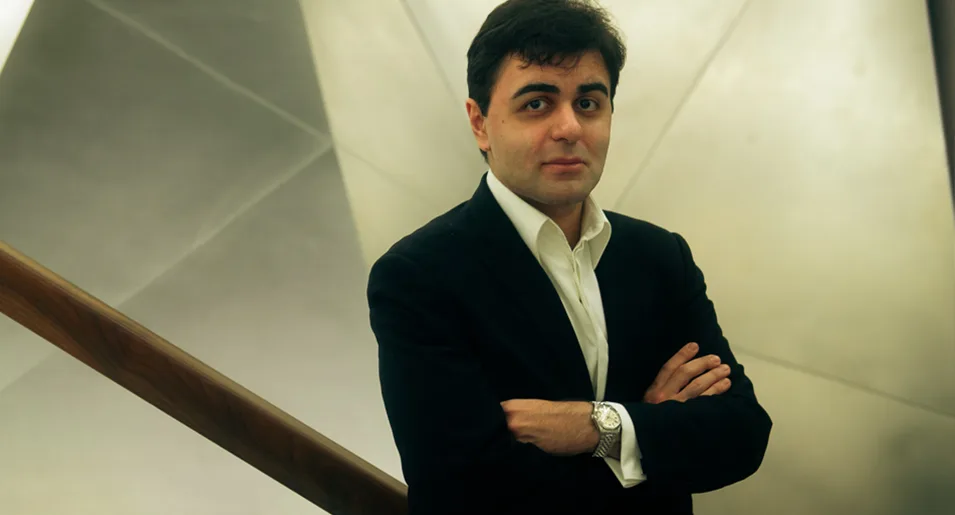
Georgian pianist David Khrikuli is a finalist of the 2025 International F. Chopin Piano Competition in Warsaw. During the competition, the pianist captured the hearts of the audience and sparked more conversation than any other participant. Though he did not take the first prize, the acclaim he garnered reached far beyond the final results. He is swiftly rising as one of the most promising artists of his generation.
A laureate of numerous international competitions, D. Khrikuli has held solo recitals and chamber music concerts throughout Europe, performing as a soloist with multiple orchestras. He is currently studying at the Reina Sofía School of Music in Madrid, supported by various foundations.
On March 22, the pianist will perform for the first (and, so far, only) time in Lithuania, here at Paliesius Manor. This will also be his first time since the F. Chopin competition dedicating an entire program solely to the works of this composer. In quiet anticipation of the concert, we sat down to speak with D. Khrikuli.
More about the concert: 03.22 | David Khrikuli (piano, Georgia)
Source: LRT.LT
– Tell us about your first encounter with music. Have you dreamed of being a pianist since childhood?
From a young age, I loved listening to music of all genres: classical, jazz, rock, metal. But I never imagined I could do it professionally—until my parents took me to the music school that was situated right below our apartment, on the lower floor (and it still is). The piano became my form of self-expression; while playing, I felt a sense of freedom and power.
– What is your personal connection to F. Chopin and his music?
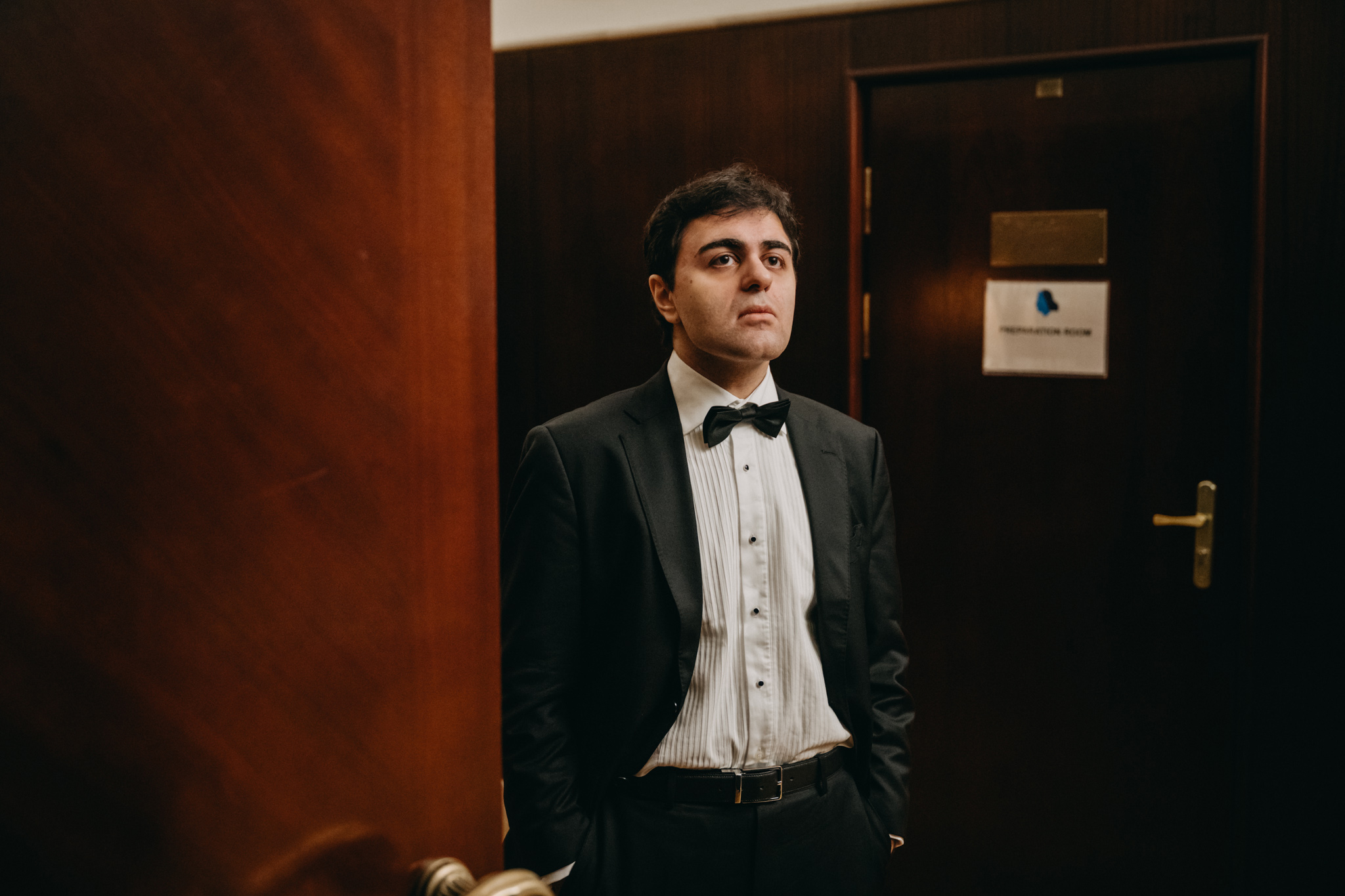
Once, when I was in the first grade, a student of my very first teacher played Étude No. 12, Op. 10—I was completely mesmerized. Then, I found the entire collection of études and the sheet music in the library, and I started learning them on my own. Later, I bought a CD with all of Chopin’s works. I listened to them endlessly and simply could not get enough.
– What inspired you to participate in the International F. Chopin Competition in Warsaw? Was preparing for the competition difficult?
In music, Chopin has always been my greatest influence and motivation. Because of his works, I remained devoted to my career as a pianist and to my craft. Participating in the Chopin competition felt almost like a duty to me—I wanted to pay my respects to this man.
However, preparing wasn’t easy: I had to focus all my attention on a single composer and maintain total concentration. Yet, in the end, it only benefited me: I delved deeper into Chopin’s music and refined my skills as a pianist.
– During the competition, you received special attention from both the jury and the audience. In your opinion, how does your playing differ from other participants? What do you strive for when you play?
Many people tend to play Chopin’s pieces as if he were merely a composer of salon music. The dynamics are reduced, everything is entirely too gentle, and the tempo is slow. Chopin was a titan. His range of expression is perhaps the greatest of all classical composers. His music encompasses everything—and I am truly not exaggerating when I say this. Chopin knows when to be tender, but also when to summon a tremendous storm. One moment he caresses you, and the next, he suddenly sends you to hell. In some compositions, there is a lingering sense of mystery, of the uncanny.
I have heard more than one pianist claim, and not only in this competition, that Chopin is overly polished, that he lacks drama—they diminish his immense emotional potential. But I don’t want to be a pessimist, because there were truly wonderful musicians at the competition whom I enjoyed. I befriended a few of them, and they seem to agree with my thoughts.
– At Paliesius Manor, you will also perform a program of F. Chopin’s works. Which pieces have you chosen and why?
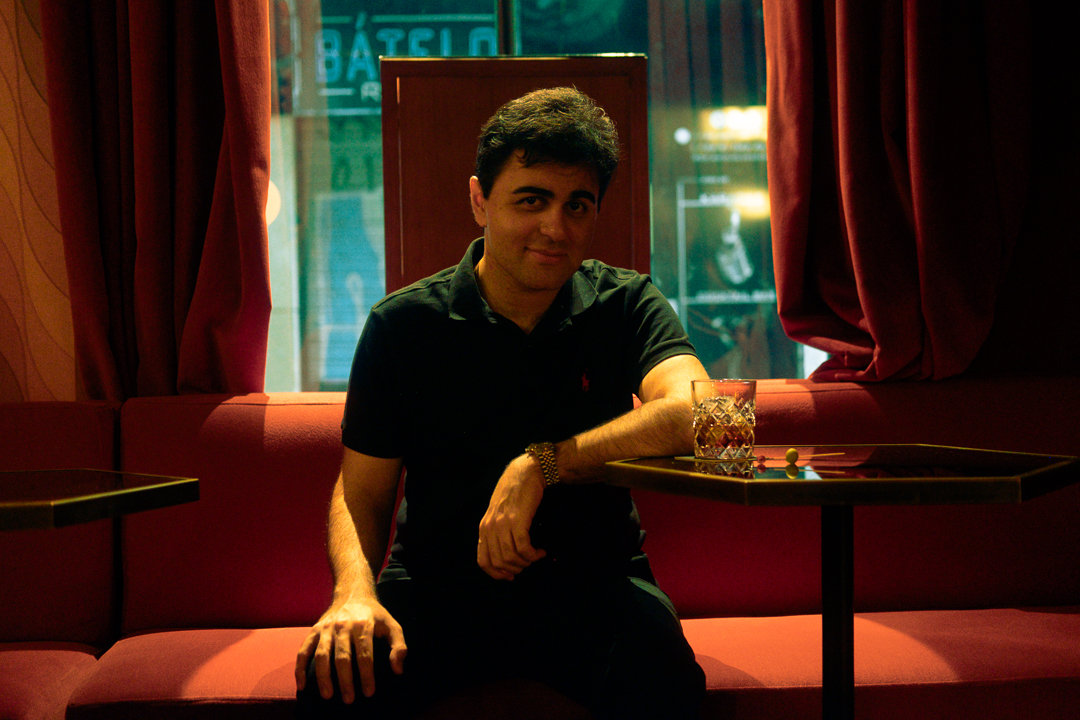
My repertoire will consist of the Polonaise in F-sharp minor, three mazurkas, Sonata No. 3, and four scherzos. I always choose the pieces I love performing the most. This concert is no exception.
– What is the greatest challenge for you as a pianist?
To do everything I possibly can. It is most saddening when you know what you are capable of achieving, but you fall short. Yet we are human, so sometimes such moments are inevitable. However, I try to keep them to an absolute minimum.
I feel the greatest success when I have no desire to leave the stage—that is when I know the concert was a triumph.
– Do you have any rituals before stepping onto the stage?
I simply think about the composer whose piece I am about to perform, and I recall all the good memories associated with them. But I suppose that is quite common among musicians. I don’t have any particular rituals. For me, everything must be simple.
– Would you like to share a message with the audience eagerly awaiting your arrival?
Just this: stay in your seats, stay curious… and don’t blink.