

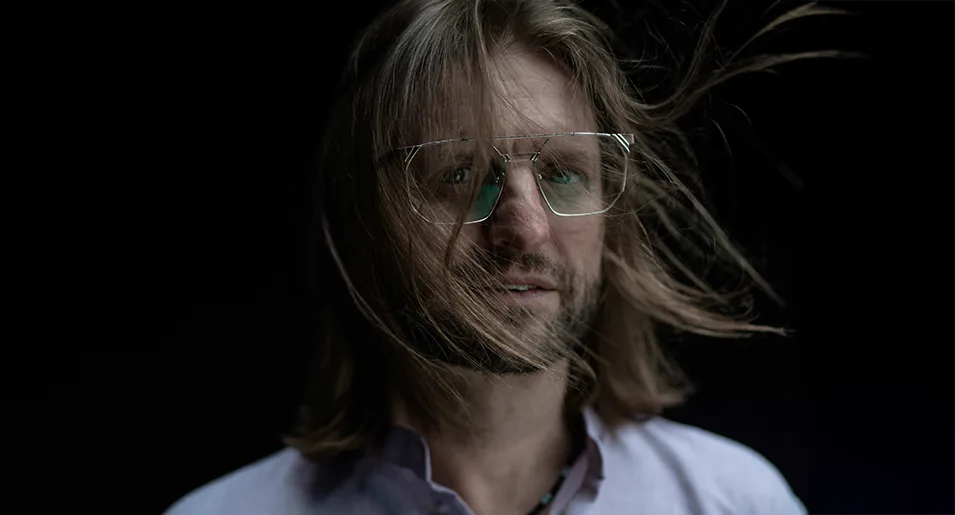
“I believe that improvisation is a vital part of life. I do not think one can become a fulfilled, happy, and successful person by merely following known, routine procedures,” says pianist and composer Leszek Możdżer.
He is an eloquent jazz creator of the younger generation, whose musical soundscape and atmosphere are shaped by impression, mood, and a uniquely original performance style.
The artist stands as one of the most intriguing phenomena in Polish jazz of recent decades, sparking a mental and stylistic revolution in the Polish jazz scene unmatched by the work of any other musician. He has woven complex jazz phrasing, multifaceted improvisations, the melodic frameworks of jazz standards, and compositional subtlety into a highly specific jazz vocabulary—one that never strains to overwhelm the listener with excess, free from commercialism and bravado. This has become the deeply expressive jazz of L. Możdżer.
The pianist’s expansive discography encompasses more than a hundred albums, released both as solo projects and in collaboration with distinguished artists. He also composes music for cinema and theater: he has earned multiple accolades for his film scores, including the award for Best Soundtrack in 2019.
Pianist and composer L. Możdżer will perform for the first time at Paliesius Manor’s “Pasaga” concert hall on May 3.
More about the concert: 05.03 | Leszek Możdżer solo
Source: LRT.LT
– What were your first music lessons like?
For a young pianist, the first lesson is proper posture—the fundamental rules of arm and hand placement, alongside a general understanding of body and elbow movement. Sitting on the chair is one of the most critical aspects for a pianist, as incorrect seating creates a host of technical and mechanical issues that simply do not arise with proper body alignment. Most importantly, one must grasp that the upper body can serve as weight when pressing the keys—knowing how to utilize this is highly beneficial.
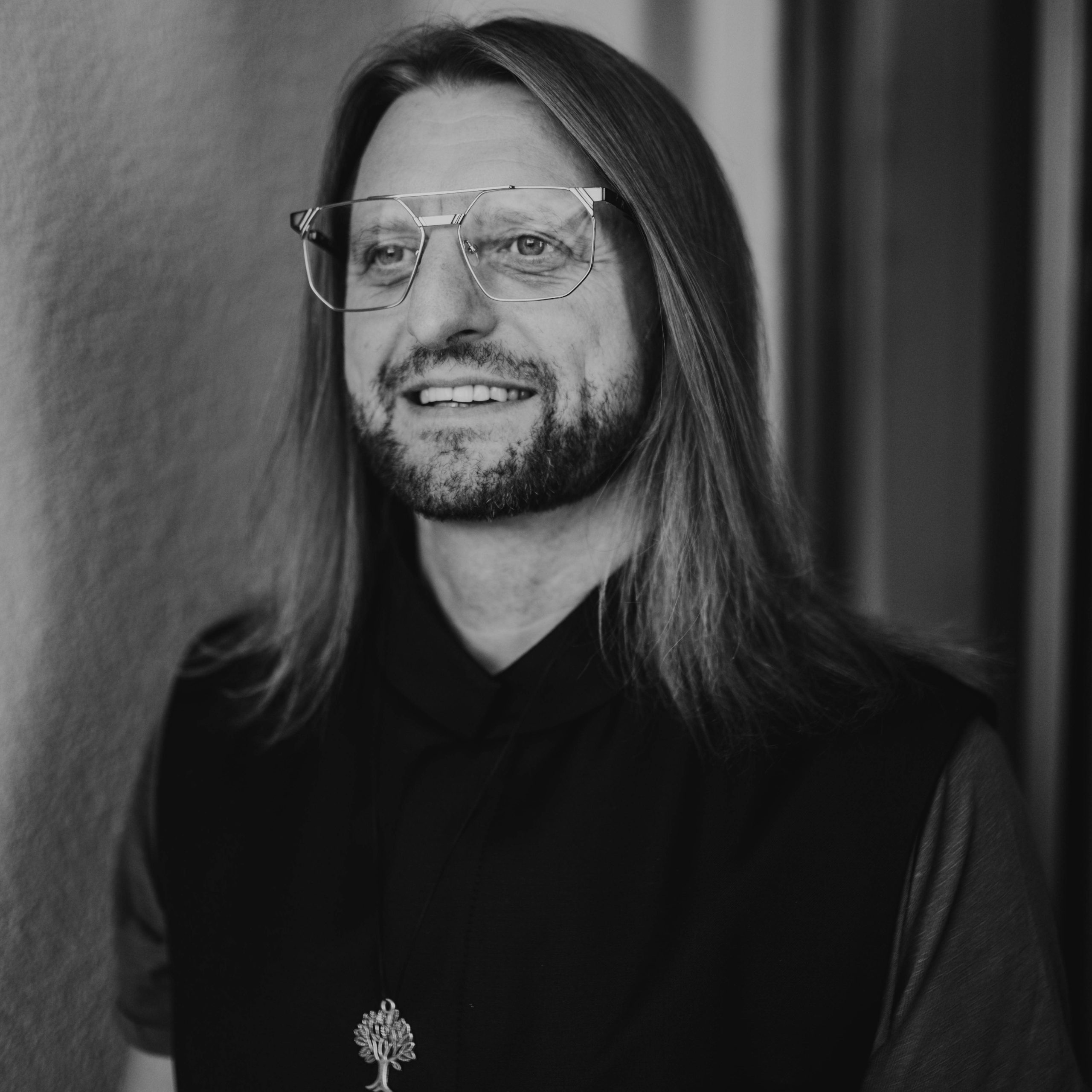
– You have a classical background, yet today you are one of the most renowned jazz pianists in Poland. How did you find your way down this path?
Jazz revealed itself to me as the voice of the present. It was harmonically rich, rhythmically captivating, and carried a modern essence that made it sound contemporary. Every jazz pianist I listened to had a distinct sound and style, whereas classical pianists often sounded quite alike. It became clear that through jazz, I could express my inner voice—I could simply sound like myself. I loved classical music, and jazz initially sounded a bit unpolished to me, but from the very beginning, I heard an internal musical vision: improvisational jazz that sounds like classical music.
I believe I have fulfilled my dream—I work in a realm where a classical sound gracefully intertwines with the emotionality of jazz.
– Jazz is often described as the music of freedom. What does musical freedom mean to you?
This is a complex question, as the piano is an instrument tuned in equal temperament—a mathematical system utilizing only twelve notes. Yes, a pianist has the freedom to choose which of those twelve notes to play, but I would not quite call that freedom. To me, playing jazz is more akin to a game where you wrestle with your own imagination. It is possible to transcend these boundaries, yet one must remember that music possesses countless layers: physical, emotional, intellectual, energetic, spiritual… An element of introspection is essential in each of them, but on the other hand, it is impossible to control the flow of jazz as it courses through your body.
Historian Ethan Mordden notes that the word “jass” referred to copulation, and that the 19th-century Black slang term “jasm” signified vitality and life force. There is also the crude term “jizz,” denoting an eruption of bodily fluids. Understanding “jazz” within such a context offers subtle clues to its true nature—it is a vital force that we cannot control; we can only strive to comprehend it.
– You have played alongside exceptionally talented artists, such as Pink Floyd’s lead guitarist David Gilmour, Swedish double bassist Lars Danielsson, Israeli percussionist and composer Zohar Fresco, and many others. Which collaboration has been the most memorable for you?
– Every encounter changes a person, so it is exceedingly difficult for me to single out which collaboration was the most important. Each time you play with another musician, an exchange of information occurs—not merely on a verbal level, but on a vibrational one, through the very sensation of the other. Every musician you mentioned is a truly unique, distinct personality. I sincerely believe that every soul carries its own sound, like a chord of standing waves, for every frequency emitted by a human being resonates within the biofield.
I have been incredibly fortunate to exchange resonance with many advanced souls, yet I could not isolate a single frequency as the most important to me. Every person is like a synthesizer: whenever you add a new frequency, the overall sound, color, and pulsation undergo a transformation.
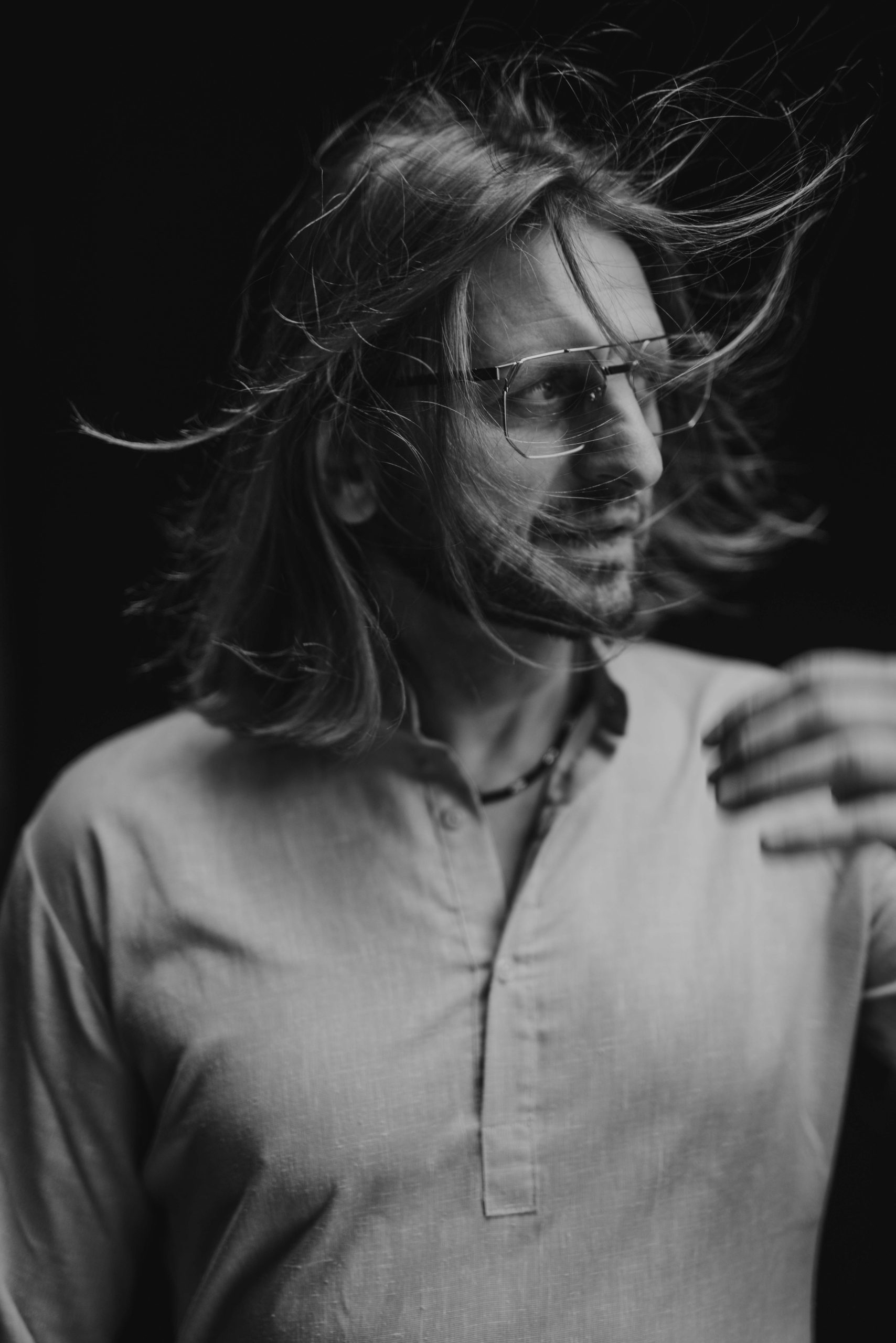
– Improvisation plays a vital role in your music. Do you improvise spontaneously, or do you follow a certain structure?
When I improvise, I sometimes take risks, but I also know what works well. There are moments during a recital when I need to rest—then I play more overtly, more predictably, allowing my mind to relax. Yet playing without risk is no fun, so I must balance these elements during a concert. I believe that improvisation is a vital part of life. I do not think one can become a fulfilled, happy, and successful person by merely following known, routine procedures.
– Perhaps you have a message for the listeners awaiting you at Paliesius Manor?
I am deeply grateful for your interest in my work, as I have spent countless hours exploring Music, learning how to weave sound together with emotion and feeling, and how to express the inner voice through the mathematical system of music. Music possesses the power to recalibrate the internal flows of our psychological patterns, sometimes even imparting profound new information to the listener.
The true beauty is that during the concert, you will be enclosed within yourself, free to gaze into your own thoughts. You may believe you are listening to music, but in truth, you are listening to your own inner world. Music is merely vibrating air reaching your ears, which the body then translates into bioelectrical signals. I have dedicated many years to creating finely tuned, harmonious music—and I sincerely hope you will feel that…