

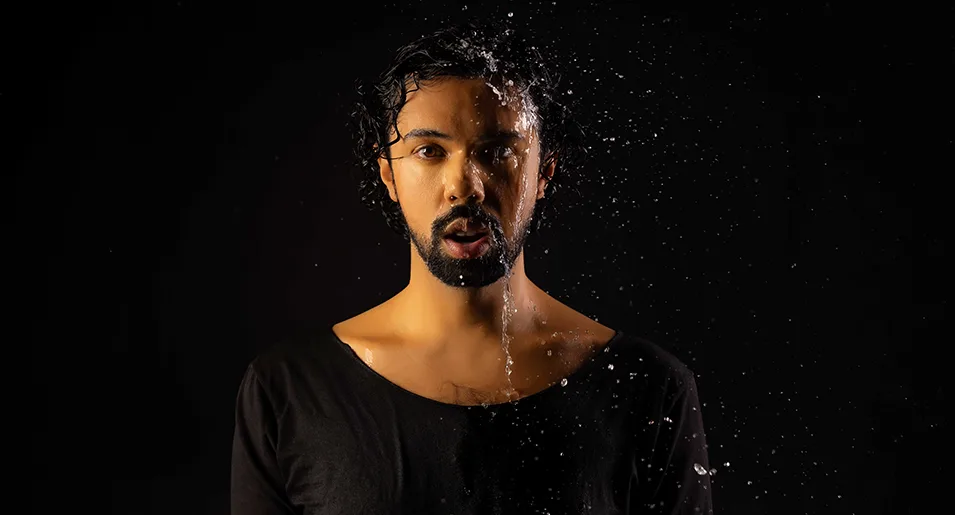
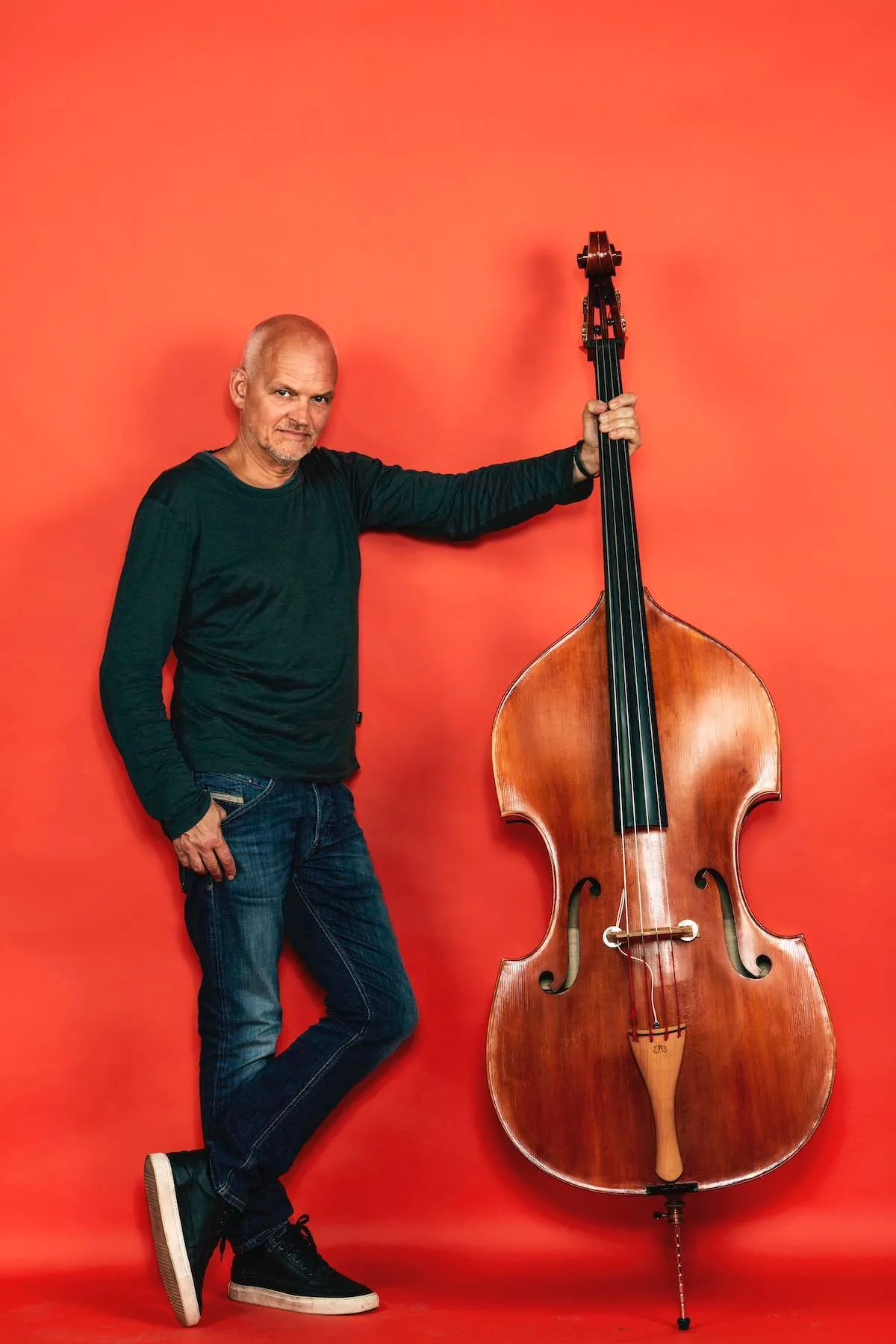
Swedish double bassist Lars Danielsson performs across the globe and is the recipient of major awards. Though the musician initially studied classical cello before turning to the double bass and jazz, he continues to feature the cello in his repertoire. His double bass playing is distinguished by a profound sense of melody, softness, and lyricism.
On the international jazz stage, L. Danielsson first made his name as a highly sought-after stage partner, performing alongside a multitude of stars. Yet, he has always possessed the soul of a composer. Today, he is one of the rare double bassists to have become a significant bandleader: albums released under his own name have garnered enthusiastic reviews and awards, firmly establishing L. Danielsson’s reputation as one of Europe’s most brilliant jazz musicians.
The musician has graced the stage at Paliesius Manor on more than one occasion. He last visited us in 2024, performing alongside pianist Grégory Privat to share works from his album “Liberetto,” arguably the most important of his career. This year, on August 22, L. Danielsson returns to the manor with an exceptional solo program.
More about the concert: 08.22 | LARS DANIELSSON SOLO
Source: LRT.LT
– Could you share a cherished childhood memory connected to music?
Yes. I remember one day vividly: my mother’s birthday when I was four years old. She received an acoustic guitar as a gift—I immediately took it, went into the kitchen, and locked the door. I sat there playing all evening while the guests celebrated in the next room. Afterward, I heard my mother play that guitar once or twice, but certainly not as much as I did.
– The conductor Leopold Stokowski once said, “A painter paints his pictures on canvas. But a musician paints his pictures on silence.” Do you agree with his thought?
I do agree. For me, this is especially relevant when playing solo. I recall a solo concert a few years ago. In my technical rider, I noted what kind of amplifier I needed and things of that nature, but I also wrote: “Silence.” You have to be able to use silence in music—especially when you are playing alone. Sometimes, what lies between the notes is more important than the notes themselves.
I believe it is essential to make the silence interesting. Then, every listener can weave their own imagery within the music.
– Your latest album is the 2026 release “Echomyr,” issued as part of the “Liberetto” series. Could you tell us more about it?
I would say this new album is a continuation of our previous ones. We have been playing together for quite a few years now. When a group stays together for that long, something extraordinary happens—you get to know the people better and better, and our interplay as musicians becomes something special. I think this is precisely what we have developed on this album. The compositions somewhat echo our earlier albums, though a few are quite different. One track might be more connected to South American music, another is dedicated to John Coltrane—we haven’t done that before. Moreover, a substantial portion of the music was recorded live in the studio.
– And what might the audience expect at your upcoming concert at Paliesius Manor?
I cannot give a precise answer just yet, but I already have an idea that I have begun to bring to life. There will be improvisation, and I will also perform songs. I will play both the double bass and the cello, and I will weave in a touch of electronics. I want this concert to be distinct from my other solo performances.
Since I have played at Paliesius Manor before, I think about that space often. How it will feel to sit there with my instruments, creating something together with the audience. It is a truly significant challenge for me, one that I am greatly looking forward to. This makes the rehearsals different, too—because this concert is constantly on my mind. On the other hand, I want to remain spontaneous; and since I will be alone, I will certainly have the freedom to shift the direction of the concert.
– How do these three instruments—the double bass, the cello, and electronics—complement one another in your music?
Well, I imagine I will open the concert on the double bass. It is my primary instrument. But ever since I began playing the cello, I feel just a little bit “naked” with the double bass alone. The cello supports me because its voice is different. I believe my cello playing differs quite a bit from other cellists, as I play a great deal with my fingers rather than a bow, and I use certain effects—electronic effects. Those are exactly what I am preparing now.
I will perform songs on the double bass, seeking to draw out a very particular resonance from the instrument. If we speak of Bach’s works for solo cello—well, only one instrument is suited to perform them. You can hear chords in Bach’s music, even though he is not playing them. I try to improvise in a similar vein when performing jazz pieces: coaxing out both bass chords and melodies at the same time. I cannot play everything simultaneously, but I can achieve it by playing in a certain way. I hope the listeners will hear this.
– As a musician, what is the greatest challenge you face?
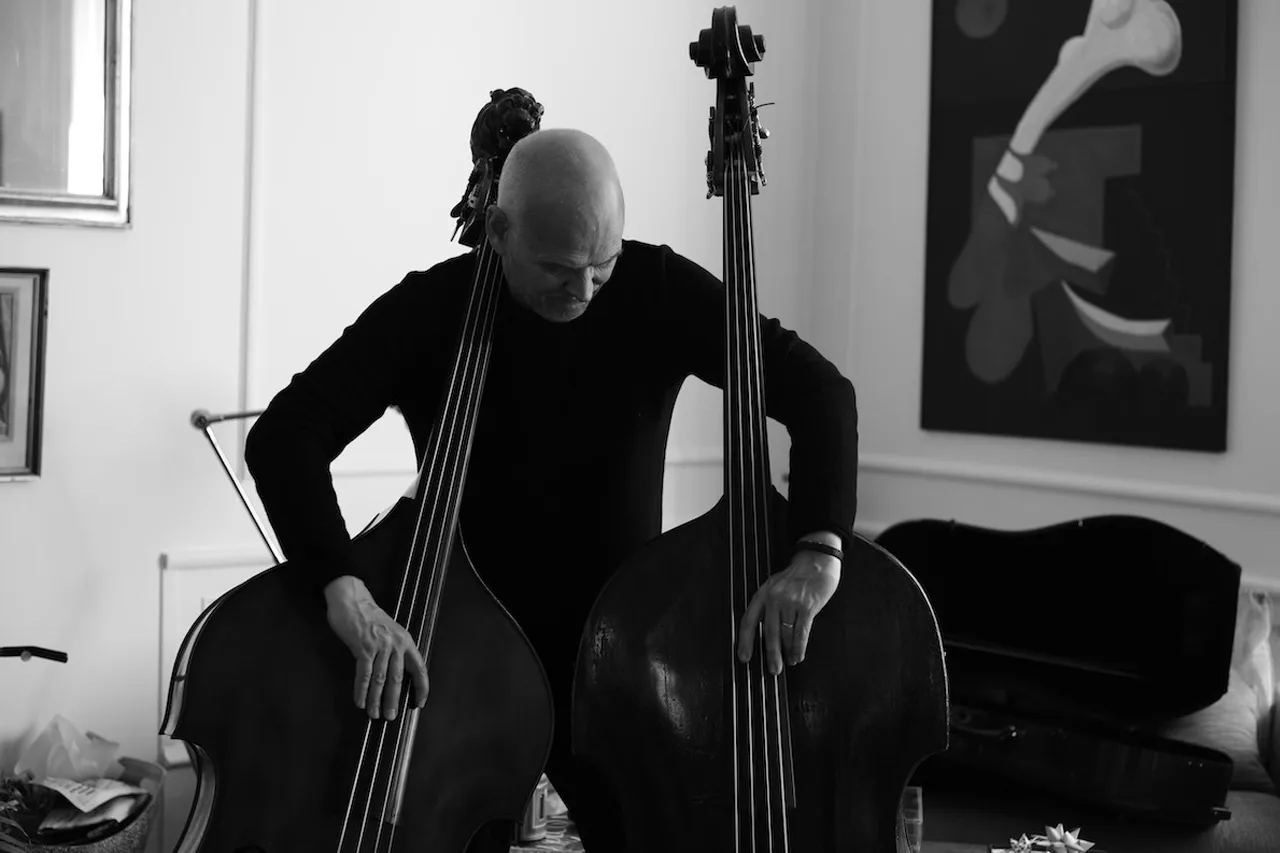
At the moment, the greatest challenge for me as a touring musician is travel and logistics, since the instruments are quite large. It is always a challenge to organize everything. I am also constantly thinking about the spaces where I will have to play and what the situation will be like there.
Yet, I also have challenges that I love. For instance, stepping onto the stage without having everything planned, intending to improvise. I absolutely love improvisation.
– Do the spaces where you play influence your music? Different concert halls, for example?
Yes, they do. Take this solo concert I am preparing for… It is wonderful to already know what it looks like there at Paliesius Manor, how it sounds, what the atmosphere is like. Of course, it will be different this time than the last, but it is still something. The sound and acoustics truly have a profound influence. And, naturally, the audience—especially when performing alone.
– Do you plan to move toward new musical horizons in the future?
I am constantly moving toward them. I plan to record more pieces. It is a goal of mine to record something solo. We are also recording a duet album with Cæcilie Norby, a Danish singer. And next year, we are planning to record a duet album with pianist Leszek Możdżer.