

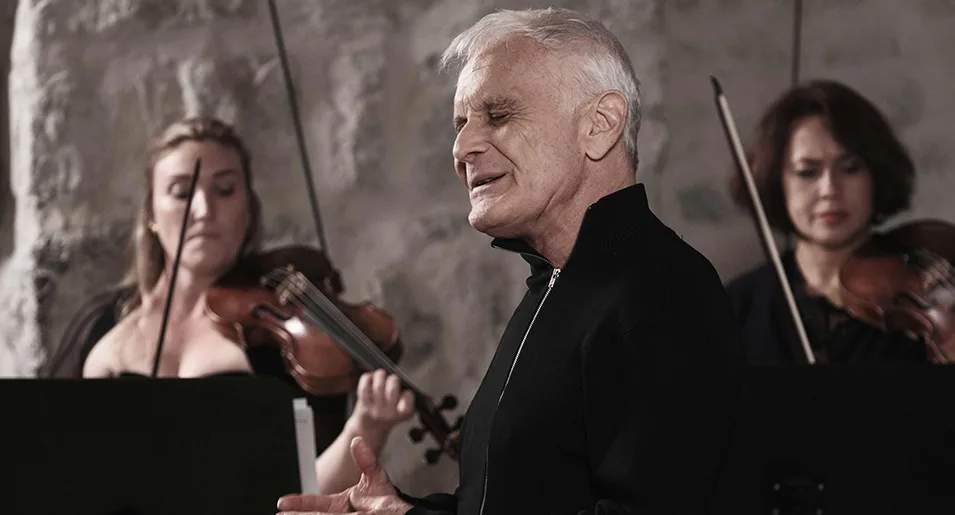
Gérard Lesne is a French countertenor and one of the most prominent early music performers in the world. Welcomed in the most renowned concert halls, he has released over 70 highly acclaimed and award-winning albums, and has been bestowed the prestigious title of Chevalier of the Order of Arts and Letters in France. The countertenor is an inherently rare voice type, the very highest of male operatic voices—yet G. Lesne is uniquely gifted with an instrument that boasts a brilliantly clear upper register alongside a powerful lower register marked by an exquisite softness, a quality most singers attain only after long years of arduous work.
On March 22, Gérard Lesne will make his first appearance in the Baltic states alongside the Baroque ensemble Le Concert Universel, performing on authentic historical instruments, with a concert at Paliesius Manor. They have prepared an early music program titled “Kvintesencija”, conceived as a beautifully bound book where every turned page awakens a sense of wonder, inviting the listener to discover the quintessence of art that lies at the heart of every human life.
While we await the concert, we invite you to enjoy an exclusive conversation with the renowned singer.
More about the concert: 03.22 | Gérard Lesne & Le Concert Universel: “Kvintesencija”
Source: LRT.LT
– How did you discover music and singing?
I discovered singing in middle school, thanks to an exceptional teacher. She helped me realize the quality of my voice. When my voice broke, my singing voice didn’t change at all.
As a teenager, I sang in a fusion rock band for a long time, and at around the age of 18, almost by chance, I started singing with a friend’s brother, who was a professional tenor. He told me about the public masterclasses taking place in Paris with René Jacobs and William Christie. That meeting ultimately defined my career.
– After meeting René Clemencic and his Clemencic Consort, you turned to the path of early music. What drew you to this repertoire?
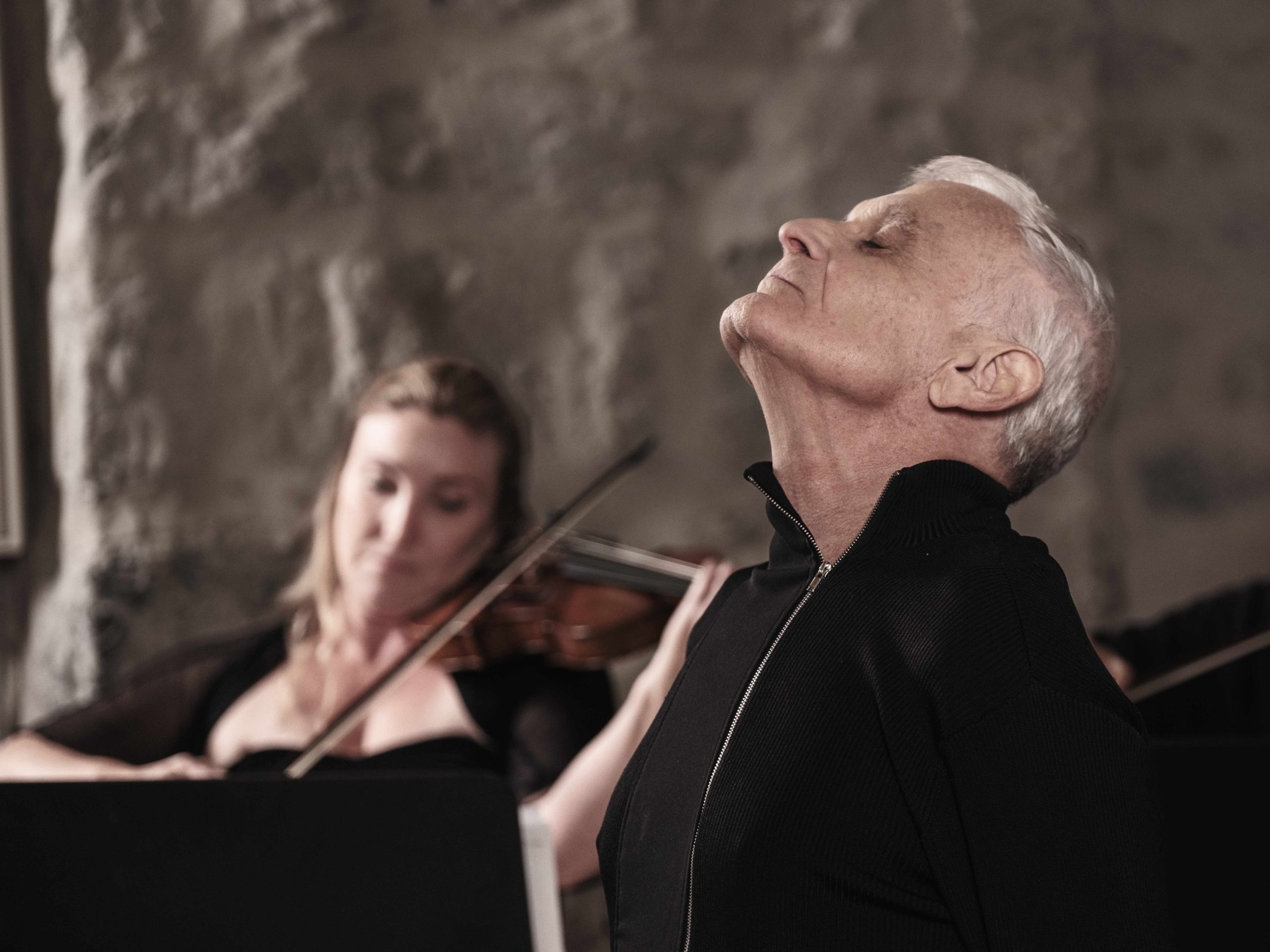
In 1979, thanks to René Clemencic, I was able to work with medieval music, predominantly Italian Baroque. Working with him, I learned the craft practically, from concert to concert, without having to graduate from a conservatory.
Early music captivated me most of all through the incredible diversity of its repertoire—from the Middle Ages through the Renaissance and into the Baroque. Over the decade I spent working with it, I realized my voice could effortlessly adapt to widely varying repertoires. So, I like to say that I am a true chameleon.
– How do you view the state of early music in the modern world?
It has changed significantly since the beginning of my career in the 1970s. Back then, early music was considered a genuine musical revolution, fascinating to a rather young and curious audience. Today, however, it has become institutionalized.
The curiosity is gone. The genre has not escaped a profound cultural crisis, which has been further exacerbated by a shift in consumption habits, with digital recordings pushing out physical ones. The youth of that era have become the grandparents of today, making audience renewal a major challenge. Innovations are now geared more toward marketing than art, though I do notice that the technical level of singers and instrumentalists has only continued to grow over recent decades.
– Today you are one of the world’s most significant early music performers, yet you continue to create music that defies genre boundaries. What inspires and motivates you?
I have always sought to introduce the early music repertoire to the most diverse audience possible—but to do so, I had to make it more approachable by breaking down boundaries. It is precisely with this utopian vision that I have always championed early music and created my own compositions and performances, such as my trilogy: “Shaman”, “Tempus Fugit”, and “L’Origine du monde” (2014–2016).
– You have received countless awards and performed in the most prestigious halls. What do you consider the greatest achievement of your musical career?
My discography and its timelessness.
– Do you have any rituals before or after a concert?
Yes, I have many rituals before concerts, but as the years go by, there are fewer of them. Perhaps I’ve matured? (Laughs).
For a long time, I was obsessed with the quality and quantity of my sleep. I was extremely careful to eat and drink healthily the night before and the day of the concerts, and I would count the hours I spent training my voice to ensure I wasn’t overdoing it. However, in recent years, I simply take care of myself and grant myself a bit more freedom.
– Tell us more about your collaboration with the Baroque ensemble Le Concert Universel. How did this musical friendship begin?
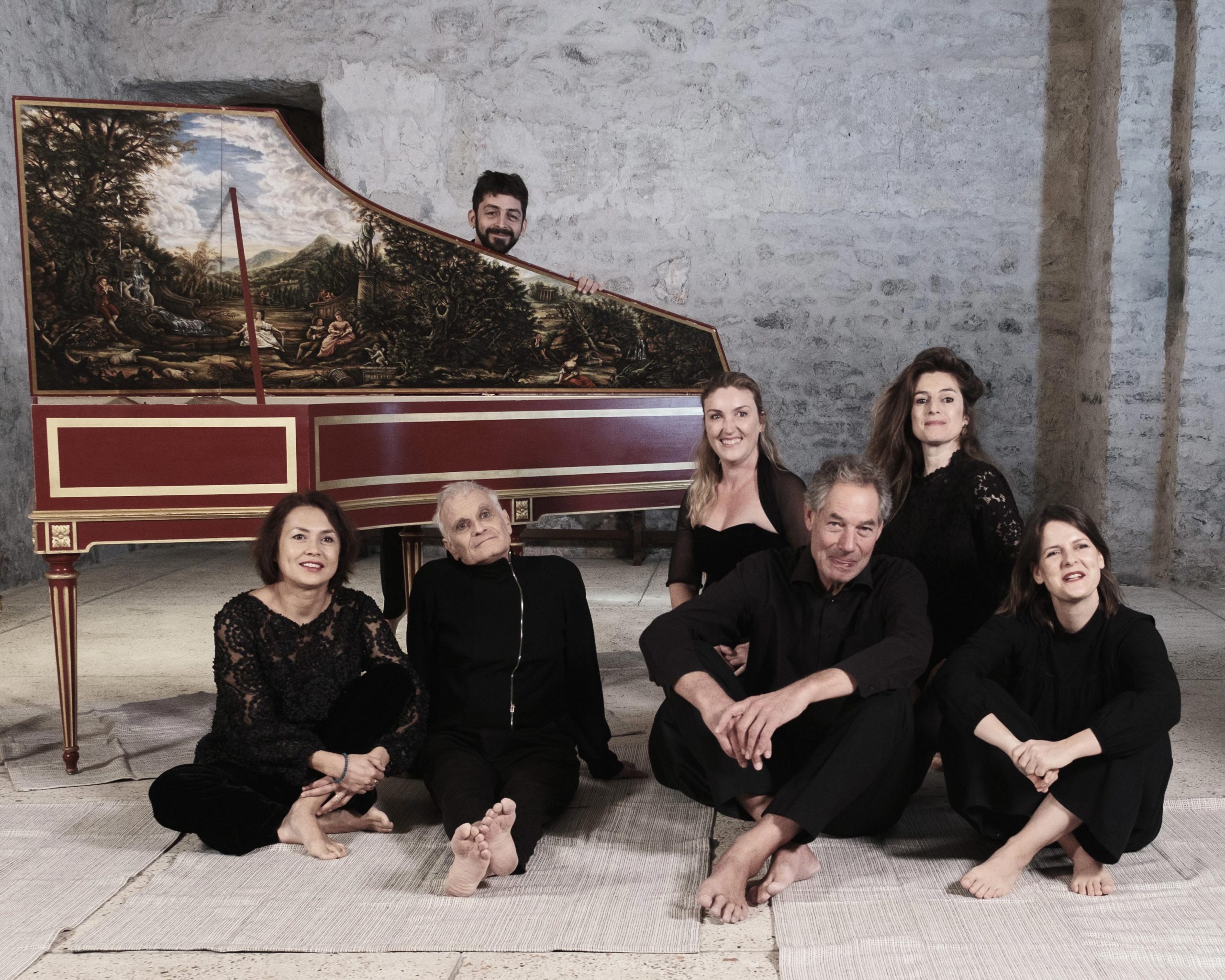
When I left Paris and settled near Lake Geneva in France, I met Juliette Roumailhac, who lived nearby. I had originally known her when she was a young violinist, and had invited her several times to perform with my own ensemble, Il Seminario Musicale. Then, in 2017, she founded her own ensemble, Le Concert Universel, and we began envisioning an ideal, extraordinary program driven by a utopian vision: to erase the boundaries between centuries and repertoires. This is how “Kvintesencija” was born. I would like to deeply thank Juliette for listening so attentively, and the ensemble Le Concert Universel for defending and conveying this vision so beautifully.
– You will be performing in the Baltic states for the first time. Is there a message you would like to share with the audience awaiting you?
Truth be told, a long time ago, back in 1989, I actually came to sing in Vilnius with Les Arts Florissants and William Christie. I remember an extraordinary and wonderfully warm reception from the audience.
Returning after so many years stirs up very powerful, moving emotions. I cannot wait until we meet again!