

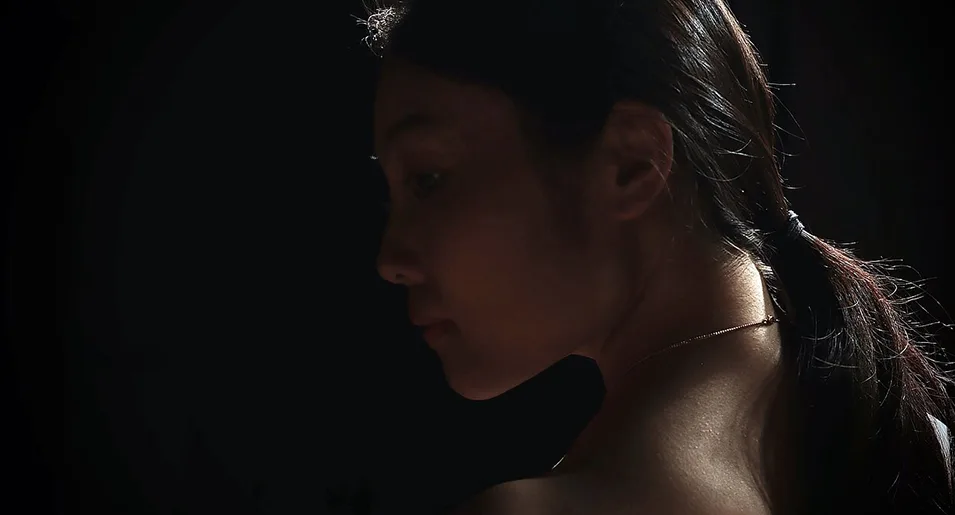
“While learning to play the piano, I also dedicated a great deal of time to classical ballet. Both were deeply intertwined with my identity, and throughout my teenage years, I simply couldn’t choose one over the other for my future path. It was only when I turned 18 that I seriously began to consider becoming a pianist,” says pianist Tamana Tanaka.
A globally performing pianist renowned for her mastery, she captivates audiences with her solo piano repertoire as well as performances for two pianos and four hands. She has earned widespread acclaim and recognition across the globe, debuting in such prestigious venues as Carnegie Hall.
On April 26, Paliesius Manor will welcome an artist from the distant Land of the Rising Sun for the very first time—pianist Tamana Tanaka.
More about the concert: 04.26 | “Old Silence”: Tamana Tanaka (Piano, Japan)
Source: LRT.LT
– How did you fall in love with music? Did you want to be a pianist from childhood?
Growing up, my mother loved to play the piano at home, almost constantly—so my introduction to music and to this instrument felt incredibly natural. At first, before I was even two years old, I simply loved touching the piano keys and looking at the sheet music, even though I couldn’t yet read it. My mother certainly never forced me; it all blossomed from my own pure curiosity.
It would take quite a while if I were to delve into the past. In short, while learning to play the piano, I also dedicated a great deal of time to classical ballet. Both were deeply intertwined with my identity, and throughout my teenage years, I simply couldn’t choose one over the other for my future path. It was only when I turned 18 that I seriously began to consider becoming a pianist.
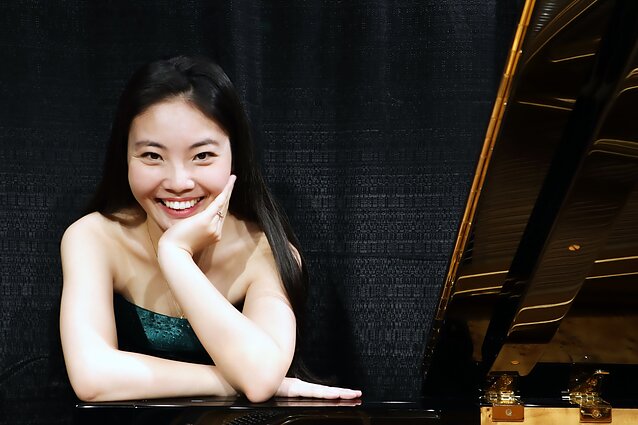
– You studied in Japan and the US, and you perform all over the world. In your opinion, how do the musical cultures of different countries differ?
I don’t believe there are many fundamental differences between countries. First of all, the classical music world is quite small, and the people who are interested in this music are already a part of that world. Now, when speaking of the US, there is a tendency to envision an enthusiastic, show-like atmosphere (and in a sense, that is true). However, in my experience, it is quite similar across all countries. The most important thing is that, everywhere, the audiences are warm and come to the concert out of a true love for music.
– Which performance has been the most memorable for you? Why?
I would have to say my debut concert at Carnegie Hall. That performance allowed me to believe in myself just a little bit more. I tend to be somewhat skeptical (or critical) of myself, as I am always striving for better results, but in that moment on stage, I was truly happy. I had never seen such a magnificent view from a stage—it is absolutely unforgettable.
– What does success mean to you?
I wish I knew exactly what success is. The answer varies depending on what one cares about, what one holds as a value. For me, it is about being myself. The ability to be exactly who you are, without trying to appear as something better. I believe that, in itself, is already the key to success.
– At Paliesius Manor, you will perform works by very different composers: J. S. Bach, M. García García, A. Scriabin, K. Szymanowski, and R. Schumann. Why did you choose these particular composers?
This program was originally created for my debut in Japan (which, incidentally, was a very successful concert in January). It is incredibly rich in its content. I have performed it in several cities across Poland and Japan, and each time it has been warmly received by audiences. It is both a challenge and a profound exploration of different musical languages.
I love German music, so I frequently create programs focused on German composers. However, I realized that this could limit my potential. The older I become, the more courage it takes to try new things, but I wanted to push my boundaries, so I decided to put together this demanding repertoire. It was my first time working with A. Scriabin’s pieces, and K. Szymanowski is rarely heard in concerts at all. It is also a great honor for me to play the music of M. García García. Don’t miss this opportunity! It is like a musical sandwich, layered with J. S. Bach and R. Schumann, who are my favorite German composers.

– What is the meaning behind your program’s title, “Old Silence”?
The program as a whole does not possess an easily digestible, superficial brilliance. Nevertheless, each piece carries its own unique challenges and depths. R. Schumann’s “Carnaval” might be considered a virtuosic work, but to me, this program also reflects my own character. I cherish tranquility; I always want to nurture that which is born of silence. Because we live in such a complex society, I believe that now, more than ever, it is vital to listen to the silence.
– You will be performing at Paliesius Manor for the first time. What message would you like to share with the audience waiting for you there?
I have been looking forward to this concert ever since the date was chosen. As a Japanese pianist, I feel that the true beauty of music lies in the fact that I can arrive in a country whose language I do not speak, and still share something profoundly special through my music. I warmly invite you to come and enjoy this concert experience together.