


Source: 
Author: Delfi “Lie Detector” editor Aistė Meidutė
How does one reach the cosmos without lifting a foot from the earth? How do we turn time backward by 1.3 billion years? What does the mating dance of black holes sound like? The answers to these questions are known to American ambient music composer and avant-gardist William Basinski. He whispered them to all who visited Paliesius Manor late on a Saturday evening.
Gracing the village of Paliesius in the Ignalina district, the classical manor is no stranger to delighting fans of intellectual electronic music. Though classical melodies echo through the estate far more frequently, four years ago it hosted Mexican electronic composer Fernando Corona, better known by his moniker Murcof. This time, the manor gates opened for a living legend of ambient music, William Basinski.
Tickets to the concert melted away in an instant, prompting the maestro to agree to two consecutive performances. This fact was a profound joy, revealing just how strong the hunger for such music truly is—enough to overcome the reluctance of a two-hour drive toward Ignalina for a performance lasting just over an hour. A subtle pleasure in a subtle place. As we arrived at Paliesius Manor, dusk was already falling, bringing a pinch of doubt: would the artist’s energy wane during a second show? Yet, we chose to take the risk. Besides, the allure of spending the day in the surrounding area, wandering the shores of the Palūšė lakes and listening to the birds, was simply too great. Could there be a more perfect prelude to an ambient evening than birdwatching, letting one’s ears trace every chirp and trill?
But now, let us turn from the thrushes and starlings. Now, we speak of music, time, love, and death.
Soap Bubbles and Rituals
Opening for William was London-based Japanese artist Hinako Omori, who infused slippery ambient loops with a siren-like, almost devotional vocal. Friends spoken to after the concert did not spare the artist their critiques, insisting that one could point a finger anywhere in the world and find a similar creator—implying she was neither exceptional nor interesting. Rarely do I seek the touch of genius in an opening act, though occasionally I find it unlooked-for, as happened during a Rival Consoles concert. Nevertheless, to my ears, Hinako’s performance was perfectly placed in time and space, beautifully preparing the room for William’s far more philosophical work.
Both artists performing that evening are united by their explorations of space, the universe, and time; yet, for each, that space and time take on a different shape. Hinako’s time is finite; through her music, she examines the theme of transience. The artist works within a translucent space. This sensation was only heightened by the bursts of pink spotlights slicing through the thick smoke that filled the hall of Paliesius Manor. It felt as though you and Hinako were ascending into the air in a colossal, rosy soap bubble—one that might burst at the slightest touch.
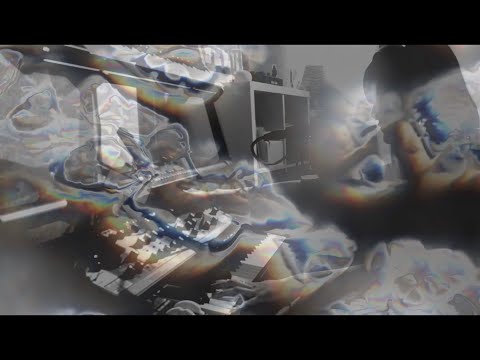
I loved Hinako’s sense of ritual. That rituals are vital to this artist was betrayed by the teacup she brought from backstage. Seizing a moment between dreamy vocal sequences, she would take a shy, quiet sip. The artist is drawn to the Japanese practice of forest bathing, which teaches an intimate relationship with the woods. One regains strength by spending time in a natural environment, consciously taking in all that nature offers—breathing the scents of diverse flora, listening intently to the sounds, touching the forest floor. This practice of forest bathing inspired Hinako’s debut album, “A Journey…”, released three years ago, where she used synthesizers to craft a woodland soundscape. The album was deeply influenced by the pandemic; when lockdown restrictions forced the world indoors, stripping away the joy of nature walks, the creator built a surrogate sonic forest.
The therapeutic qualities of Hinako’s music unfolded gracefully at Paliesius Manor as well. The half-hour spent with her was sweet and translucent—easier to grasp (and therefore easier to replace) than the minutes with William Basinski that followed.
The Music of Decay
Awaited all day, the maestro stepped up to his synthesizer with flowing hair, wearing a t-shirt of the American drone metal band Sunn O, whose print—likely no coincidence—resembled a black hole devouring matter. Fingers adorned with vintage-style rings wrapped around a glass of mineral water. The New York artist has always been known for his eccentric image, not nearly as solemn as the music he creates.
William Basinski captured the world’s attention with the four-album series “The Disintegration Loops”, released in 2002 and 2003. One Reddit commenter, hidden behind an Aphex Twin avatar, called it “the most convincing representation of death I have ever heard in music,” while another likened it to watching the collapse of ruins.
Such comparisons directly reflect the space and time whose spirit was captured in the album. On one hand, it is a very real decay. The album features processed loops the artist created in the 1970s, capturing music from an “easy listening radio station”—a radio format that typically played instrumental versions of well-known songs. Deciding to digitize the tape-recorded loops, William noticed that the endlessly spinning magnetic tape was gradually crumbling, and along with it, the recorded sounds were slowly fading away.
Though the artist succeeded in digitizing the tapes, September 11th followed shortly after—the Twin Towers fell in New York, burying thousands in the rubble. The event that shocked America imbued “The Disintegration Loops” with a new meaning. The albums masterfully immortalized death, decay, and mourning.
A Cosmic Love Story
“The Disintegration Loops” did not echo through Paliesius Manor, yet this introduction is vital to understanding the artist’s relationship with matter, its decay, and his intimate, human gaze upon inevitability and eternity—fundamental questions that fill many with fear.
When William announced that we would soon hear his work “On Time Out of Time”, to those unfamiliar with it, the title might have seemed a subtle hint that we had gathered there on borrowed time. After all, the second performance had not been planned, and only the sold-out tickets of the first provided the premise for it to happen.
The first thing to be said about the 2019 release “On Time Out of Time” is the extraordinarily unusual material that formed its foundation. An acquaintance with a staff member at the Laser Interferometer Gravitational-Wave Observatory (LIGO) led William Basinski to a remarkable recording, capturing the collision of two black holes 1.3 billion years ago. The signal received by LIGO marked the very first time scientists managed to detect gravitational waves and translate them into sound.

This cold, unearthly sound was precisely what was used to create “On Time Out of Time”. The quick-witted artist, speaking of his work, often says it captures a love story between two fucking black holes.
What happens when two black holes, devouring all matter around them, merge? Is love possible between them? Or are black holes doomed to an eternal cosmic solitude? The themes explored in “On Time Out of Time” differ from those we hear in the far more earthly and human “The Disintegration Loops”, yet the specter of death haunts both albums. In one, it is intensely physical and palpable; in the other, it is but a distant echo of a brutal cosmic collision, billions of light-years away. Despite a distance comprehensible only to the minds of scientists, the final sighs of these black holes acquire a profound humanity within William Basinski’s synthesizers, as the artist regards them with a gaze full of empathy.
The union of black holes is an incredibly violent event, sending distortions of spacetime—known as gravitational waves—rippling through the universe. Scientists compare these distortions to what we see on the surface of water when a drop falls into it: swallowing the drop, the surface begins to ripple. It was no accident that on the screen behind William Basinski, a drop illuminated by a multicolored halo twitched and pulsed—a deliberate choice by the artist to illustrate his work using, once again, a deeply earthly image.
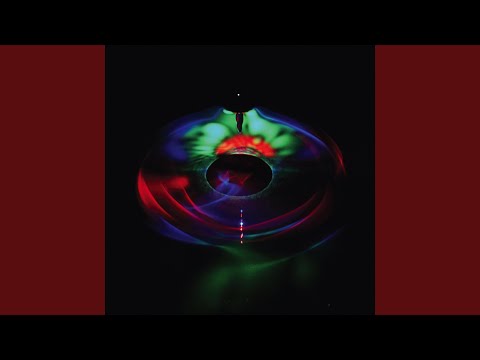
For the entire 40 minutes of “On Time Out of Time”, you feel these ripples. As you listen, you can envision two dense oceans of gravity, pulsing and spiraling ever closer to one another, though this is mere imagination. For now, sound is the only way to witness the act of black holes, for it takes place in a darkness so absolute that no telescope invented by human hands can pierce it. A fact that endows the work with even greater worth.
Yet, this dance of darkness, death, and decay also reflects the universe’s creative potential. Two merged black holes give birth to an even larger black hole, and their love is crowned by a burst of light brighter than the simultaneous glow of all the stars in all the galaxies of the universe. And so, the dramatic, at times even menacing, “On Time Out of Time” shines with a cosmic hope—as if somewhere out there, in the cold, boundless universe, God is smiling.
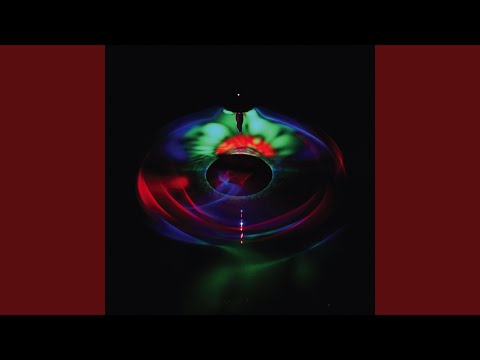
Listening to this piece for at least the fifth time in a row, through headphones in the comfort of my home, I begin to wonder: did the spotlights glaring into our eyes during the concert truly help me feel its full grandeur and fundamentality, or did they distract? Sitting in the cozy, chamber-like embrace of the manor hall, warmly cloaked in thick stage smoke, it felt as though everything was exactly as it should be. Yet now I believe that “On Time Out of Time” would unfold best in pitch darkness, perhaps with only a single, small, pale spotlight casting a faint glow on William Basinski’s face.
In the broader sense, however, the venue beautifully complemented the theme of the work performed. The surviving stone walls of Paliesius Manor, whispering of the 17th century, also speak to us of the past, of preservation, of decay, and of hope. Within them, people loved, longed, and lived. Later, the manor was abandoned, and only through immense effort, patience, and creativity was it possible to save what visitors see today. When you reflect on this, how extraordinary it is to listen to the billion-year-old music of the universe surrounded by walls once touched by the hands of those who lived centuries ago.