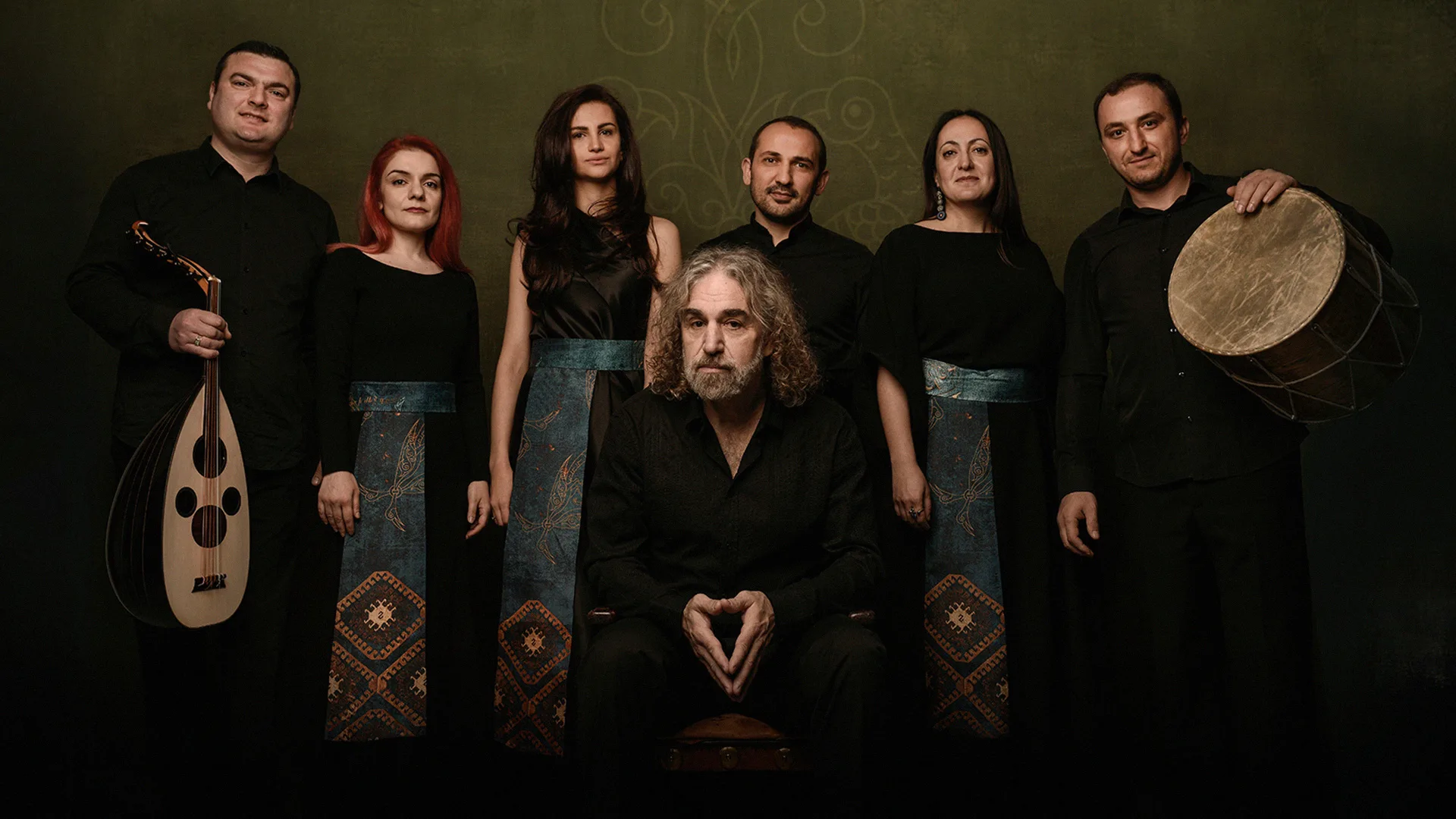
On March 14, we invite you to hear the “Naghash Ensemble” at Paliesius Manor! Mysterious music will be performed, created for the ensemble by Armenian-American composer John Hodian, based on the sacred texts of the medieval Armenian poet and priest Mkrtich Naghash – combining the earthly spirituality of Armenian folk songs, new classical music, contemporary post-minimalism, and the energy of jazz and rock.
Critics have showered this music with praise. “A charming elixir of sounds, based on new Armenian folk music and centuries-old poems,” KEXP stated. In “Rolling Stone” magazine, it was described as “a moment of grace and meditation”. “Part folk music, part classical, deeply moving. Undoubtedly Armenian, but not of this world,” wrote the cultural newspaper “Armenisch–Deutsche Korrespondenz”. And the work “Songs of Exile” (Lithuanian: “Tremties dainos”), a meditation on man’s relationship with God from the perspective of a monk who lived in exile for many years, was called “the sound of ancient Armenia reborn in the 21st century” by visionary Armenian composer Tigran Mansurian.
The “Naghash Ensemble”, comprised of Armenia’s finest musicians and singers, has been touring throughout Europe for ten years, receiving numerous accolades. Their album “Songs of Exile”, released in 2014, is the first in a three-part series. The second disc, “Songs of Exile, Volume II: Credos & Convictions”, appeared in 2016. The third and final disc, “Songs of Exile: Lamentations & Benedictions”, was released in the autumn of 2019, and a live recording appeared in 2021. Their studio recording “Songs of Wisdom” is a collection of new works based on the texts of the 13th-century Armenian poet Kostandin Erznkatsi, scheduled for release in 2027.
Pianist and composer John Hodian recounts that the idea to form the “Naghash Ensemble” came to him when he first heard Hasmik Baghdasaryan singing in the ancient pre-Christian Garni Temple near Yerevan, Armenia. She sang spiritual Armenian medieval music with a stunning voice. The fascination was further intensified by Garni’s unique acoustics and the beauty of its surroundings. Hodian states that this sound haunted him for several days, so he decided to create a work that would allow him to use it in a new way.
He had a clear vision for Baghdasaryan’s voice, but it took him several years to find the right text. While researching libraries in Yerevan, New York, and Berlin, the musician finally discovered a small text by the medieval Armenian poet Mkrtich Naghash, whose words leaped from the page directly into his soul. “I realized I had found my text!” he says.
Naghash was primarily a priest, and his poetry was a continuation of his sermons. Hodian was particularly drawn to his powerful poems about the plight of the “ghareeb” (exiles). As a person of Armenian descent and a grandson of genocide survivors, he, like many members of the Armenian diaspora, can deeply identify with the sad fate of the “ghareeb”. Although written in the 15th century, Naghash’s texts are surprisingly timeless in these turbulent times. In Yerevan, Hodian managed to find the remaining fourteen poems. After long deliberation about which of these texts to use, the musician finally decided to adapt all of them for the music.
Naghash’s language has a unique characteristic: he addresses both the elite and the downtrodden. His sharp warnings are directed at both the powerful and the common person. In many poems, Naghash emphasizes that no matter who we are, we all go to the same “home” – the afterlife. The poet often directs warnings to himself as well.
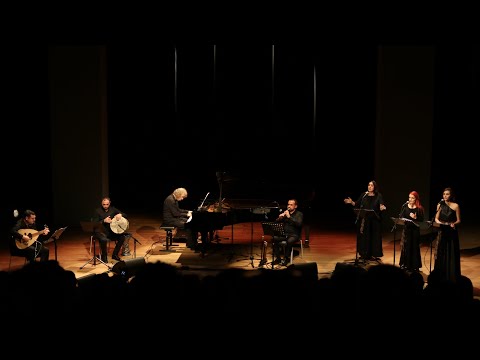
Hodian did not envision a specific ensemble (only Baghdasaryan’s voice), so he allowed the texts to dictate the music. The instruments were chosen intuitively, but in retrospect, they proved to be an excellent complement to the words, as the formal elements (piano and voice) are balanced by the earthy sounds of Armenian folk instruments (duduk, dhol, and oud).
Persistence and a bit of luck allowed Hodian to assemble some of Armenia’s finest musicians and singers. All of them possess deep knowledge of Armenian folk and spiritual music, but have also graduated from the Yerevan State Conservatory and can play or sing anything. Each member brings something unique to the ensemble’s sound. “I am still amazed by their exceptional qualities as musicians and as people,” concludes the composer.




News