

Source: 7MD.LT
Author: Aldona Eleonora Radvilaitė
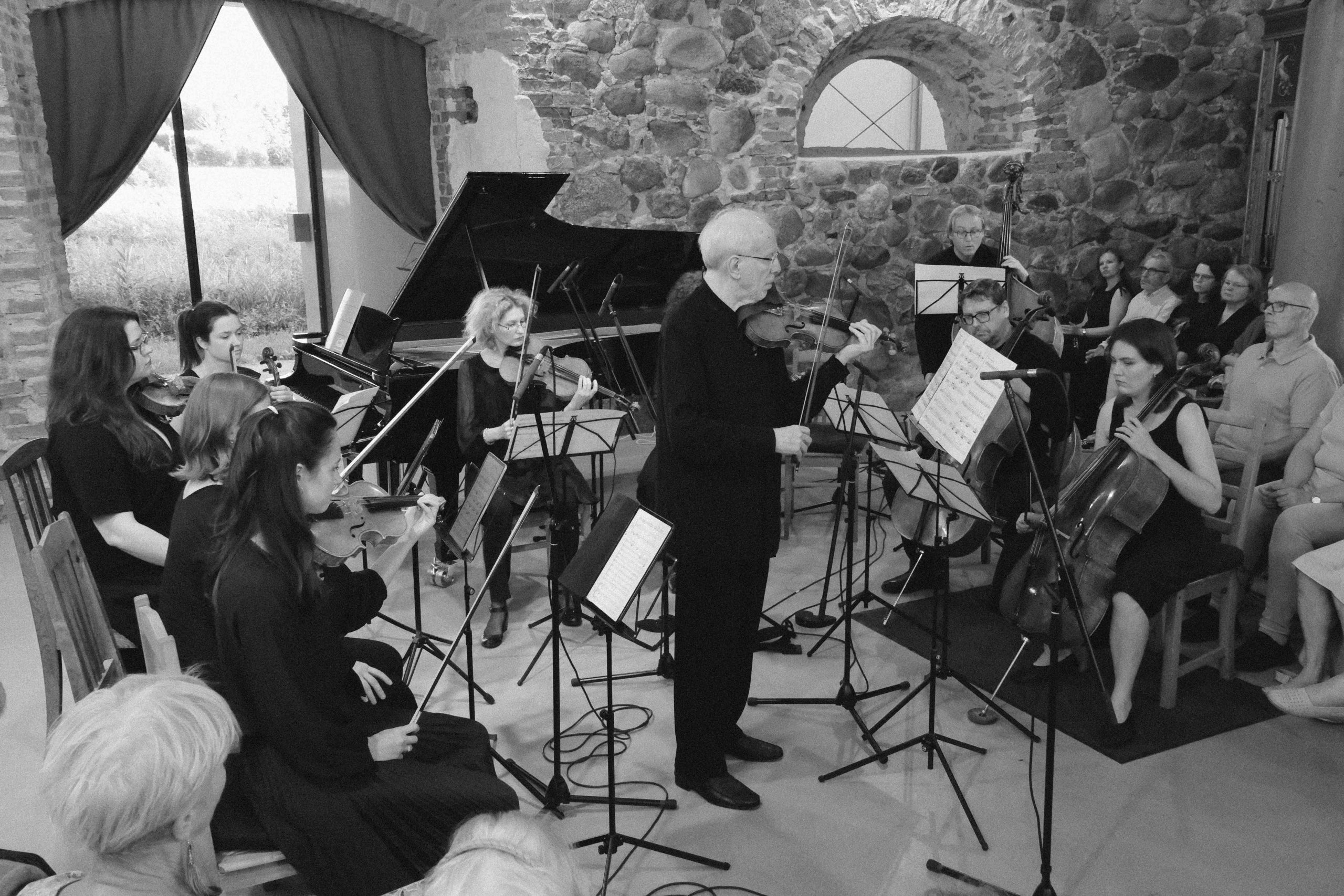 On August 10–11, Paliesius Manor hosted an extraordinary musical event. For the first time, the estate welcomed the Kremerata Baltica festival, filling the air with masterful, time-honored music. Simply naming the performers reveals the immense dedication required to orchestrate an event of this scale—gathering so many artists within the intimate space of the Pasaga hall, and inviting such luminous stage stars to take part. Undoubtedly, what made it possible was the allure of the manor’s surroundings, the flawless acoustics of the hall, the warmth of the musicians, and a deeply attentive audience, capable of appreciating interpretations of the highest professional caliber.
Performing across both days of the festival was the world-renowned violinist Gidon Kremer—celebrated as one of the most original and compelling artists of our time—alongside his Grammy Award-winning international ensemble Kremerata Baltica, founded in 1997, and the Latvian ensemble Kremerata Lettonica, which unites brilliant young musicians. Together or in solo performance, they were joined by a constellation of acclaimed guest artists: Yulianna Avdeeva, who won First Prize at the 2010 International Chopin Piano Competition and earned global acclaim for subtle, precise playing likened to “Chopin himself” (“The Telegraph”); the Latvian laureate of international competitions, Andrejs Osokins; one of Lithuania’s most distinguished pianists and a Grammy nominee, Andrius Žlabys; the laureate of numerous Latvian and international competitions, violinist Madara Pētersone; and German-Austrian violist Emma Wernig, renowned for her deeply authentic musical voice. She has released a critically acclaimed album of rare Austrian viola works with pianist Albert Cano Smit, performs solo programs, and frequently arranges cello, violin, and vocal repertoire herself.
Before the first notes of the festival rang out, audiences gathered for the premiere of the 52-minute film “Ieškant tylos”. The film weaves together the thoughts and insights of renowned international musicians who have performed at Paliesius Manor, reflecting on culture, nature, and presentiments of the world’s future, interspersed with fragments of their performances. Directed by Aleksas Matvejevas and co-written by Viktoras Paukštelis and Matvejevas, the documentary features such luminaries as Andrius Žlabys, Gidon Kremer, Helene Papadopoulos, Ian Bostridge, Jarkko Riihimäki, Jean-Marc Luisada, Juan Manuel Cañizares, Saskia Giorgini, Simin Tander, Simone Kermes, Tord Gustavsen, Viktoras Paukštelis, and Vladimir Tarasov.
Following the film, the two-day musical journey began, dedicated to marking the 90th anniversary of composer Alfred Schnittke and the 115th anniversary of Grażyna Bacewicz. Those who had the opportunity to experience both days of the festival noted a distinct shift in atmosphere: the first day’s concert was longer, brimming with emotionally tense, dramatic music, while the following day’s works seemed to drift with a subtle, refined, serene lightness—save for the final, most complex piece, Schnittke’s Concerto for Piano and Strings. The programme was curated with profound expertise, utilizing the principle of contrast to guide the musical narrative (with the printed programmes even noting the exact duration of each work).
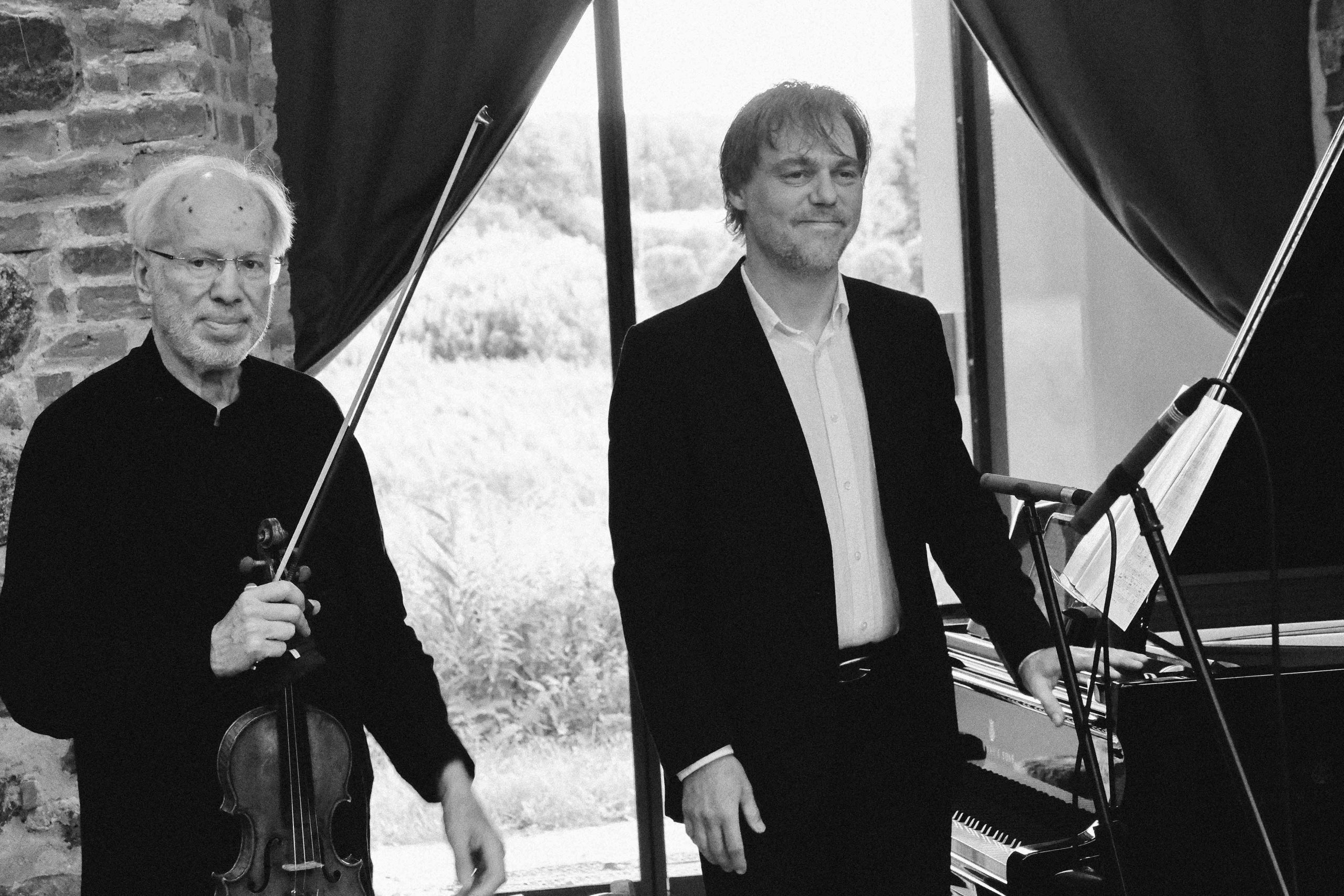
The festival opened with Schnittke’s luminous, baroque-inspired “Gratulationsrondo” (“Pasveikinantis rondo”), masterfully performed by Kremer and Žlabys. Among the program’s many striking works, several stood out with an overwhelmingly powerful expression. It was only a pity that, due to the concert’s length, Grażyna Bacewicz’s Piano Quintet No. 1 could not be performed in its entirety—only its third movement, Grave, echoed through the hall. Yet, it was granted a spectacular interpretation by Žlabys, Kremer, Dainius Peseckas (violin), Karolis Rudokas (viola), and Rūta Balčiūtė (cello). This music struck a vivid contrast to the radiant lightness of the program’s opening piece.
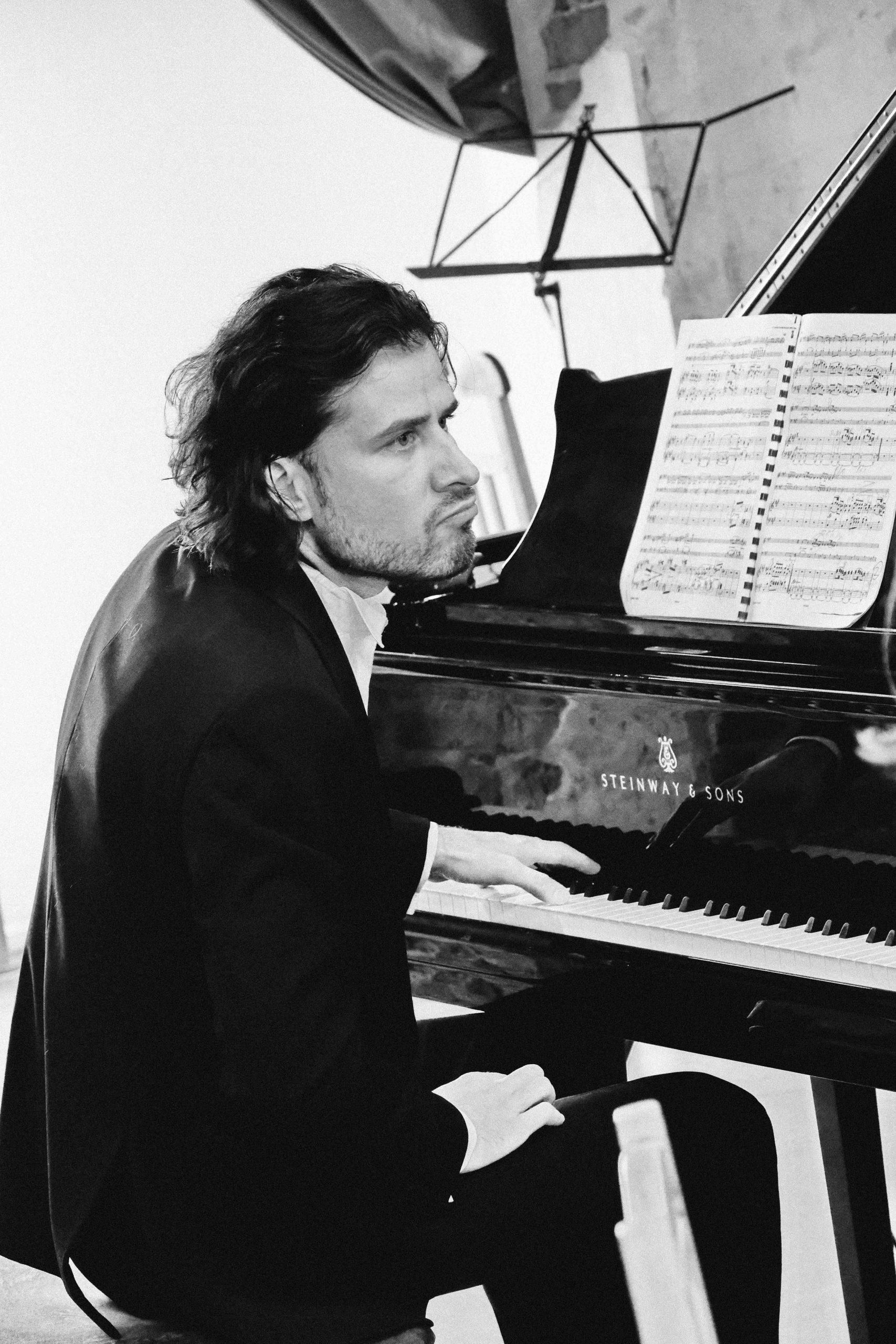
Franz Schubert’s brilliant Quintet for Piano, Violin, Viola, Cello, and Double Bass in A major (D. 667, Forellenquintett) then illuminated the hall with a spectrum of musical colors and joyous moods. This exceptionally vibrant, magnificent work was brought to life in sparkling, spirited tones by pianist Osokins and the Kremerata Lettonica quartet: Pētersone (violin), Wernig (viola), Magdalena Ceple (cello)—whose exceptionally sensitive playing caught the ear of even the non-professionals in the audience—and the energetic double bassist Iurii Gavryliuk. The quintet performed with such vivid, uplifting energy that as the audience stepped out into the manor park for intermission, breathing in the tranquil embrace of nature, they did so with smiles on their faces.
The second half of the concert opened with works that offered a sharp emotional contrast to what had come before. Valentin Silvestrov’s “Three Serenades” for violin and piano were played with a hushed, unhurried, and profound sensitivity by Kremer and Avdeeva; Vytautas Bacevičius’s “3 Pensées musicales” were delivered with a quiet, gathered focus by Žlabys; and Schubert’s single-movement String Quartet in C minor (D. 703, Quartettsatz) was performed with lucid, dynamic precision by a quartet of young Latvian string players: Sabīne Sergejeva (violin), Rūdolfs Miķelsons (violin), Marta Rācene (viola), and Anna Katrīna Paukšēna (cello).
The true revelation of the concert was Schnittke’s Piano Quintet—a deeply captivating, striking piece, saturated with vivid contrasts and an abundance of color. It was given an intensely compelling interpretation by Žlabys, Kremer, Pētersone, Wernig, and Ceple. The music swelled like an apocalyptic force, sweeping away all that breathes.
Providing a profound contrast to this opus, and bringing the evening’s musical marathon to a close, was an encore: “Hommage à A. SCH” (Anonymous). It was performed by Kremer, with Žlabys drawing mysterious, crystalline tones from an upright piano in another room (listed first in the programme), alongside Kremerata Lettonica. Bright, tender, and serene sounds poured forth.
***
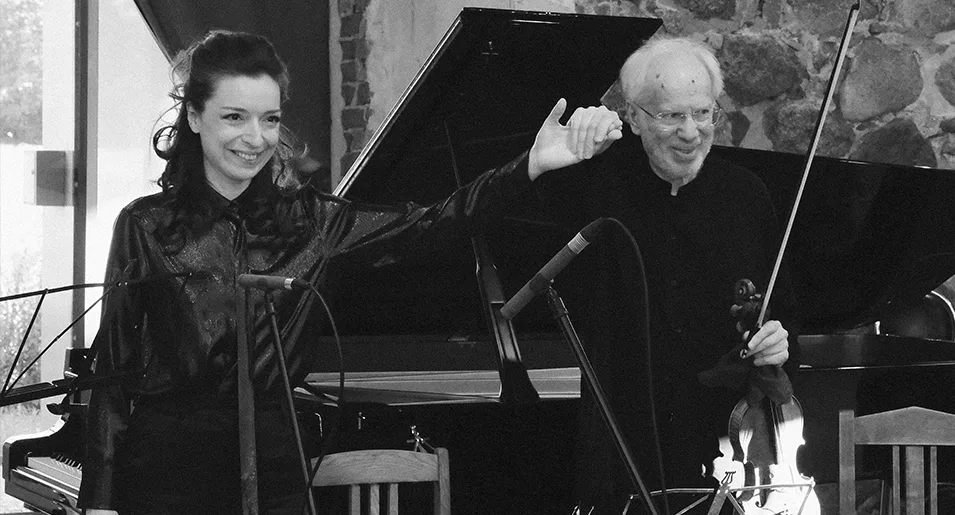
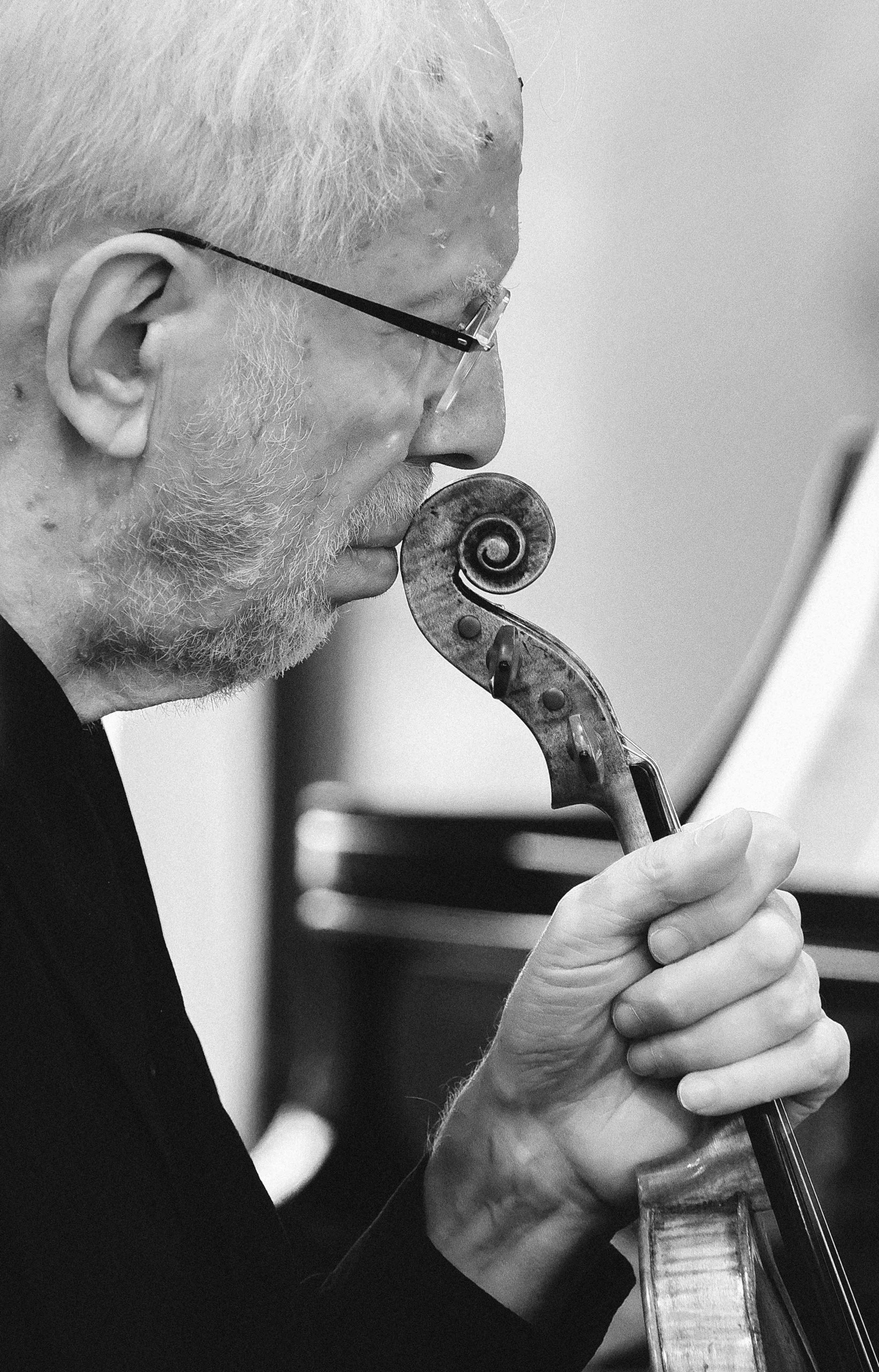
 Having performed substantial piano works in the festival’s first concert, Žlabys and Osokins inaugurated the second day as well, sharing the bench for Ludwig van Beethoven’s bright and graceful Sonata in D major for four hands. Pianist Yulianna Avdeeva shone brilliantly, offering an intriguing ensemble interpretation of Schnittke’s Concerto grosso No. 6 for Violin, Piano, and Strings alongside Kremer and Kremerata Baltica. This three-movement opus captivated listeners with its incredibly inventive effects, the intricate textures of the violin part, the shifting moods, and the consummate mastery of every performer. Through it all, Kremer’s sensitive, nuanced bowing was, as ever, a deep joy that completely immersed the audience. Indeed, this tireless magician of the violin took part in performing almost every piece on the programme.
Together with Kremerata Baltica, Kremer presented a brief, luminous, and crystalline cycle woven from arrangements of Schubert’s music. The cycle was framed by Schubert’s Minuets, and carried listeners through Raminta Šerkšnytė’s “Winternacht” (based on the song “Gute Nacht”), movements of Schubert’s Trio, Victor Kissine’s arrangement of “Frulingstraum”, and Osokins’s “Auf dem Flusse”.
Following this, Grażyna Bacewicz’s Divertimento for Strings struck a vivid contrast, brimming with a rich tapestry of sonic effects. The piece was masterfully conveyed by Kremerata Lettonica.
Drawing the entire two-day festival to a close was Schnittke’s Concerto for Piano and Strings, given a mesmerizingly powerful and energetic interpretation by Avdeeva and Kremerata Baltica. The performance was a journey through incredible virtuosic flourishes, meditative episodes, and wondrously strange sonorities.
Just as at the close of the first programme, the encore was an anonymous dedication to Alfred Schnittke, echoing with mysterious upright piano notes drifting from behind the main stage.
A heartfelt expression of gratitude goes to the host of Paliesius Manor—medical professor, doctor, and head of Diagnostinės sistemos, Julius Ptašekas—and his wonderful team, who managed to organize such a monumental festival, offering us all the chance to revel in the artistry of these talented musical masters. And the most resounding applause belongs to Maestro Gidon Kremer!