

Source: NEMUNAS
Author: Valdas Puteikis
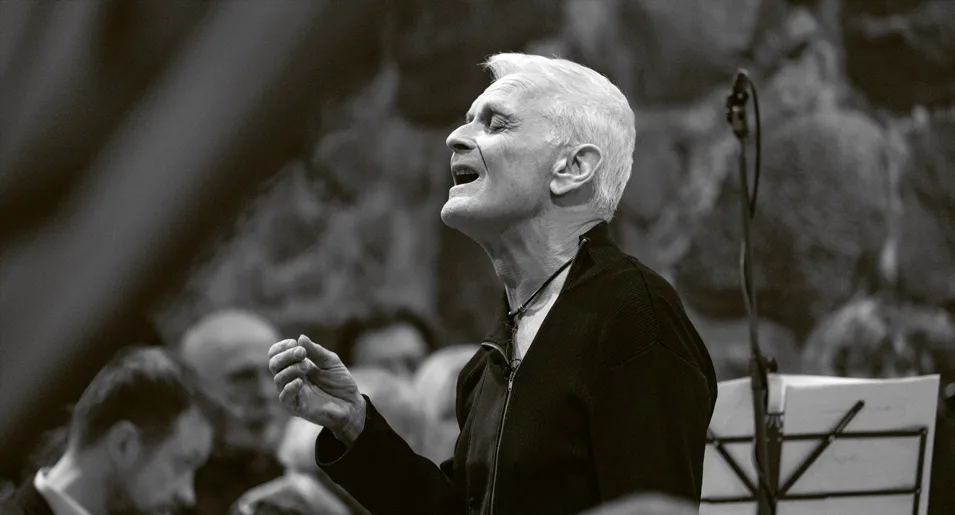
There are but a few creators in the world who, with the passing years, preserve and polish their musical talent like a fine wine. The Ukrainian-born American pianist Vladimir Horowitz was one such artist: well into his nineties, he performed his recital programs in the halls of New York with such phenomenal skill that his playing left even the most exacting music critics breathless. We can bestow this same mark of distinction upon the French countertenor Gérard Lesne. The vocals and Baroque music program of the 68-year-old singer continue to astonish discerning European audiences—among them, the Lithuanian listeners who gathered at Paliesius Manor. What they witnessed from this talented performer and the Swiss ensemble “Le Concert universel” from Geneva was not merely a concert, but a musical performance by a single singing actor.
The countertenor vocals of G. Lesne always evoke the sensation of traveling through time—drifting across entire epochs, beginning seemingly long before the Baroque era, and wandering without a map (google maps), as the performer’s voice appears to dissolve the borders between nations. This time, it resonated through a space whose foundations were laid in the first half of the 18th century—when Paliesius Manor passed from Count Ignotas Tyzenhauzas to the landowners Justina and Kazimieras Petras Kublickas, who had arrived from Livonia. While they were more focused on the economic estate than on culture (though their son-in-law, the renowned 19th-century Lithuanian painter Vincentas Smakauskas, would much later note in letters to his wife Emilija that her brothers had preserved an extensive library here), the new owners constructed a horseshoe-shaped stable…
***
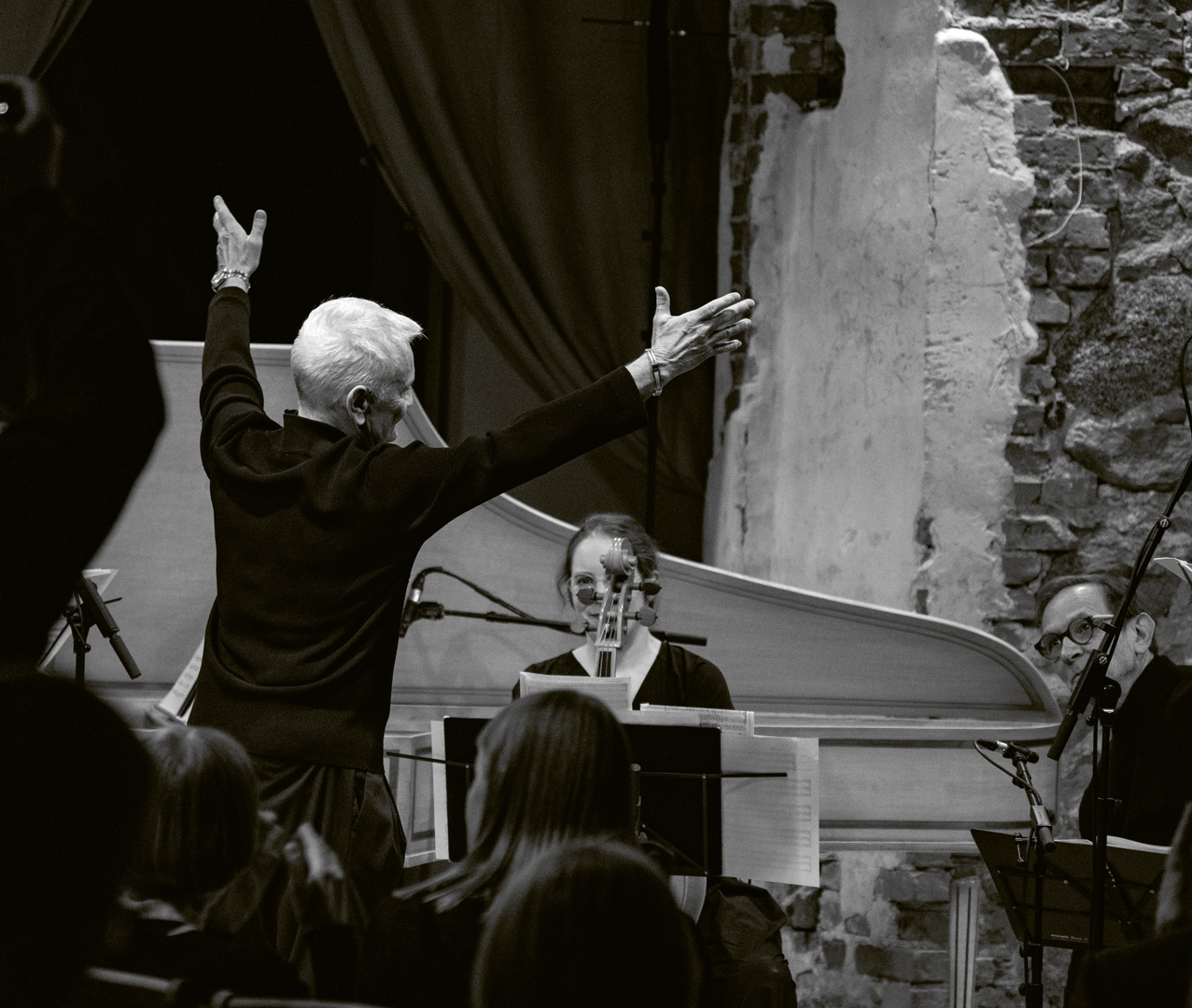
Over a decade ago, this manor was authentically resurrected from its Soviet-era ruins by its current owner—medical professor and businessman Julius Ptašekas. The architects he invited, Daina and James Ferguson, designed the former stable in such a way that upon visiting for the first time, pianist Andrius Žlabys remarked, “Flawless acoustics for concerts.” Thus, it was within this fortress of stone and glass that the Baroque music concert performed by G. Lesne and the Swiss ensemble unfolded. When the notes of “Senhora del Mundo” by an unknown Portuguese composer, played by Mathurin Bouny, arose from the wings of the hall, and the performer appeared before the audience, the atmosphere he created felt cloaked in a Baroque mystery. It was as though we were hearing a voice from beyond, an ancestral chant drifting from the tomb, or perhaps the beginning of a dialogue with the world of the dead—a musical connection to an era long lost, yet certainly not the present day. Lasting nearly an hour and a half, the concert, sung in high notes and delivered in recitative, maintained a macabre holiness (however contradictory that phrase might sound), which the singer deepened continuously—right up to the culmination, when the aria “Air du Froid” from English Baroque composer Henry Purcell’s opera “King Arthur” (1691) filled the space.
***
We met the French vocalist G. Lesne at Paliesius Manor on the eve of the concert, exactly on the equinox, March 21st, as the world observed both Poetry Day and the 340th birthday of German Baroque composer Johann Sebastian Bach. We drank coffee and tasted cinnamon buns, which, owing to their stickiness, the performer sliced with a knife and ate with a fork. Incidentally, the pastry chefs of Paliesius Manor bake these treats using flour milled at the Šlyninka Water Mill in the Zarasai region, which boasts a history of over three hundred years. How chronologically close it all is to the European Baroque!
When the Livonian-born Cupbearers of the Grand Duchy of Lithuania, the Kublickas family, were establishing themselves in Paliesius, just a few years or perhaps a decade earlier, the Italian Baroque composer Antonio Vivaldi had already written everything—some sixty operas (many lost to time), four oratorios, over five hundred concertos, his ever-famous “The Four Seasons”, and even the vocal piece for two violins and harpsichord, “La Follia”, which the French countertenor performed in the manor’s “Pasaga” hall, seemingly lost in pure ecstasy. The same held true when he sang “Cara Sposa, amante Cara”, an aria from the opera “Rinaldo”, and “Ombra mai fu” from the opera “Xerxes”, both by the German Baroque composer George Frideric Handel (whose creative peak chronologically mirrored Paliesius Manor’s era of economic prosperity). And what of J. S. Bach? His late creative period overlaps with the history and culture of the region where G. Lesne was visiting. “To me, Bach is not just the Absolute of the Baroque, but of all music and all ages, an unquestionable Greatness, he is Immortality,” the impassioned performer shares. “Throughout my career, I haven’t performed his works often for one reason alone—the Latin texts, which I find slightly more challenging than those written in, say, Italian or French. My first profound encounter with this composer’s work came through the Belgian conductor and ensemble artistic director Philippe Herreweghe. A decade my senior, the Ghent-born musician had founded the vocal ensemble of the Chapelle Royale in Paris, and later led and conducted countless renowned European orchestras. Yet it was his incredibly subtle and harmonious interpretation of Bach that touched my mind and emotions—then still a very young, budding countertenor—allowing me to experience how mathematical precision in music becomes poetry, and lyricism becomes mathematics. I would call those moments an epiphany—nothing less! Delving into Bach’s scores, I realized that my voice is absolutely unsuited for his ‘St Matthew Passion’ and almost ideal for his ‘St John Passion,’ though I never chose this oratorio. Usually in life, I also had to take on repertoire that was traumatically difficult. And, for instance, I could not record François Couperin’s ‘Leçons de ténèbres’ for a long time due to the constant catharsis I experienced.”
***
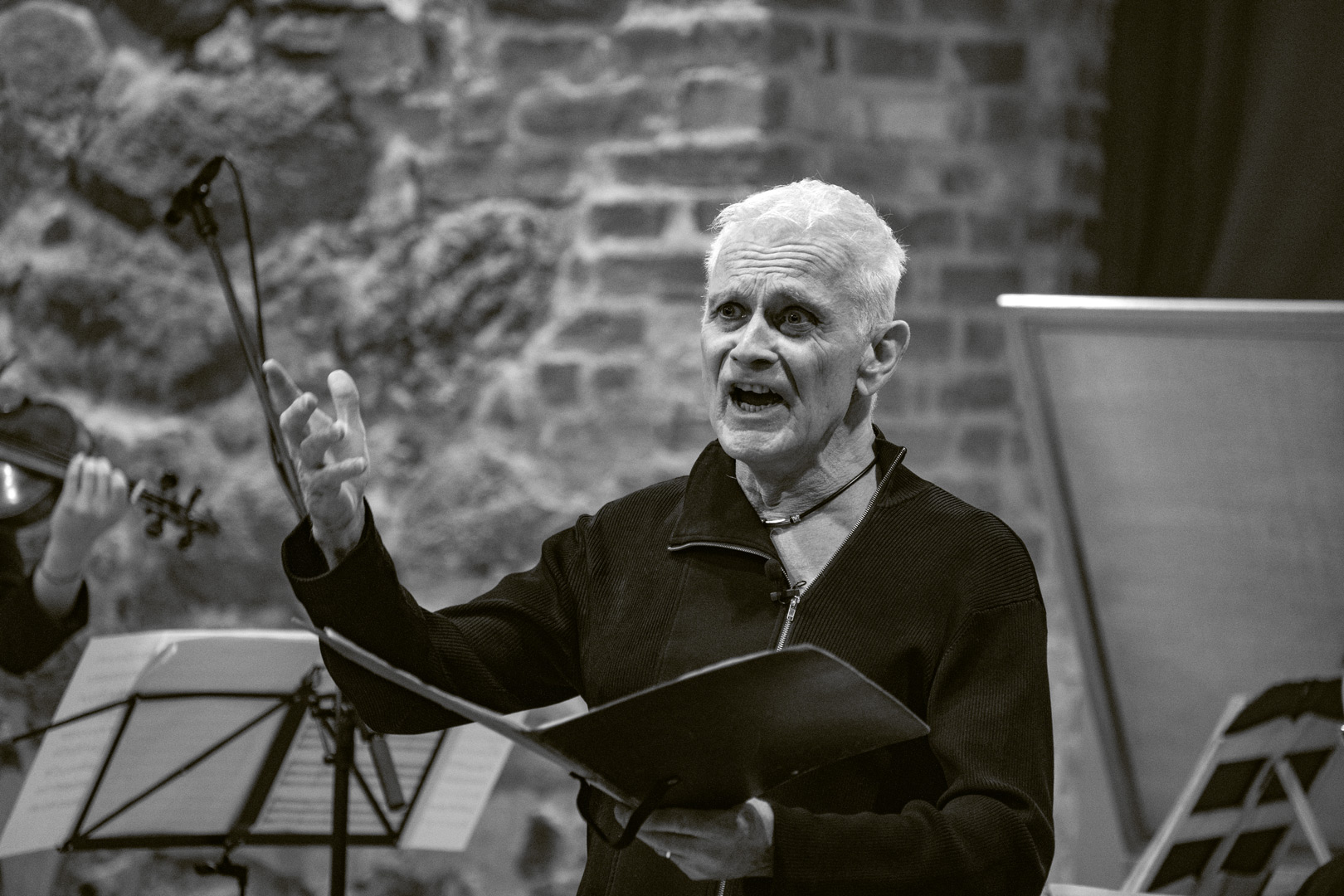
Having met on International Poetry Day, we could not avoid the topic of poetic texts. Unlike some Frenchmen who claim to adore poetry yet struggle to recall a single poet’s name, G. Lesne immediately confessed that his relationship with his homeland’s poetry—aside from the Symbolist movement represented by Paul Verlaine, Arthur Rimbaud, and Stéphane Mallarmé—is not nearly as intimate and passionate as his immersion in haiku. This genre of Japanese poetry has so enchanted the singer that he even creates theatrical mise-en-scènes around it. “Haiku draws me in with its ephemerality and the infinite precision of the phrase, where three lines say everything about life and the world. With them, everything is captured as if with a single press of a camera button. Take, for instance, ‘the thief left it behind: the moon at my window’ or one written after the Hiroshima tragedy: ‘war was here, far at the end of the corridor’ (literal translations by V. P.). Haiku affects me with its momentary beauty and immerses me in absolute sorrow, that beauty of sorrow, that sweet melancholy I want to relish endlessly. Perhaps in a certain sense, haiku could be compared to the works of the aforementioned Bach: in both, a single line holds eternity; in both, the image appears first, followed by a flood of emotions. From the 16th century onwards, the art of music maintained a verticality for nearly three centuries, both structurally and in its emotional weight, but later it grew increasingly horizontal,” the interlocutor shares his thoughts.
***
Looking through the window at the slowly awakening, spring-touched Kančiogina marsh that pools and stretches to the southeast of Paliesius Manor, G. Lesne admits he has not seen such a landscape of northern nature in a long time. Even the native valley of the Oise River, a right tributary of the Seine, during his childhood in the late 1950s, he notes, was far more urbanized than the grounds of this estate. Born in 1956 in the Parisian suburb of Montmorency, Gérard did not stand out too much from his peers: his adolescence was filled with rock music, classical guitar, jazz, listening to “Pink Floyd” at home, and occasional train rides to Paris, never bypassing the iconic Saint-Germain quarters. All around, people talked about the holidays in Nepal that were so popular among Parisians at the time, yet the ordinary suburban routine was nothing like the one today’s French citizens strive to escape. The singer and his wife, Laurence, also left not only the suburbs but Paris itself long ago—settling in a small French town near the Swiss border, not far from Geneva. “We are in a place where the most negative news of the world has a harder time breaking through. It is enough for us to know what is happening, but we are not inclined to savor every piece of news from America. The world that surrounds me is not my world, but I am well aware that the golden sixties and seventies of the last century will not return,” G. Lesne admits.
Gérard’s childhood and adolescence were not marked by hours of music lessons and rehearsals; nevertheless, having noticed that his timbre changed only slightly during his voice mutation period, the teenager began singing more and more, albeit self-taught. “At one point, a friend and I attended school choir rehearsals; he had an incredibly pure treble—mine could not even compare—but after his voice broke, my friend never sang again,” he recalls. “I managed to keep mine—or rather, God kept it. While studying at the Sorbonne, I could never quite manage to successfully join any amateur groups. At the age of 23, in 1979, I met the Belgian countertenor Zeger Vandersteene. His career, too, hadn’t started in a serious music school or later a conservatory, but with Gregorian chants, which he performed as a soloist with the choir of the famous St Bavo’s Cathedral in Ghent. I was surprised that Zeger was fascinated by my timbre and offered me a genuine opportunity for a classical music career. He introduced me to the Austrian composer, harpsichordist, musicologist, and conductor René Clemencic, who deemed my voice suited for lyrical work. Incidentally, Z. Vandersteene could never decide whether he was a tenor or a countertenor. At the time, it was not socially acceptable for a man to sing in such a high register, as the shadow of the castrati—who essentially put vocal Baroque music on its feet—still lingered. True, their culture stretched back to Antiquity, but it became immensely popular in the 17th and 18th centuries. Thus, not all performers of my generation or older felt comfortable, and so Zeger, advised by his wife, chose the position of tenor, yielding his place in R. Clemencic’s ensemble to me. Today, I see the reverse problem of this social cross-section: among my students, there are countless talented young men who possess high voices and are proud of them, yet we are living through the twilight of Baroque music—audiences are shrinking, and we constantly feel a lack of funding. We have become representatives of an absolutely niche music.”
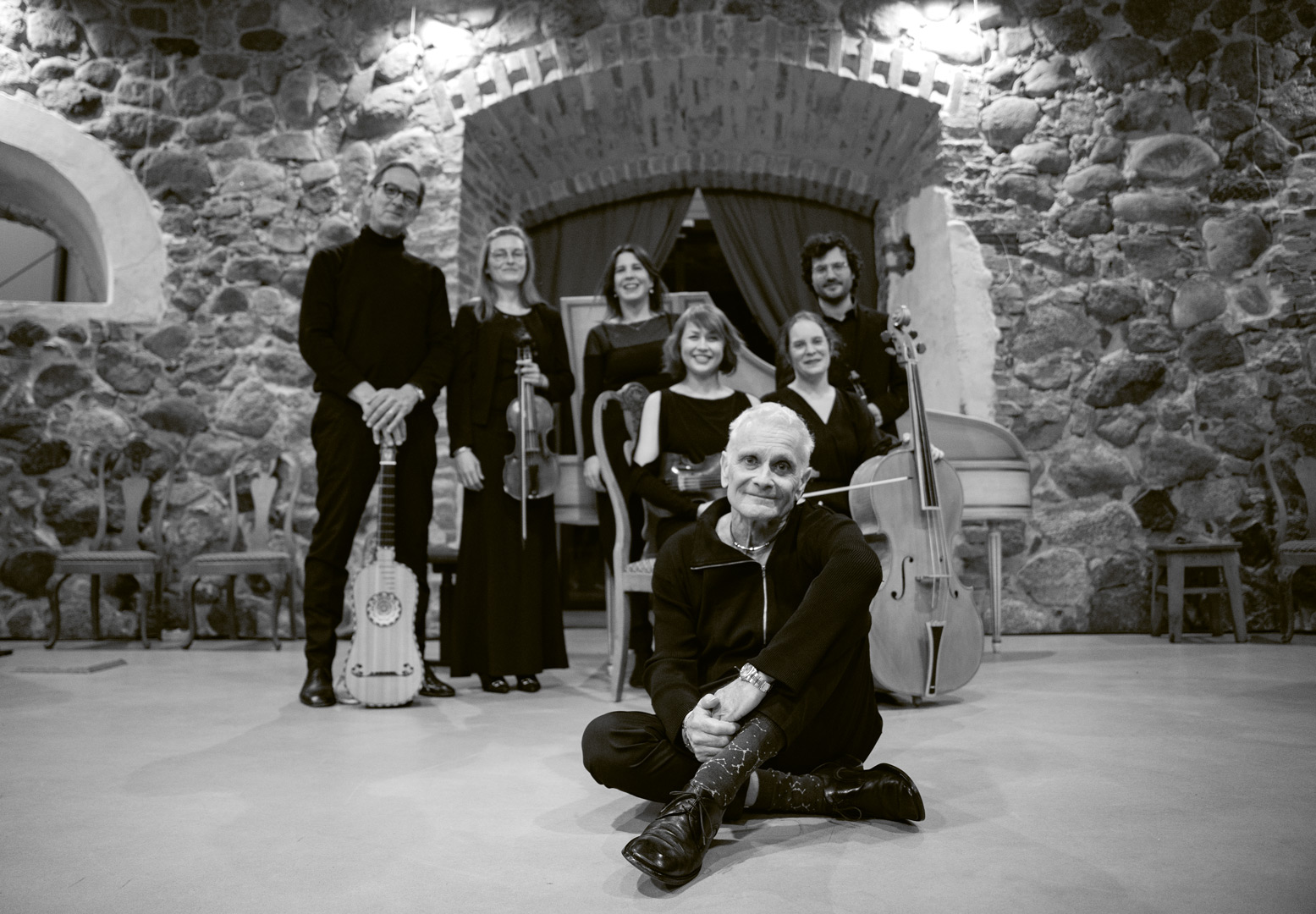
G. Lesne joined the “Clemencic Consort”, and the world of Baroque music opened up to him. The experience gained during tours and recordings (they released three albums each year) served as a springboard into a dual career—as a countertenor and artistic director. The performer relates: “From the very first days of our collaboration, R. Clemencic entrusted me, a 23-year-old self-taught singer, with leading roles and solo parts in Baroque operas and oratorios, the posters for which I have kept to this day—it was something incredible! Being an influential figure in the Viennese music world, this man opened the doors for me to prestigious concerts and opera productions. Thanks to him, I plunged deeply into medieval music, and in turn, I tried to show him the French Baroque with Jean-Philippe Rameau, Marc-Antoine Charpentier, Michel Richard Delalande, André Campra, and F. Couperin. Unlike the Italian Baroque, which flourished through the efforts of the Church—where women were forbidden from singing, and so the high parts were performed by castrati—the French Baroque grew out of the aristocracy and court culture, becoming a mark of good taste and fine manners in every educated family. But—a paradox—Italian Baroque music is much freer, it ‘breathes easier’, and it was precisely this freedom that my country’s composers sought when creating the vocal works of this era. The aforementioned French composers soon became part of my repertoire as well. I recorded all my albums not just anywhere, not in studios, but in Gothic churches with predominantly wooden interiors.” In 1985, G. Lesne founded his own ensemble—”Il Seminario Musicale”, which initially tackled the Italian Baroque, performing the works of Domenico Scarlatti, Giovanni Battista Pergolesi, and A. Vivaldi. Later, the repertoire expanded. And the ensemble itself became a training ground for luminaries of the music world, such as conductors Marc Minkowski, Fabio Biondi, Patrick Cohën-Akenine, Florence Malgoire, and harpsichordist Blandine Rannou.
 ***
***
For entire decades, the countertenor recorded and held concert tours with such conductors as Jordi Savall, Gustav Leonhardt, René Jacobs, and Sigiswald Kuijken. He has even interpreted contemporary works by Benjamin Britten, Alfred Schnittke, and Carl Orff, including the latter’s “Carmina Burana”. Yet it was with “Il Seminario Musicale”, based at Royaumont Abbey in his native Oise River valley, that G. Lesne earned his most significant awards and critical acclaim. His stage partners have included Thomas Hampson, Natalie Dessay, Paul Agnew, Patricia Petibon, Sandrine Piau, Laurent Naouri, Philippe Jaroussky, Anthony Rolfe Johnson, Véronique Gens, Peter Harvey, and others. “To this day, I have preserved the vocal timbre characteristic of a countertenor. True, some registers have weakened slightly, but the most frustrating thing is that over the years, I have lost my singing speed and sharper reaction time. Meanwhile, my peer and colleague Dominique Visse has retained that speed,” the performer shares. The vocalist admits that one of the greatest influences on his musical career has been Venice, a city “where there are no cars—only gondolas.” Three places mark his success most vividly. First, the city’s opera house, La Fenice; then, St Mark’s Basilica; and finally, an open-air space where, just past St Mark’s Square, the Grand Canal ends and the sky opens up—here, every February, a stage is constructed on the water, a tiny wooden theater, hosting Baroque opera concerts. “It is an unforgettable feeling to perform the 13th-century song cycle ‘Carmina Burana’ by an unknown composer in this place, including my favorite chant, ‘Ave Nobilis’. My teacher, R. Clemencic, also gave concerts here. Despite the massive influx of tourists, Venice has fortunately not become a globalized metropolis. To be in a museum-city and feel as though you are living in the times of Voltaire and Diderot, while simultaneously listening to Igor Stravinsky’s ‘The Rite of Spring’—that is a great privilege,” concludes G. Lesne, who chose Lithuania for one of his final concerts.