

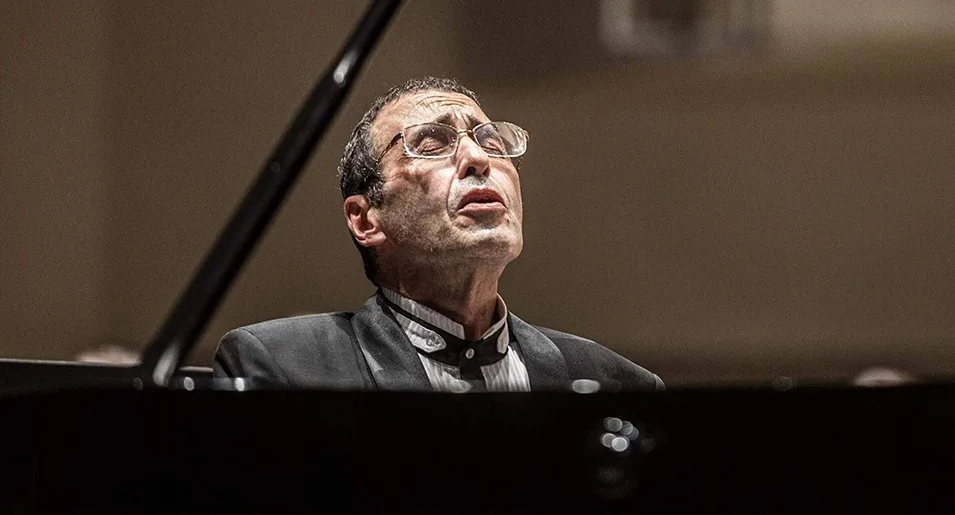
“If I can step onto the stage every single evening, I need nothing more. The stage is where I feel completely happy. Of course, as with anyone, there are less successful concerts, but that is life,” says pianist Alexander Paley.
Dividing his time between New York, Paris, and Vilnius, piano virtuoso A. Paley leaves no one indifferent with his profound talent and charisma. Audiences rise to their feet, and critics are boundless in their praise. Honored with a multitude of world-class awards, the pianist has graced the stages of the most prestigious concert halls and festivals, where he is always warmly welcomed.
On September 13, he returns to Paliesius Manor to host his seventh music marathon: this time its theme is „Šubertiada Paliesiuje“. Although F. Schubert, one of the most pivotal composers in musical history, died very young, he composed an extraordinary wealth of music. He wrote primarily for intimate musical gatherings—cozy salons and performances among friends.
This same intimate atmosphere will come alive during „Šubertiada Paliesiuje“. Across one day and three concerts, the composer’s greatest masterpieces will fill the air—magnificent piano trios, sonatas, works for piano four hands, and much more.
While awaiting this event—a conversation with the marathon’s organizer, A. Paley.
More about the marathon: 09.13 | Seventh Alexander Paley music marathon „Šubertiada Paliesiuje“
Source: LRT.LT
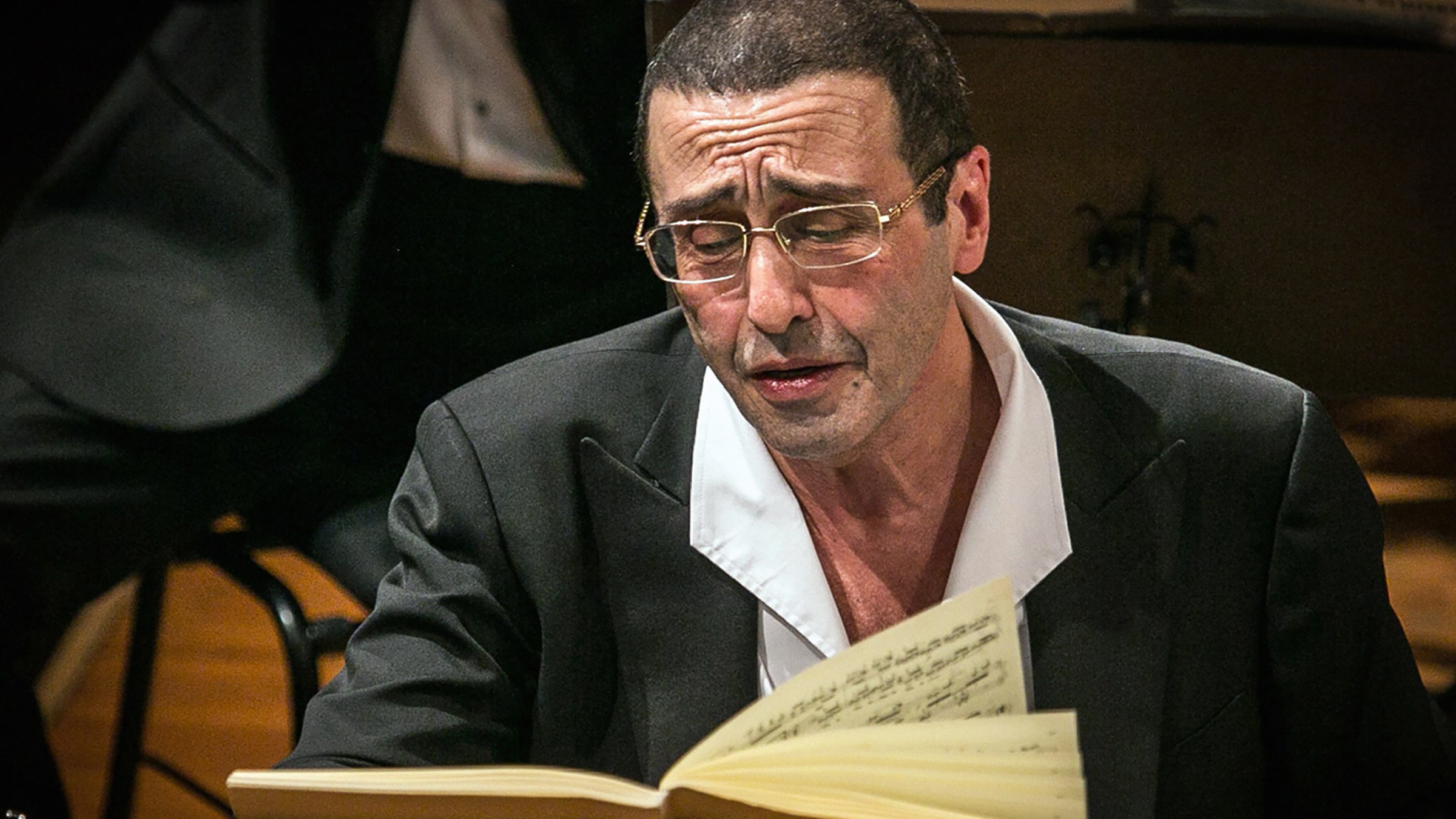
– You are organizing the music marathon for the seventh time now. How has the marathon changed over the years?
The first marathon took place in Klaipėda and was quite successful. The second time was in Kintai, and the third – at Paliesius. I met Julius [Julius Ptašekas – the restorer of Paliesius Manor] and we immediately became friends. After the third marathon, he said: “There is no doubt, from now on the marathon will always take place at Paliesius.”
I received this news with the greatest pleasure, as Paliesius is one of the most special places in Lithuania. Believe me, I know Lithuania very well; I have played everywhere. Paliesius has such a chamber music repertoire that the Vilnius Philharmonic could be envious. Wonderful, world-class performers play here. I host my festival at Paliesius, Gidon Kremer hosts his—that really is something.
Furthermore, the hall has two wonderful Steinway pianos, a fantastic audience gathers, and a very pleasant atmosphere lingers. I simply pray and hope that this continues for as long as I am alive, because in all of Lithuania, I cannot find a more poetic and beautiful place than Paliesius Manor.
– At Paliesius Manor, you will perform alongside pianist Pei-Wen Chen, violinist Raimondas Butvila, and cellist Marius Dominykas Sakavičius. Tell us about this collaboration.
Raimondas and I have been friends since our student days; he is a dear friend of mine, and we play together often. Marius is a member of our trio. Raimondas, Marius, and I are the Vytautas Magnus Trio. Raimondas and I are professors there [at the Vytautas Magnus University Music Academy], and Marius is a leading alumnus who graduated from this academy.
We play quite a lot. Last year we performed all of Mozart’s chamber music, and even earlier, all of Beethoven’s and Brahms’s music. No one else in Lithuania has done this. And this year we will perform the complete works of F. Schubert. That is why it will be a „Šubertiada“.
Pei-Wen Chen is my wife; on February 6, we celebrated our 30th wedding anniversary. We hosted a concert in Vilnius—that was how we celebrated. Of course, as you can understand, over these 30 years we have played a great deal four hands or on two pianos. Throughout all these years, she has been an irreplaceable partner—when playing, we feel every nuance, every shift in mood; playing together is a profound joy and blessing. And F. Schubert wrote countless pieces for four hands.
I am very fond of my partners, both as people and as musicians.
– What is your personal connection to F. Schubert and his music?
I share a special bond with every composer whose works I perform. F. Schubert, however, is one of those composers who has accompanied me my entire life. At the same time, it is a tremendous challenge, because, for example, we will perform two major F. Schubert trios, which are exceptionally difficult. The music is of an absolutely divine beauty. Truthfully, all the music written by F. Schubert—who died so very young—is a masterpiece. No matter the instrument or the number of people playing.
Of course, his solo pieces are wonderful too—at Paliesius, I will play a solo sonata that all my partners love dearly. And with my wife, we have also played F. Schubert’s four-hand works countless times. I honestly do not know of a single piano duo in the world that does not have at least one of F. Schubert’s works in their repertoire. I deeply love every note this composer wrote.
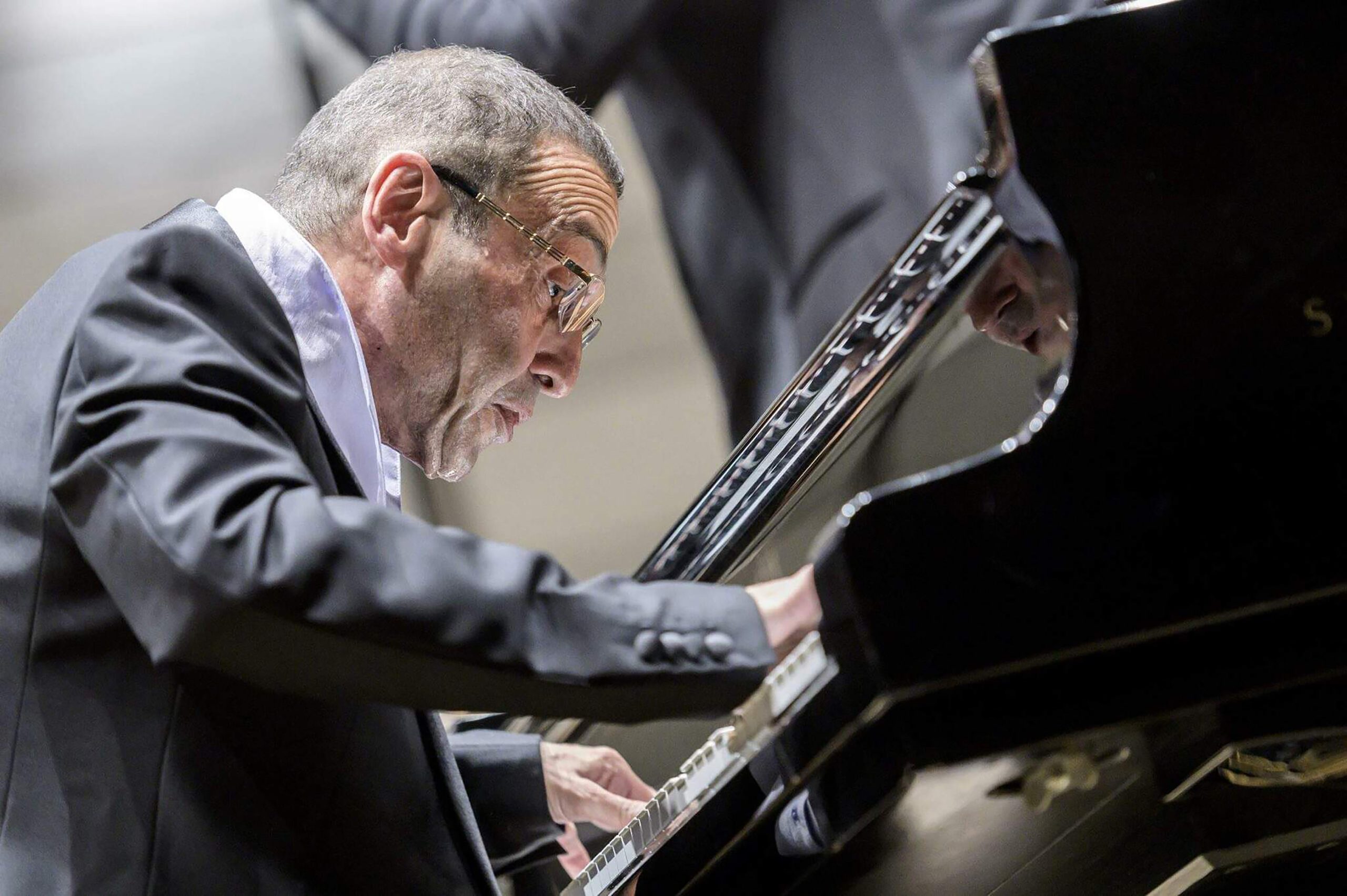
– Are there perhaps any compositions you are especially looking forward to performing?
I cannot wait to play every single note (laughs).
– Three concerts in a single day sounds like a challenge.
We are used to it. The festival in France, which will be the 34th this year, is different, grand, and the location is also marvelous—there we perform five concerts, a new program every day. And here there are three concerts—of course, it is a challenge. But you know, if I can step onto the stage every evening, I need nothing more. Because the stage is the place where I feel completely happy.
Of course, as with anyone, there are also less successful concerts, but that is life. And I am happy that my partners share this love for the stage with me. You spend the whole day with F. Schubert, what more could one want?
– What are your or your partners’ plans for the future?
Looking at the upcoming season’s calendar, I am a bit surprised. I always play a lot in Lithuania and elsewhere, but I have never had as many concerts and as many programs as await in the upcoming season. I rejoice in this. There are solo, orchestral, and chamber music concerts on the horizon, of course, including with my partners. For instance, Pei-Wen will arrive in January and we will once again play an F. Schubert concert for four hands. Such are my plans.
Marius has his own quartet; they started playing together recently, and I hope their future will be very successful. They take it quite seriously. And with Raimondas, we play together constantly; this season we have a recital in the main hall of the Vilnius Philharmonic, and we play practically every year at the Kaunas Philharmonic. He told me that since I arrived in Lithuania, he has performed more programs and concerts than in his entire prior life. I am so very happy for him.
– Perhaps you would like to pass a message to the audience awaiting you at Paliesius Manor?
I simply cannot help but send a message!
When you step onto the stage to play, you must have something to say. You come to the stage to tell a story, to convey the deepest of feelings. To express something that is profoundly important to both the composer and yourself. And you must ensure that it feels just as important to the audience as it does to you. Unfortunately, many of my colleagues forget this very simple truth: they come to the stage to demonstrate something, to show off, to play better than others, and the like. Music is not a sport; it is entirely different. The essence lies in what you express.
Speaking of the Paliesius audience, they are wonderful. It feels as though they breathe the music right alongside us. And thank God for that. I hope it continues this way.