

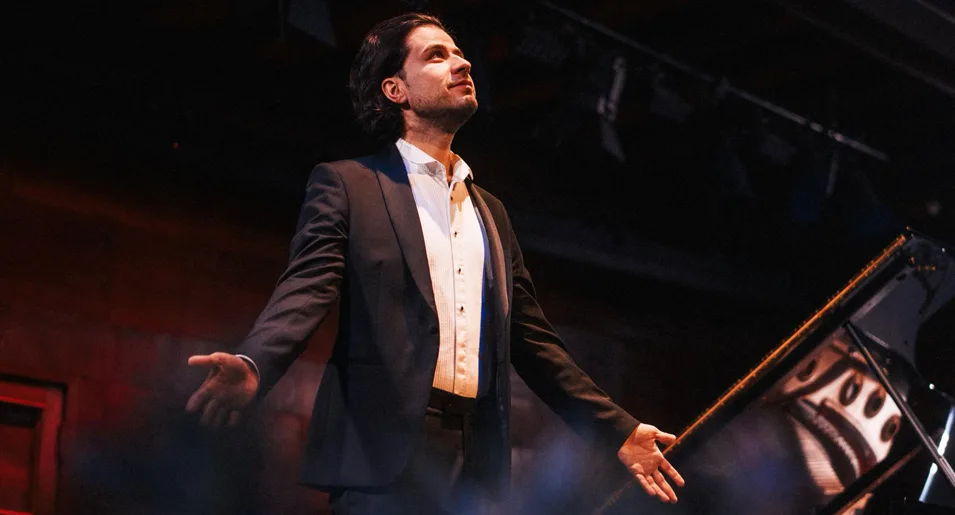
Andrejs Osokins, a classical Latvian pianist, is a laureate of the world’s most prominent piano competitions. Described by critics as impeccably stylish, he is praised for his powerful intellect and charisma, his broad and expressive palette of sound, and his exceptionally compelling performances of diverse repertoire, as noted in this publication prepared by Paliesius Manor, which features a conversation with Osokins.
Osokins is the founder and artistic director of the annual Osokins Freedom Festival in Latvia, an Associate of the Royal Academy of Music in London, a member of Trinity College of Music in London, and a member and organizer of the piano dynasty project The Three Osokins. The pianist has been awarded the Grand Music Award, the highest form of state recognition in the field of music in Latvia, and the Order of the Three Stars, Latvia’s highest state honor, for his charitable work and concert organization.
On March 29, he arrives to perform in Lithuania at Paliesius Manor. His program, “Dedication to Chopin and Schumann,” resonates closely with current events—for instance, F. Chopin’s life was deeply affected and disrupted by the Russian invasion of his homeland, after which he never returned to Poland, composing music in exile until his death. “Art and music are strongly connected to historical events; for centuries, they have acted as a mirror reflecting human experiences and global processes,” Osokins shared when discussing the program.
More about the concert: 03.29 | Dedication to Chopin and Schumann: Andrejs Osokins (Piano, Latvia)
Source: LRT.LT
– You come from a family of musicians. There must have been a great deal of music in your childhood? Did you want to be a pianist from an early age?
Indeed, I grew up in a musical family; my parents are both pianists. We were constantly surrounded by music.
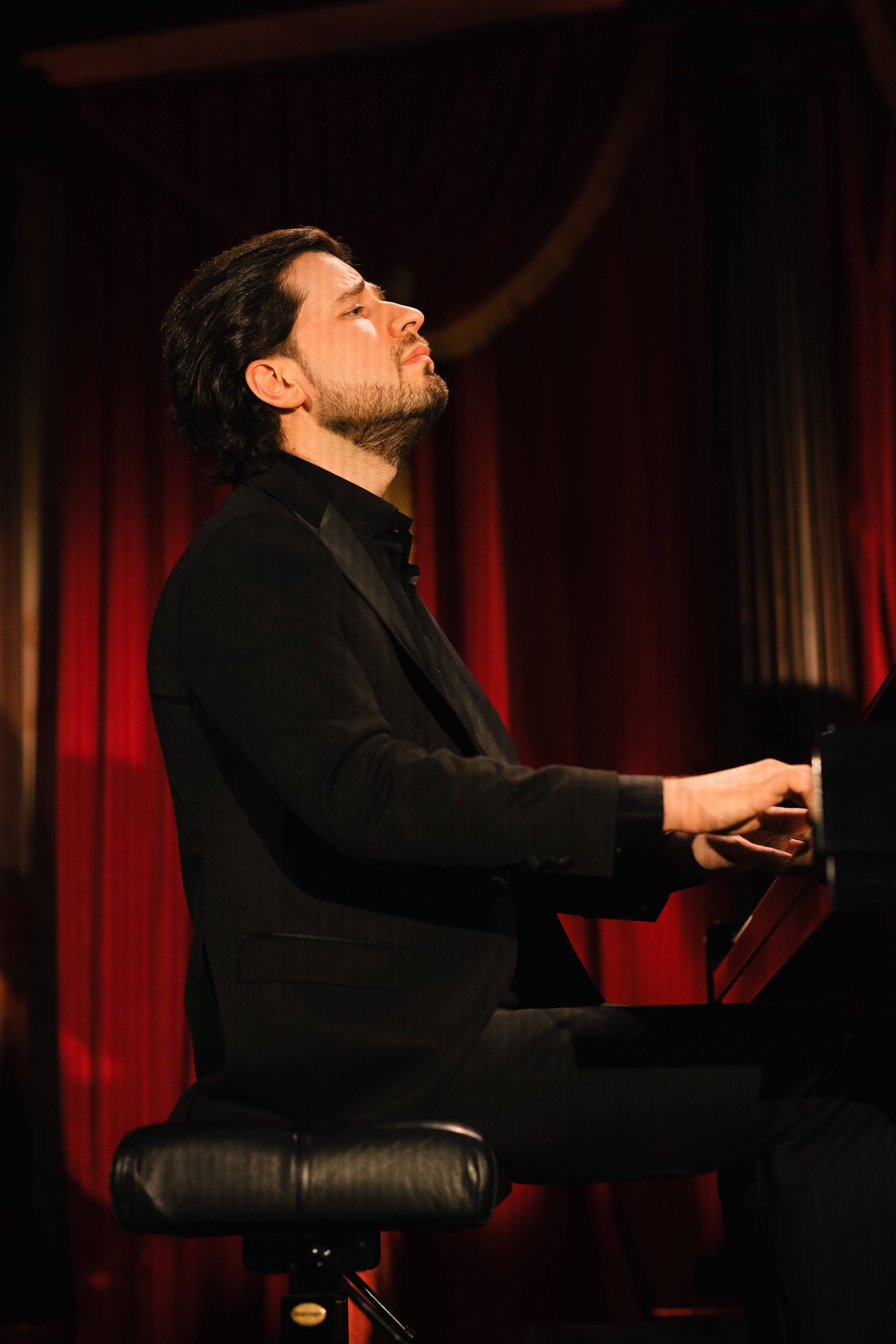
My introduction to the piano happened in a rather unique and natural way. At first, our parents placed no pressure on us; they allowed my brother and me to independently discover a love for the instrument. I remember watching my mother play with absolute fascination when I was a child, trying to imitate her movements. Because it happened so organically, I realized the true joy that playing the piano could bring.
– Has your relationship with this instrument changed over the years?
Undoubtedly. In the beginning, the piano was a source of fascination and exploration, but as I grew, it became my voice and my companion. Over time, I began to appreciate its limitless possibilities—from its technical challenges to its vast emotional spectrum. Every performance and every rehearsal deepens my understanding and my bond with the piano. It is a journey that is ever-evolving.
– And with music itself? What does music mean to you in a broader sense?
Music is my life’s calling and an emotional language that transcends words. It allows me to express the inexpressible and to forge a profound connection with the listener. To me, music is both a mirror of the human soul and a bridge connecting cultures, emotions, and experiences.
– Alongside your father, Sergejs Osokins, and your brother, Georgijs Osokins, who are also pianists, you founded the project The Three Osokins, and you perform together. Could you tell us more about this piano dynasty?
The Three Osokins project is a unique collaboration between my father, my brother, and myself. It began in 2015 and has since become one of the most significant events in Latvian classical music. Each of us brings our own distinct style and personality to our performances, creating a rich and dynamic experience. Even though we all play the same instrument, our interpretations differ, allowing us to offer the audience a multifaceted yet beautifully cohesive musical narrative.
– What challenges do you face in your career?
One of the greatest challenges is adapting to different instruments and the acoustics of various concert halls. As a pianist, I cannot take my instrument with me, so every performance is a journey of discovery and adaptation. Furthermore, I must constantly balance the technical demands of the repertoire with the necessary emotional depth.
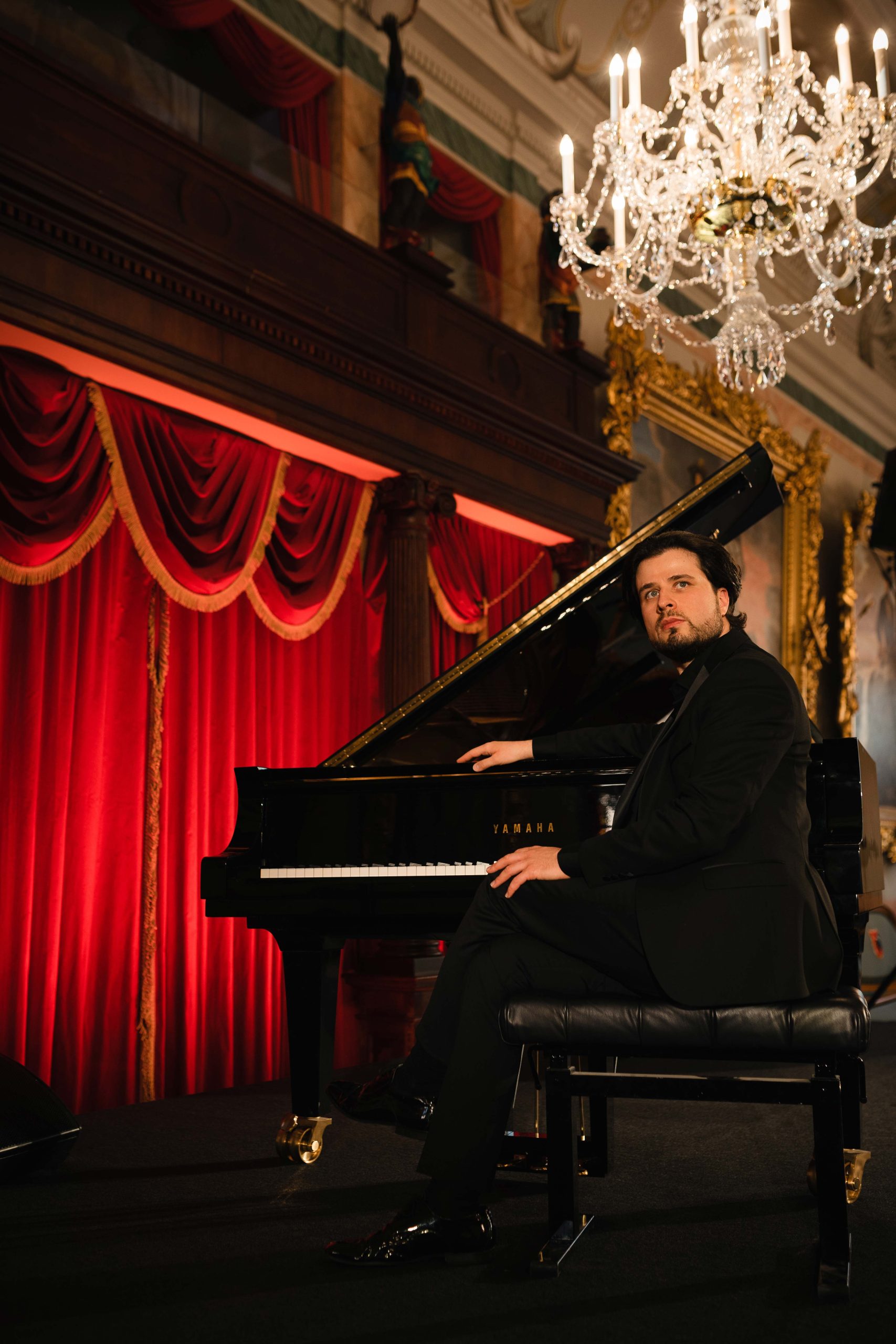
– Your upcoming concert at Paliesius Manor is titled “Dedication to Chopin and Schumann.” Why did you choose these two composers in particular? What binds them together?
Chopin and Schumann are foundational composers of Romantic piano music, each having brought their own unique voice to the repertoire. Chopin’s music is deeply personal, brimming with poetry and complex beauty, while Schumann’s works are emotionally expansive, often drawing inspiration from literature. Both composers share a profound depth of feeling and a desire to push the boundaries of pianistic expression, making their works beautifully complementary.
– What are your immediate plans for the future?
I am always looking for new collaborative opportunities and projects that expand the boundaries of classical music. My immediate plans include recording new pieces, collaborating with other artists, and continuing to develop the Osokins Freedom Festival to bring classical music to a broader audience. I also look forward to performing in Latvia and internationally, building connections with listeners around the world.
– Is there a message you would like to share with your fans and future audience?
To everyone who supports and appreciates classical music: thank you for your openness and enthusiasm. Your presence and energy at concerts inspire me to reach for even greater artistic heights. Music connects us all, and I am eagerly looking forward to sharing this incredible journey with you. See you soon at the performance!