

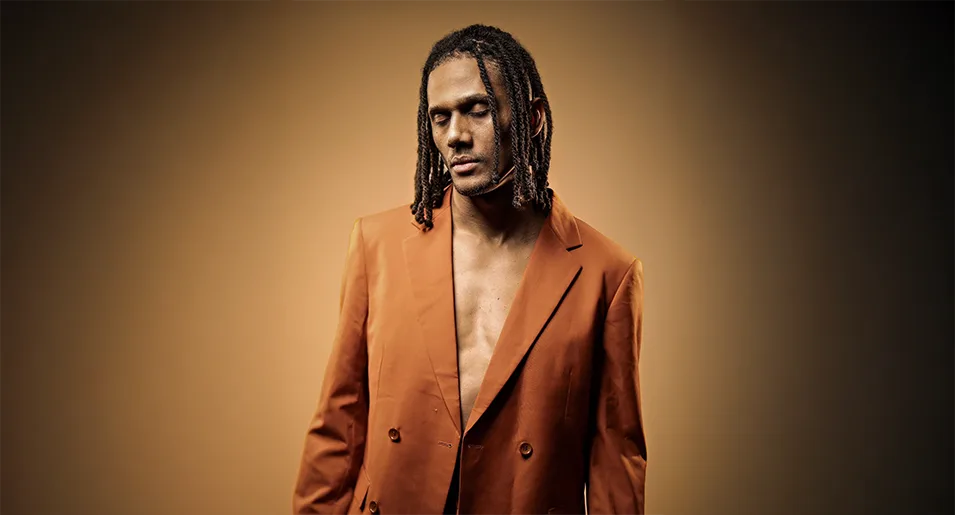
“My parents told me it would be wise to have another career alongside music. Life is hard, and I might not be able to make a living purely from music, they said,” recalls pianist Grégory Privat.
On August 16, Martinique pianist G. Privat returns to the Pasaga Concert Hall at Paliesius Manor, having performed at the estate in June 2024 alongside renowned double bassist Lars Danielsson. G. Privat is one of the most brilliant musicians on the new jazz scene.
Born in Martinique in December 1984, G. Privat is the son of pianist José Privat. Though he studied piano from childhood, he initially pursued engineering in Toulouse, only later devoting himself to his passion for the stage. Seeking to establish himself in the jazz world, the musician participated in the Montreux Jazz Festival piano competition in 2008, and in 2010, he reached the semifinals of the Martial Solal competition.
His first original compositions and the album “Ki Koté” were exceptionally well received, as were his subsequent albums—for instance, his third album “Luminescence,” recorded as a duo with Sonny Troupé, was recognized in the “Revelation of the Year, Frank-Ténot Prize” category at the 2015 “Victoires du Jazz” awards.
At Paliesius Manor, G. Privat will present his first solo piano album, “Yonn.” Intimate music, with roots reaching deep into Caribbean culture, classical music, and jazz, will fill the space, intertwining the piano with the musician’s voice.
Paliesius Manor offers an exclusive conversation with the musician.
More about the concert: 08.16 | Grégory Privat: “YONN”
Source: LRT.LT
– Your father, J. Privat, was also a pianist. Was he the one who inspired your love for music?
To tell the truth, my father is self-taught. When I was a child, I would watch him play the piano. That is why the thought of choosing another instrument never even crossed my mind. Because he was self-taught, he introduced me to a piano teacher so I could learn theory and classical music. And yes, I do believe my father passed down his love for music and jazz to me.
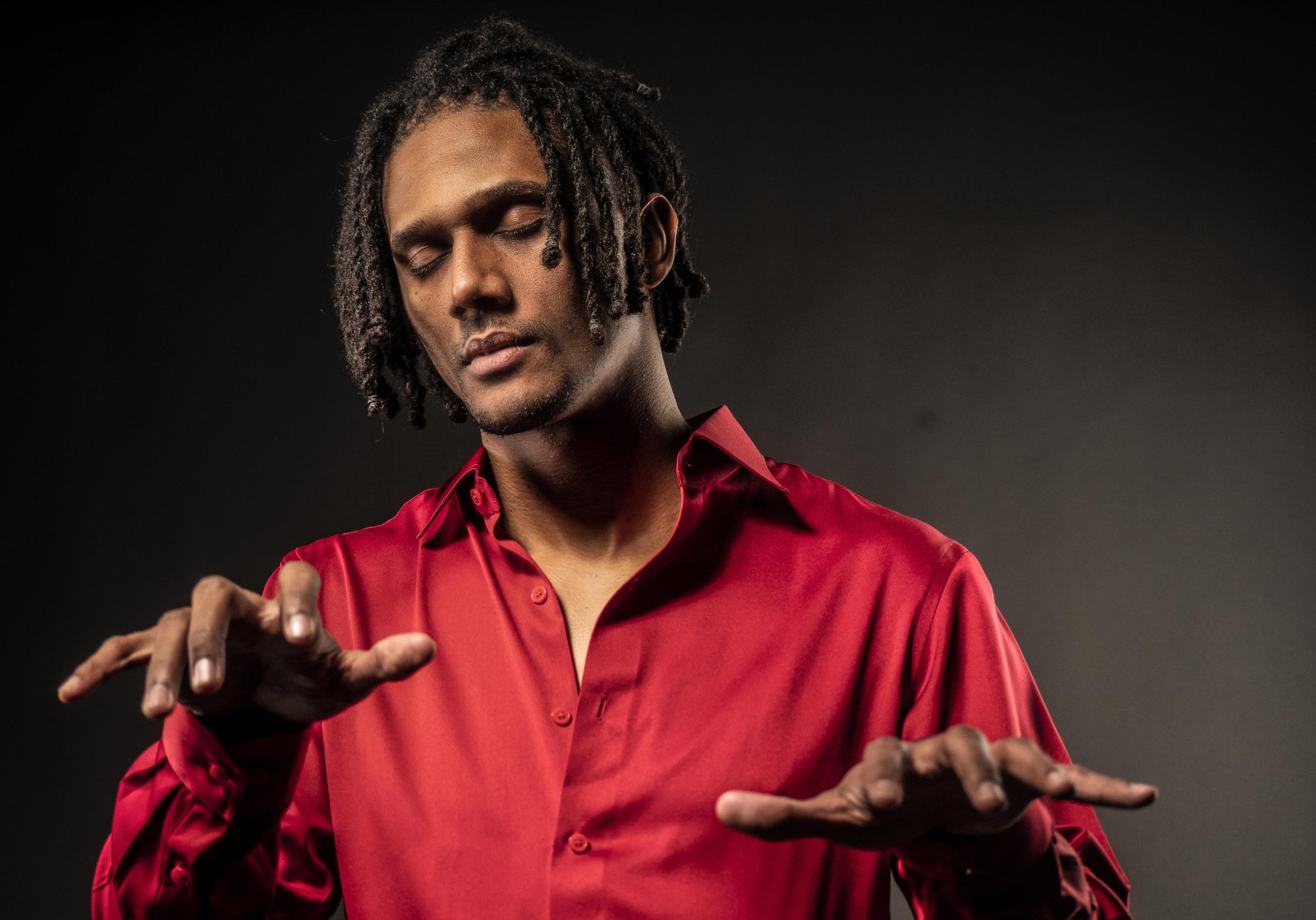
– Have you dreamed of becoming a musician since you were little?
No, I don’t think it was always a dream of mine. I knew music would be a profoundly important part of my life. But in my childhood, music felt like a game. I simply delighted in it and in learning to play the instrument. It was a way to have fun.
– Although you played the piano from the age of six, you later studied at an engineering school in Toulouse. At the same time, you played in jazz bars at night. What inspired you to choose music as your main career?
I was good at math and generally a good student. My parents told me it would be wise to have another career alongside music. Life is difficult, and I might not be able to make a living purely from music, they said. So, I enrolled in an engineering school in Toulouse. However, music remained incredibly important to me, drawing me to nightclubs, to meet fellow musicians, to join in jam sessions.
I earned my engineering degree and worked in Paris for five years. Yet music remained a constant presence in my life; I played constantly in Paris: at jam sessions, sometimes in late-night concerts. After five years, I decided to leave my engineering job—the music within me was simply too strong. I wanted to discover what it would feel like to dedicate my life solely to music, to see if I could make a living from it.
At the time, I didn’t know if I would succeed, so it was a rather difficult period of my life. But with time, I came to understand what it takes to be a musician and to live a musician’s life, what it truly means to be an artist. As the years passed, becoming who I am today grew easier and easier.
– As a musician, what are the greatest challenges you face?
I think sometimes the hardest part is to never stop creating music. There are many ways to be a musician: you can be a supporting musician, playing with various artists in their bands. Or you can choose to build your own career: compose your own music, record albums, and be creative.
I believe it is not easy for a musician to do all of this, to remain constantly creative. It is very difficult, yet at the same time, it is a dream—the dream of living your passion all the time. I would say the challenge is always there: to continue, to move forward. For me, this is truly the greatest challenge. But this is the life I have chosen—and if you never stop, you can truly find joy in it.
– In pursuit of freedom and artistic independence, you founded your own record label, “Buddham Jazz.” Tell us a little about it.
“Buddham” is a word I used to say when I was little. I didn’t know what it meant, but I kept repeating “buddham buddham buddham,” and my parents would ask what it was. Later, I learned it is part of an Indian mantra, a kind of prayer, and I decided to choose this name for my record label. I think it has a nice ring to it (laughs).
Ultimately, it was another choice. I previously belonged to a major German record label, but I longed for more freedom in my creative decisions. So I left that label and started my own, enabling me to release records and follow my own creative directions. Now, “Buddham Jazz” is six years old, and I have released four albums through it.
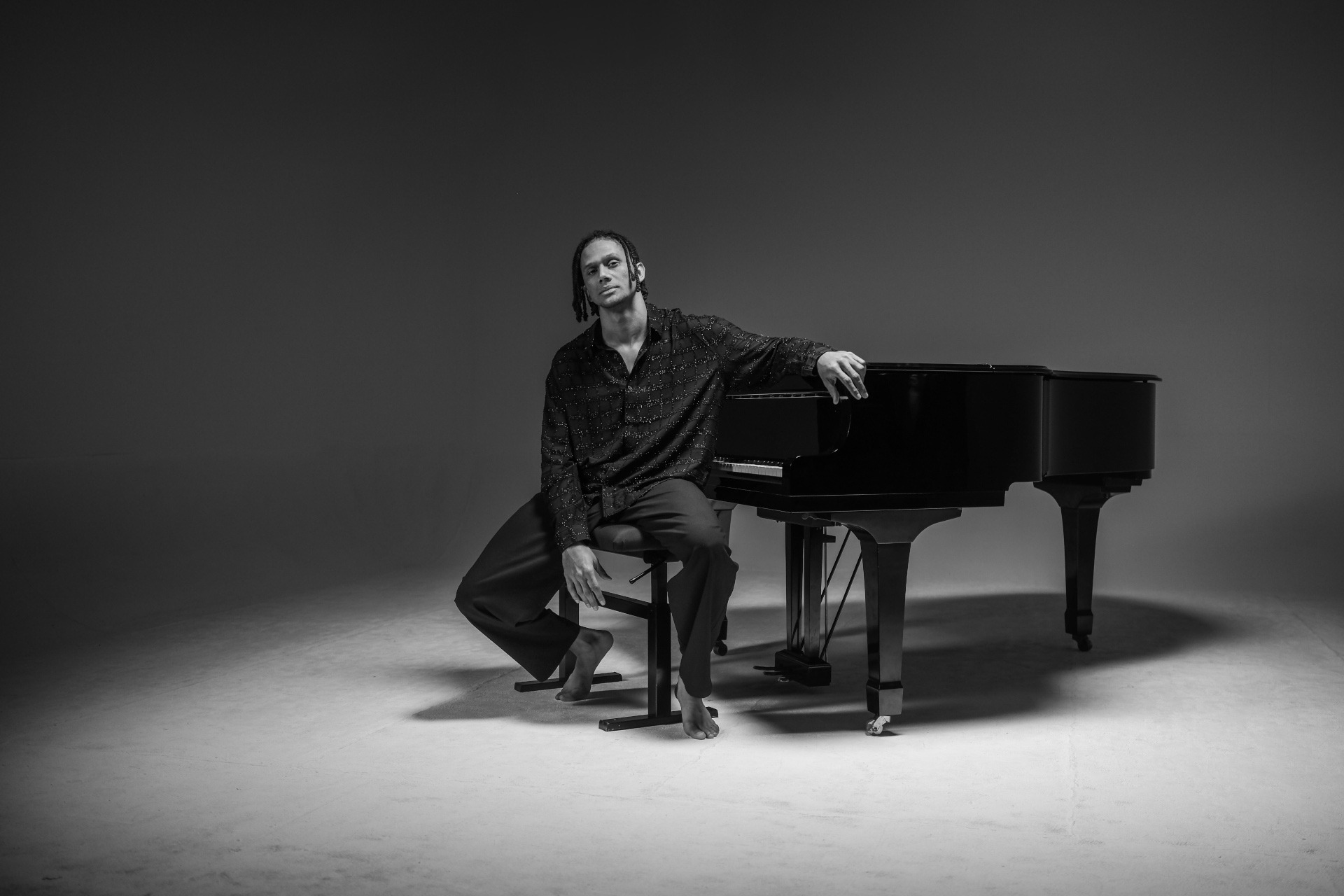
– Your solo album “Yonn,” which you will present at Paliesius Manor, is a collection of intimate music rooted in Caribbean culture, classical music, and jazz. How were these compositions born?
This album is music I composed during the pandemic in 2020, when we had to stay at home. It was an opportune time to create a solo record. The project’s original goal was to compose music for solo piano, but then I decided to add my voice to some of the pieces, turning them into songs. So, it is a solo piano album, but it features a few songs.
The album’s title, “Yonn,” is a Creole word. I am from the island of Martinique, where Creole is spoken. “Yonn” means “one.” The message of this album, of this music, is this: even if we have many cultural, traditional, and religious differences, we are one. When I play in concerts, my desire is to bring people together and unite them through music.
– Do you have any rituals before or after a concert?
I don’t really have any rituals (laughs). But sometimes before a concert, I try to be very still, in absolute quiet, all alone, as if meditating. And if I am not alone, if there are people around me—it is also wonderful to talk, joke, and relax before stepping onto the stage, allowing the energy to flow so I can pass it on to the audience.
– Perhaps you would like to send a message to the audience awaiting you at Paliesius Manor?
– Of course. This will be the second time I play my music in Lithuania, and the second time I perform the album “Yonn.” I am greatly looking forward to meeting the people of Lithuania, and I cannot wait to share my music with them. I believe we will have a wonderful time. After the concert, I will be delighted to speak with the listeners.