

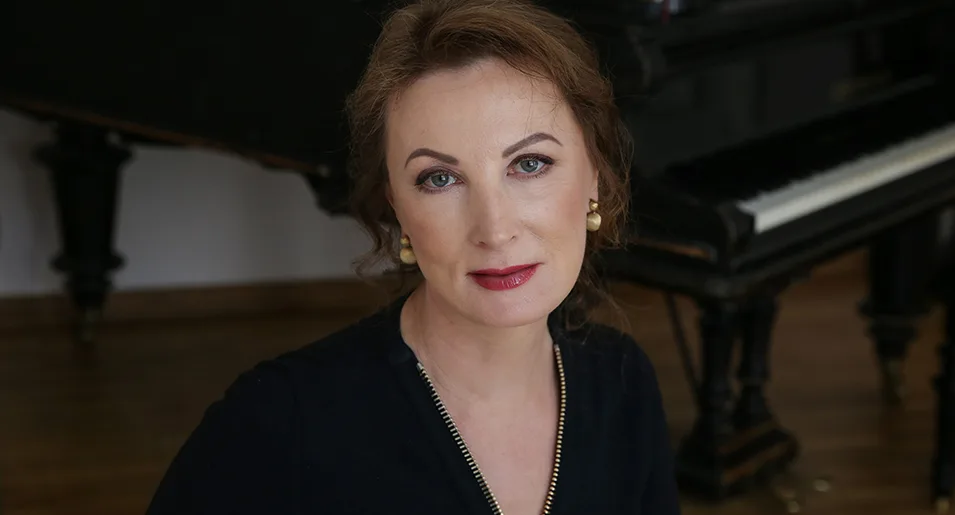
“Franz Liszt once said of himself: ‘I am half gypsy, half Franciscan.’ An idealist and a seducer, yet at the same time a Franciscan, a Freemason, and an abbé. Controversy surrounded him everywhere,” says pianist Mūza Rubackytė in a publication prepared by Paliesius Manor, emphasizing that despite F. Liszt’s inherent contrasts, he remained eternally faithful to Beauty, Goodness, and Spirituality throughout his life.
On October 17–18, Paliesius Manor will host the first international piano music festival, the EuroLiszt Festival, under the artistic direction of world-renowned pianist M. Rubackytė. This year’s festival theme, “Gypsy or Franciscan?”, invites us to view F. Liszt not only as a composer and an icon of pianism, but also as a European humanist, a modernist, and a figure who united diverse cultures, nations, and spiritual ideas.
For more than three decades, M. Rubackytė has been creating international musical projects that connect Lithuania with the European musical tradition. A laureate of the Lithuanian National Prize for Culture and Arts, she is the founder and artistic director of the Vilnius Piano Festival and the EuroLiszt Festival, as well as the president of the Lithuanian Franz Liszt Association “Lisztuania.”
Paliesius Manor was not chosen for the festival by chance. In the 19th century, manors and salons were vital spaces for European musical life, where a concert became a social and spiritual experience as much as a musical one. It was in precisely such an environment that F. Liszt spent the “Glanzperiode” of his touring years, performing for monarchs, the aristocracy, and the intellectual centers of Europe. The festival seeks to revive this tradition at Paliesius Manor—restoring the intimate connection between performer and listener and transforming the manor into a vibrant space for international culture.
Ahead of the first EuroLiszt Festival, we spoke with its artistic director, M. Rubackytė.
Read more about the concert: 10.17 – 10.18 | EuroLiszt Festival | “Gypsy or Franciscan?”
Source: LRT.LT
– Your work has been connected to F. Liszt for many years: in 1981 you won the prestigious Liszt-Bartók Competition in Budapest, your contribution to global Lisztiana has been recognized with numerous international awards, and you have been working with F. Liszt’s name and projects for more than 15 years. How has your relationship with this figure evolved over the years?
F. Liszt entered my life early. I was eleven years old when I fell in love with him. Since then, his aura has never faded. And how could it fade? After all, this incredible figure flew like a comet through the entire 19th century, inspiring and shaping not only the purpose and evolution of musical art but also the role of the artist’s ideal in society.
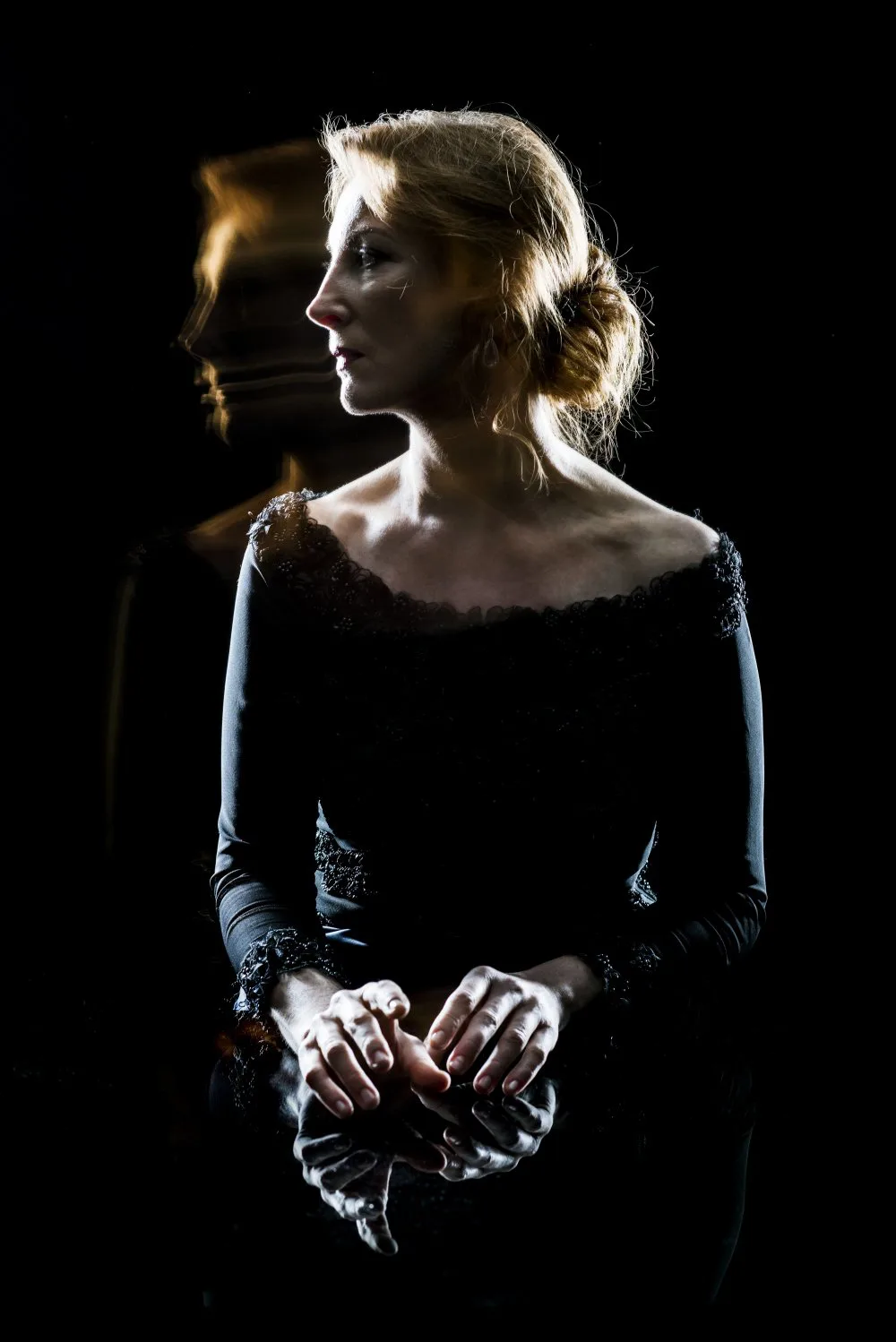
– And how has the attitude of listeners and young performers toward F. Liszt changed during this time? Do you notice differences across generations?
F. Liszt is an exceptionally multifaceted figure. I often ask: “Do you love F. Liszt?” If so—which one? What kind? Our view of his life is frequently met with various misunderstandings. He became the world’s greatest virtuoso and was never able to shake off this enduring image.
Those who idolize him as a rock star are surprised by his religious compositions. Those Lisztomaniacs who never forgave him for abandoning the stage after eight years of European virtuoso tours cannot fathom his value as an innovative composer. Those who saw him as a tempter, a seducer, never forgave him the abbé’s cassock. Thus, F. Liszt’s persona and his legacy are boundless, relevant to every generation—and the better we know him, the more he enriches us.
– In your opinion, what can still surprise us in F. Liszt’s music today?
Precisely those metamorphoses. We seek him in one place, and he catches us by surprise in quite another. Everything he touched turned to gold. The transcendental virtuosity of his music is not an end, but a means to awaken poetic emotion within us. And this allows his music, without the need for thought or contemplation, to sweep us up and carry us away.
– How did the idea of organizing the EuroLiszt Festival come about? Is it connected to the “Lisztofonija” competition you initiated?
It is vital in human life to have a guiding star, an ideal. To me, the role of an artist is a mission, and it is not merely an opportunity to share profound emotions with the audience through music. Today, as the world loses its values to the law of the jungle, ideals and our connection to them through the catharsis of art become an inseparable part of our spiritual lives—a necessity.
“Lisztofonija” was born ten years ago, thanks to the like-minded individuals of the Lithuanian Liszt Association “Lisztuania.” The ILA (International Liszt Association) was founded in 2011, and “Lisztuania” is one of its founders, signatories, and benefactors. We believe that young people, having encountered F. Liszt, will emancipate themselves not only in the art of the piano but also in the realm of human values.
F. Liszt is the embodiment of a true European. With his concerts, he traveled the length and breadth of Europe—even reaching St. Petersburg and Constantinople. His patriotism, generosity, philanthropy, and profound understanding and embodiment of man’s highest mission on earth are incredibly relevant today, serving as an enduring example.
– The festival is called the EuroLiszt Festival, and the theme of its first edition is “Gypsy or Franciscan?” What lies beneath these titles?
F. Liszt once said of himself: “I am half gypsy, half Franciscan.” An idealist and a seducer, yet at the same time a Franciscan, a Freemason, and an abbé. Controversy surrounded him everywhere, but despite his contrasts, F. Liszt remained eternally faithful to Beauty, Goodness, and Spirituality throughout his life.
– Why was the setting of Paliesius Manor chosen for this festival?
During his “Glanzperiode,” which lasted eight years, F. Liszt traveled across Europe, visiting the palaces of monarchs, the salons of the aristocracy, and grand manors. On a personal note, before the Soviet deportations began, my own family resided at Meižiai Manor in the Mažeikiai district. Prominent artists, writers, and poets of the time would gather in my family’s manor salon. So, for me, this is also a symbolic rehabilitation of my family’s cultural legacy.
We already share the successful experience of several “Lisztofonija” competitions with Paliesius Manor. And today, I am incredibly happy that the owner of Paliesius Manor, my dear friend Prof. Julius Ptašekas, enthusiastically supported this idea and dedicated every resource to ensure our inaugural EuroLiszt Festival could take place.
Having returned to the embrace of Mother Europe, Lithuania is not merely a nation unto itself—it is profoundly European, just as it was during the long and celebrated eras of our history. Through the unique historical and geographical syncretism of his musical language, his mission, and his progressive ideas, F. Liszt encourages and inspires a distinctly European mindset—one where creative inspiration intertwines with respect for individuality, rigor, and freedom. Following in F. Liszt’s footsteps, we embrace the challenge of creating a synergy among the cultures of all European countries. “You are a child of Europe,” Richard Wagner once said of him.
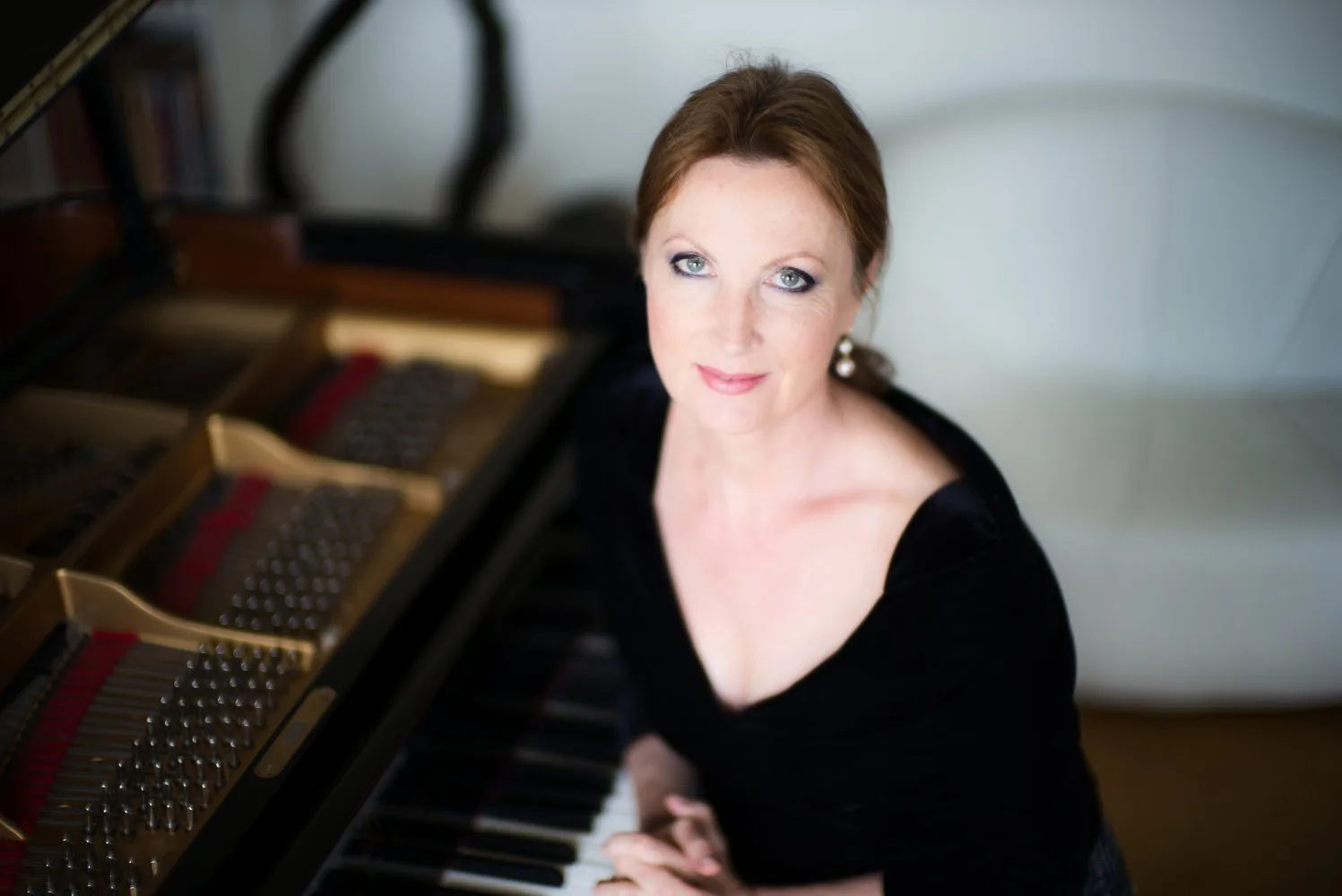
– How was the festival program put together? We will hear not only F. Liszt’s music but also R. Šerkšnytė’s “Pasakalija”—how does this piece connect with the rest of the program?
The passacaglia is an ancient musical form, originating from a Spanish processional dance. According to the composer, it was inspired by the theme of the Stations of the Cross. To me, R. Šerkšnytė’s “Pasakalija” recalls F. Liszt’s “Funeral March.”
“Via Crucis,” which you will hear at the EuroLiszt Festival’s closing concert, is an exceptionally modern, one might even say futuristic, work. Thus, this musical and spiritual dialogue is entirely justified. F. Liszt, freely paraphrasing Goethe, said: “Even at the end of the road, the only worthy conduct is to look forward.”
We feel that, following the innovative example set by F. Liszt’s character, including a contemporary Lithuanian piece in the festival is only natural. In the future, we hope to have the opportunity to commission Lithuanian composers for a work written specifically for the festival, inspired by F. Liszt.
– Besides yourself, the festival will feature pianists Thomas Kelly, Attila Szaniszló, and Simonas Miknius, as well as the Vilnius University combined choir led by Rasa Gelgotienė. Why were these particular artists chosen?
We chose youth, as it represents a look to the future. The artists of the first EuroLiszt Festival are true connoisseurs of F. Liszt’s work. British pianist Thomas Kelly is one of the principal laureates of the 40th Utrecht Liszt Competition in 2026; Lithuanian Simonas Miknius is the winner of the 5th National “Lisztofonija” Competition in 2025; and Hungarian Attila Szaniszló is a rising national star. Together with the Vilnius University Choir, we performed “Via Crucis” at the Château de Compiègne in 2025. Thanks to them, this masterpiece was heard for the first time in Lithuania.
– What message would you like to pass on to the prospective audience?
Alongside “Lisztofonija,” EuroLiszt is yet another new European child of “Lisztuania” in Lithuania—awakening, through F. Liszt, our reflections on Beauty, Goodness, and Generosity, and, we hope, contributing to the creation of the world of tomorrow. We are true Europeans, the heirs of Europe, thought Friedrich Nietzsche. Noblesse oblige (nobility obliges), said F. Liszt.