Source: 7MD.LT
Author: Aldona Eleonora Radvilaitė
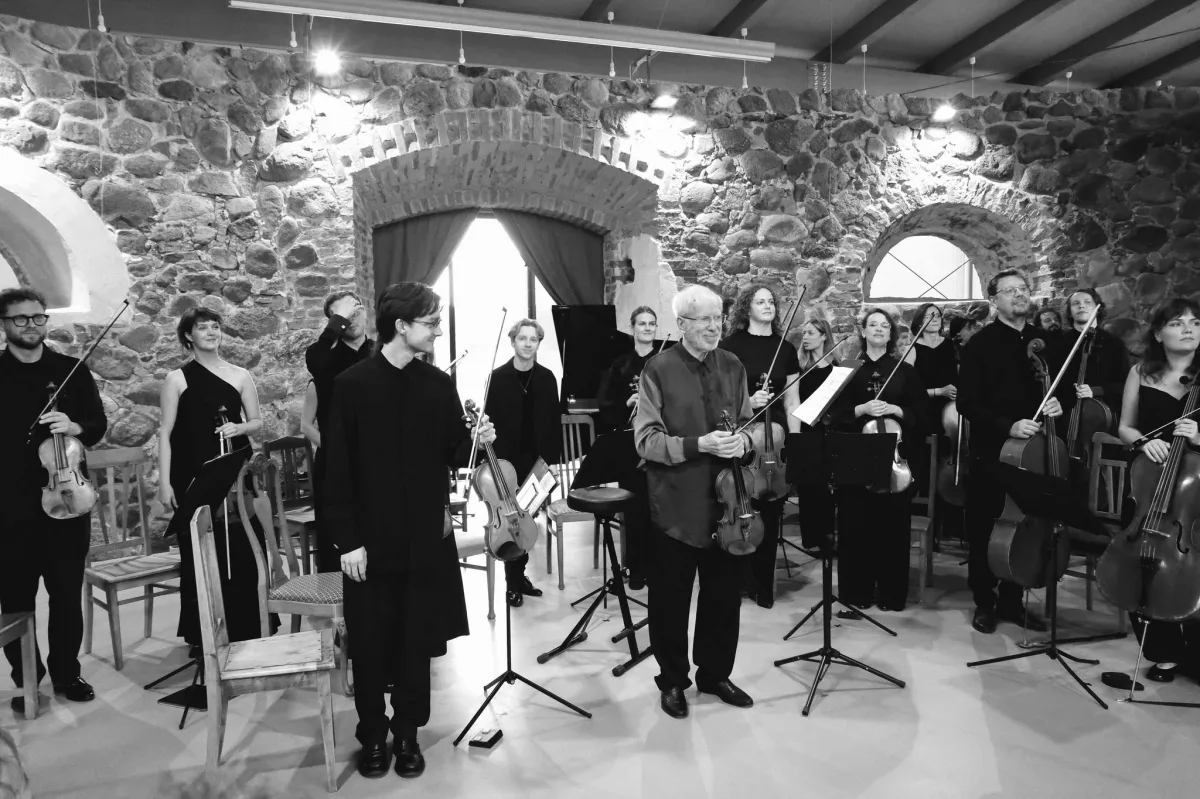
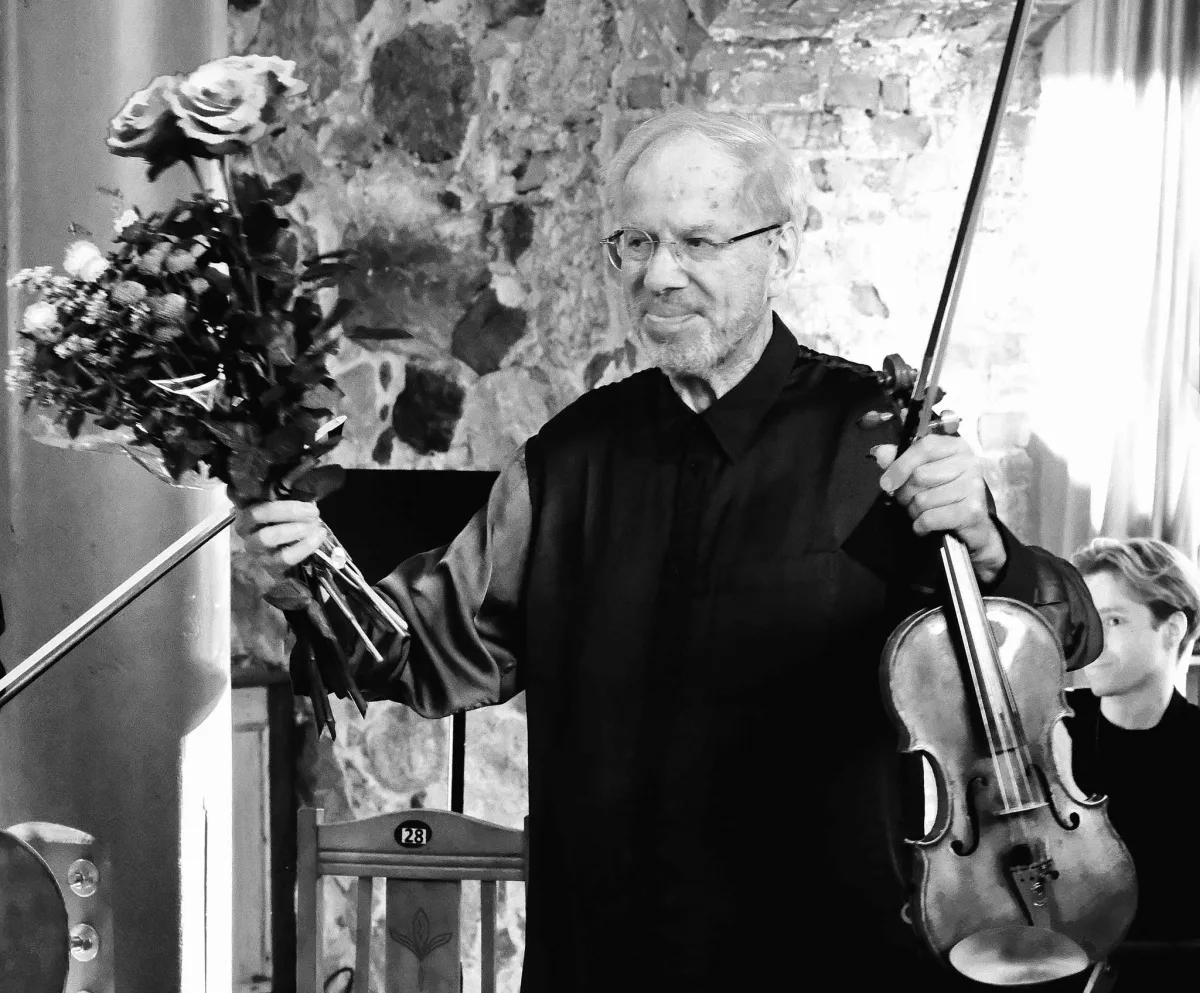
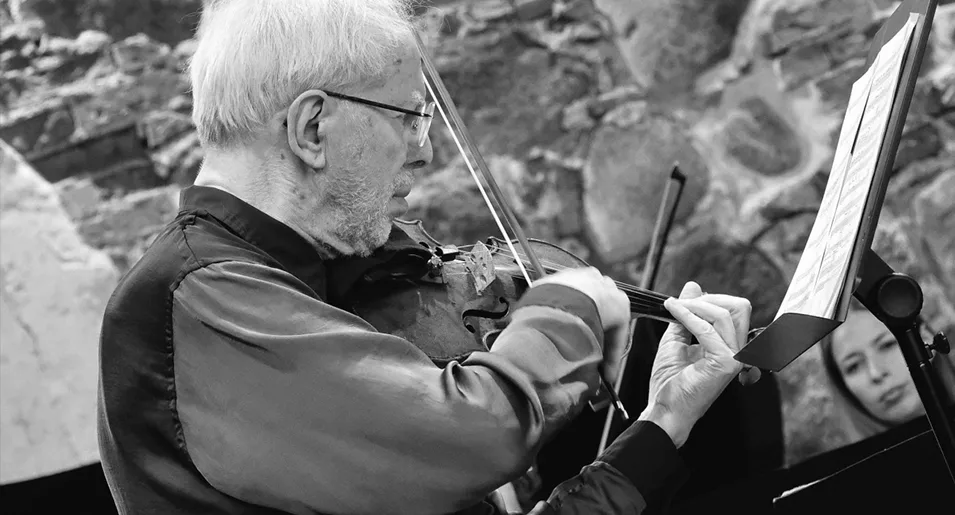
World-renowned violinist and conductor Gidon Kremer shares a particularly close bond with Baltic culture—serving as the founder, artistic director, and visionary event organizer of the chamber orchestra “Kremerata Baltica.” For several years now, the maestro has hosted the “Kremerata Baltica” festival at Paliesius Manor. The two-day programs resounding here continually surprise with their thoughtfully curated themes, presenting works of the highest artistic merit by both eminent historical and contemporary composers, elegantly contrasting large-scale and more intimate compositions.
This year, the festival held on July 18 and 19 at Paliesius Manor drew listeners not only from Lithuania but from abroad. A simple visit to this estate—with its superb chamber hall boasting professionally crafted acoustics, favored by countless world-class musicians for high-quality recordings—offers both performers and audiences a sense of true bliss. Here, one can savor the beauty of nature and the embrace of silence, while those who linger may enjoy additional pre-concert activities, delve into the manor’s history, taste exquisitely prepared dishes, or partake in a tasting of the finest French wines.
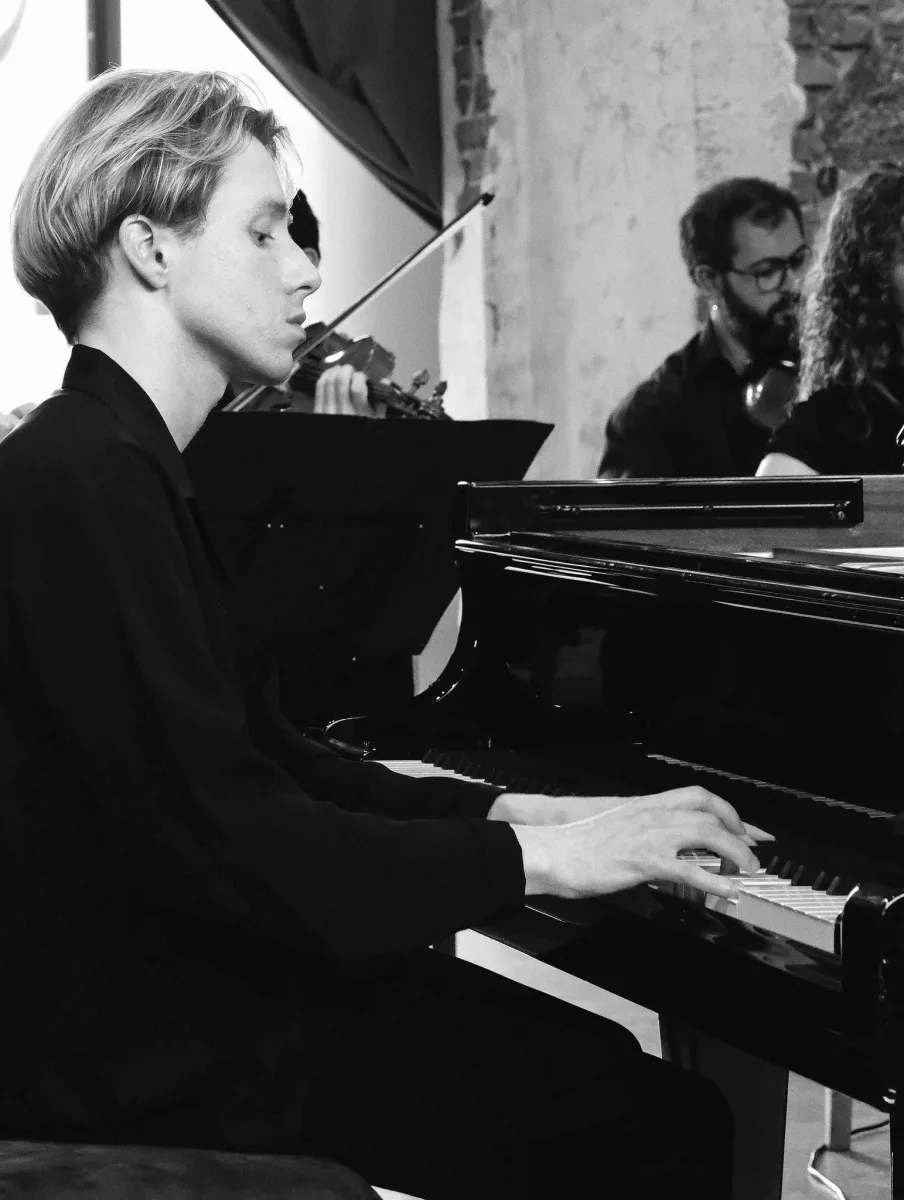
The festival featured three concerts—one on July 18 and two on the 19th. In each concert, grand romantic opuses were gracefully woven among various smaller-scale pieces of differing styles. For instance, on the first evening, we heard Robert Schumann’s Concerto in A minor for violin and string orchestra, Op. 129 (René Koering’s arrangement for cello and orchestra), with a solo by the talented Canadian cellist Luka Coetzee. In the first half of this concert, “Kremerata Baltica” performed Dmitri Shostakovich’s Chamber Symphony, Op. 110a (after String Quartet No. 8), captivating the audience with a particularly uplifting romantic interpretation. The following evening, we listened to Schumann’s Concerto for Piano and Orchestra in A minor, Op. 54. It was played by Julius Asal—a rising star named a BBC New Generation Artist—with youthful vigor, a bright, gleaming contemporary style, and brilliant virtuosic resonance in the passages, while gracefully lingering with a peculiar rubato in the slower-flowing episodes. The orchestra, playing without a conductor, adapted to the soloist’s interpretation, performing vibrantly, with frequent accents and dynamic climaxes approaching a perilous edge. Earlier in this concert, Felix Mendelssohn’s Symphony No. 10 in B minor rang out with romantic elevation, performed expressively and vividly by the young artists of “Kremerata Baltica” (also without a conductor). It was evident that maestro Kremer had prepared them flawlessly.
Also in this concert, we heard the concise, four-movement Concertino for Cello, Op. 43bis by Mieczysław Weinberg, treated with meticulous care alongside the orchestra by Magdalena Ceple, who holds the title of Latvia’s Young Musician of the Year and is distinguished by her exceptional flexibility, musicality, and profound mastery. In this piece, romantic tradition merges with modern harmony and vivid instrumental colors. Incidentally, the composer and pianist Weinberg was a close associate of Shostakovich, constantly sharing creative ideas. Experiencing a revival on world stages in recent years, Weinberg is considered one of the most prominent and prolific creators of the 20th century.
Speaking of the smaller opuses in the program, one must mention the orchestra’s spirited performance of Heinrich Ignaz Franz von Biber’s “Battalia à 10” in D major, C. 61, which opened the entire marathon of festival concerts, as well as a beautiful collection of works by Latvian composers. These were treated with refined subtlety by Kremer and the orchestra, bearing the well-known “Kremer-esque” signature style characterized by a deep immersion into the essence of the music. These included Pēteris Vasks’ “A sad piece,” performed together with Asal; Pēteris Plakidis’ “Sad and Cheerful Grasshopper Dances”; Tālivaldis Ķeniņš’ Aria (performed solely by the orchestra); and Jēkabs Jančevskis’ “Meditācija Gaismai” for violin and string orchestra.
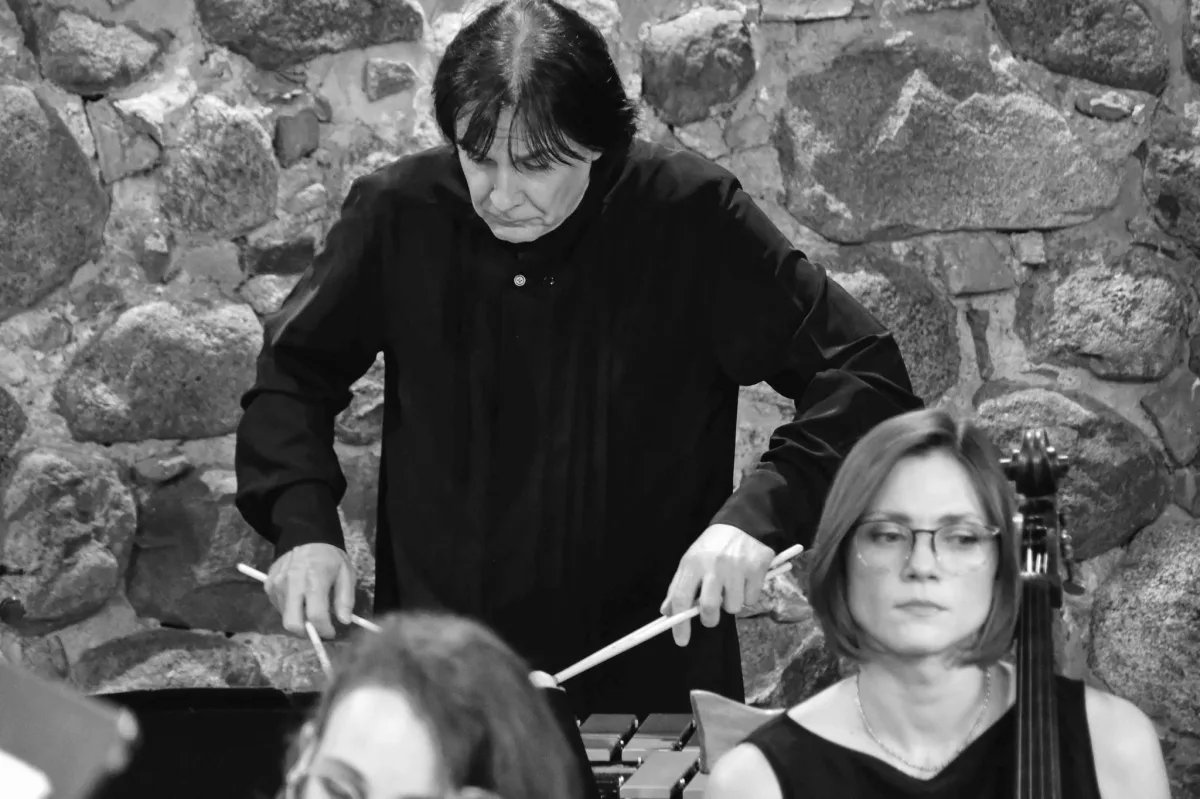
The festival’s finale was impressively adorned by two exceptionally moving pieces: the seemingly subtext-laden “A Little Daneliade” for violin and string orchestra by perhaps the most famous Georgian composer, Giya Kancheli, dedicated to Gidon Kremer and his orchestra. The piece seemed to transport listeners to the world of Fellini films featuring Nino Rota’s music, a realm of fantasies and dreams, only in a different era, speaking a more modern, sharper language where emotions are expressed with a deeper ache. With “A Little Daneliade,” Kancheli paid homage to the internationally acclaimed Georgian film director and screenwriter Georgiy Daneliya, known for his unique style—sad, lyrical comedies that masterfully blended gentle humor, drama, and profound melancholy. Perhaps this is why, at the end of some small episodes in the piece, Kancheli inserted the sighs of the orchestra members, and once—even a theatrical, loud shout as they leapt from their chairs. Kremer and the orchestra played with vibrant and highly spirited energy, while percussionist Andrei Pushkarev delicately interjected with piano sounds.
A different kind of piece—more dramatic, tense, and written in a seamlessly flowing musical language—concluded the festival’s planned program. This was Giovanni Sollima’s “Violoncelles, vibrez!” for two cellos and string orchestra, spiritedly performed by Luka Coetzee and Magdalena Ceple with “Kremerata Baltica.” Sollima is one of the most frequently performed contemporary Italian composers, distinguished by a unique, innovative musical style. He also composes music for cinema, theater, and television projects. The final touch of the festival was an encore: Imants Kalniņš’ gentle miniature “The Milky Way” (“Paukščių takas”), delicately played by Kremer.
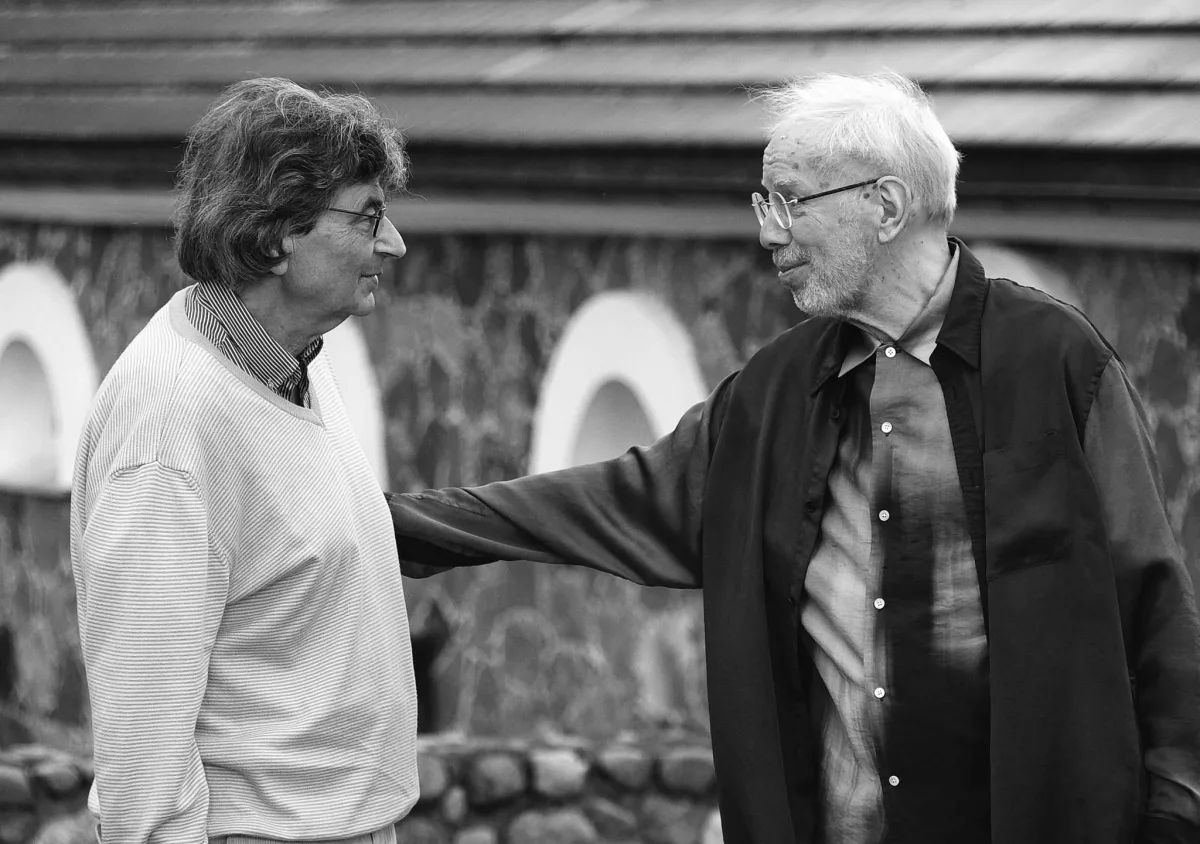
Deserving separate mention is the exceptional daytime concert on July 19, both parts of which were dedicated to honoring remarkable creators. The first half featured works by the Belgian composer and musicology professor Victor Kissine, who himself traveled to Paliesius Manor to hear the performance. The Russian-born creator moved to Belgium in 1990, where he teaches orchestration and musical analysis at the Royal Conservatory of Mons and the INSAS higher arts school in Brussels. Renowned conductors describe his style as residing between the sound worlds of Alfred Schnittke and Morton Feldman, while Kissine himself associates it with silence, which “does not stop the music, because it is part of the music.” Kissine has collaborated closely for over 20 years with Kremer and his orchestra, which has performed, recorded, and commissioned multiple works by the composer.
At the beginning of the concert, Kissine’s “Duo” for viola and cello was played attentively by violist Jevgenija Frolova and cellist Magdalena Ceple. Because this was followed by a Piano Quintet—seamlessly performed by Julius Asal (piano), Saulė Buikaitė (violin), Rūdolfs Miķelsons (violin), Marta Rācene (viola), and Luka Coetzee (cello)—in which the composer employed very similar means of expression (various quietly “rustling” string effects with pauses between slightly varying brief phrases, played in flashes of a few notes, with the piano introducing timbral variety), I believe this is why Kremer inserted a brief, popular Aria by Bach between these works. He performed it subtly himself, accompanied by this ensemble of string players.
The second half of the concert—”Hommage à Herz Frank” (with film fragments)—was memorable as an exceptional event, intimately fusing visual art with the music that imbued it with even deeper meaning. Herz Frank is an eminent Latvian documentary film director, screenwriter, and photographer, considered one of the pioneers of the Riga School of Poetic Documentary Cinema. Throughout his life, he created more than 80 internationally recognized films. Together with his colleagues, Frank shaped the Latvian “new wave,” noted for its insightful philosophical generalizations and the quest to understand the depths of the human soul. His short film “Ten Minutes Older” (1978), which captures the emotions of a child watching a theater performance, is considered a masterpiece. From 1993 until his passing, Frank lived in Israel, actively making films in both Latvia and Israel.
As the concert organizers noted, “This program bridges the cinematic world of Herz Frank and the musical voice of Gidon Kremer. Through fragments of films by Frank—one of Latvia’s most prominent documentary filmmakers—a symbolic journey of human life is revealed, from birth to life’s end and spiritual transformation. The visual narrative, crafted by Frank’s like-minded contemporary Vitaly Mansky, becomes the foundation for the live performance of Kremer and the soloists of ‘Kremerata Baltica.’ The music here does not merely accompany the films; it enters into a dialogue with them, granting the images a new dimension and emotional depth. It is an experience that speaks of human dignity, empathy, and the shared moments that shape our lives.” Speaking of the work, Kremer says: “What draws me most to the work of Herz Frank is the power of sincerity. Therefore, in searching for the right sounds for it, I sought to create a certain counterpoint to the images, which in places—even in some fragments—demanded silence… This silence allows us to look deeper into ourselves, just as the overtones of music do from time to time.”
During the concert, it felt as though the listeners (and viewers), much like the performers, were hypnotized by moments of silence and profound concentration while watching the expressive visuals on the large screen (especially the shifting moods on the child’s face from the film “Ten Minutes Older”). These were accompanied by sorrowful, serenely flowing romantic music, compellingly performed by the orchestra’s strings and principal percussionist Andrei Pushkarev. The work featured a powerful interplay of silence, varied imagery, and the seamless merging of both art forms.
In closing, one wishes to recall that the primary mission of this festival (much like the previous one) is to carry forward the efforts of the world’s most brilliant creators: to bring joy to people through artistic masterpieces of various eras and styles, turning away from disheartening social and political realities to spread the ideas of music and the spirit of free art. We will eagerly await the next “Kremerata Baltica” festival at Paliesius Manor!